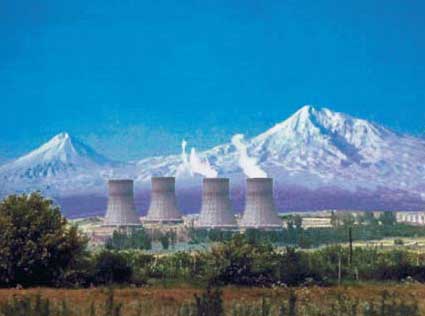
ArmInfo. This week a Committee session will be held in Geneva which will supervise "Environmental Impact Assessment of Transboundary Context" European ESPOO Convention's implementation. Metsamor nuclear power station is among the discussed issues. The members of the committee will analyze actions taken by Armenia in the assessment of ecological consequences of constructing Metsamor nuclear power station, according to UN.org.
The convention was started by the UN Economic Commission for Europe, according to which the parties should do the assessment of certain actions' impact on environment in earlier stages. The members of Convention have agreed on consulting on those big recycling projects which can have dangerous transboundary influence on the environment.
The Espoo (EIA) Convention sets out the obligations of Parties to assess the environmental impact of certain activities at an early stage of planning. It also lays down the general obligation of States to notify and consult each other on all major projects under consideration that are likely to have a significant adverse environmental impact across boundaries (see some examples).
The Convention was adopted in 1991 and entered into force on 10 September 1997 (see which countries are Parties to the Convention).Read more about the history of the Convention > The sixth session of the Meeting of the Parties to the Convention took place in Geneva in June 2014.
First amendment to the Convention was adopted in 2001. It entered into force on 26 August 2014 (see status). It has thus opened the Convention to accession by UN Member States that are not members of the UNECE Second amendment to the Convention was adopted in 2004. Once in force (see status), it will - Allow, as appropriate, affected Parties to participate in scoping - Require reviews of compliance - Revise the Appendix I (list of activities) - Make other minor changes
The Espoo Convention and the Rio Declaration on Environment and Development (1992)
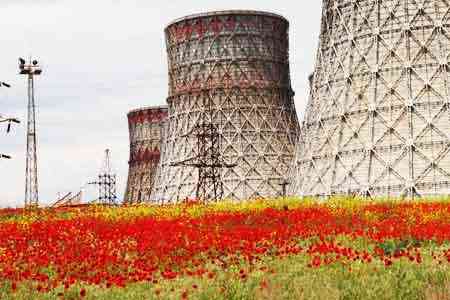
- Principle 17: Environmental impact assessment, as a national instrument, shall be undertaken for proposed activities that are likely to have a significant adverse impact on the environment and are subject to a decision of a competent national authority. ? Principle 19: States shall provide prior and timely notification and relevant information to potentially affected States on activities that may have a significant adverse transboundary environmental effect and shall consult with those States at an early stage and in good faith. To note, the Armenian NPP consists of two power units with the capacity of 400 megawatt each. But only one of these two power units is operating at present. The first unit was commissioned in 1976, the second one in 1980. At the beginning of 1989, the plant was decommissioned following the Spitak earthquake in December 1988. In early 1995 the second unit was re-launched. The ANPP's power output makes up nearly 40% of the total power generated in the republic. In March 2014, the Government adopted a decision to extend the lifetime of the unit No.2 of the NPP in view of the delay with the construction of the new power unit. At the current stage, the Lifetime Extension Project of unit No.2 of Armenian NPP is being implemented with the participation of Rusatom Service's specialists. The NPP will be modernized at the expense of the Russian $270 mln loan and the Russian $30 mln grant funds. The project will be implemented by the late 2019. The power supply problem in the country will be finally settled after the construction of the new nuclear power generating unit that will cost the country $5 billion.