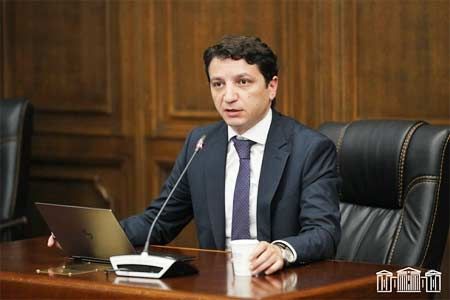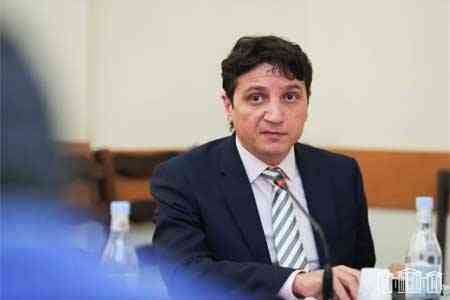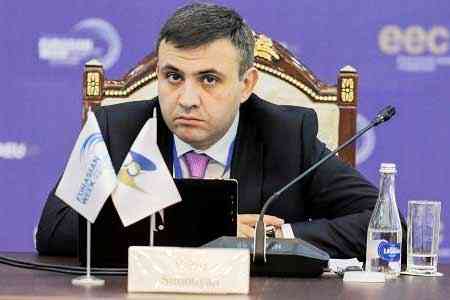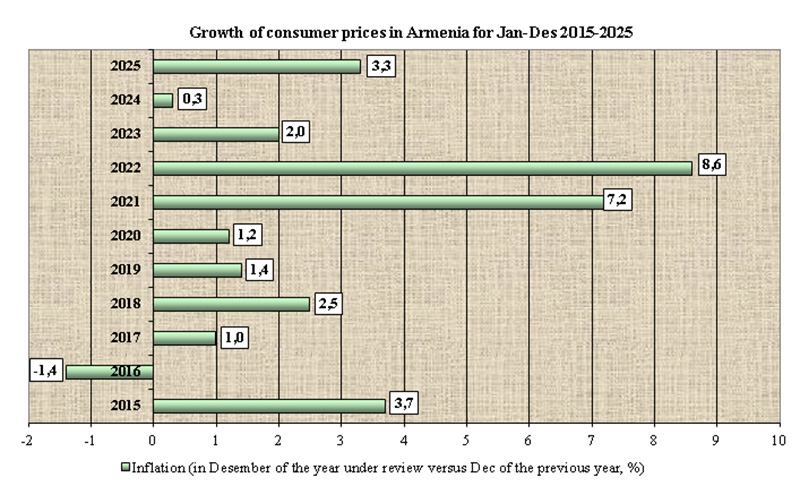


ArmInfo. Due to negative external shocks and a high level of turbulence in the world economy, in 2016 Armenia closed with 0.2-0.3% GDP index with economic activity of 0.5%. Only the industrial sector (0.8 pp) and the service sector (1.9 pp) recorded positive growth against the backdrop of negative growth in agriculture (-1.0 pp) and construction (-1.0 pp). This was stated by the Minister of Finance of Armenia Vardan Aramyan on June 26 in the National Assembly of Armenia presenting the report "On the execution of the RA state budget for 2016".
At the same time, Armenia, in 2016 did not collect taxes and exceeded the planned deficit level in the budget. As a result, the deficit of the state budget of Armenia in 2016 also deviated somewhat from the index set in the main financial document of the country, exceeding it by 2% and making up 5.5%, against the planned 3.5%. In absolute terms, the deficit was about 278 billion AMD or 54% higher than the annual plan. Basically, this is due to the shortage of taxes and the retention of the planned amounts of expenditure items.
Tax collections in the state treasury for 2016 amounted to 1.8 billion AMD, which is lower than the planned figure. At the same time, as the minister noted, as a percentage of GDP, the indicator was overfulfilled by 0.4%, and as a result, the tax/GDP ratio was 21.1%.
Despite this, in order to maintain the economy, in 2016 Armenia increased the share of budget expenditures in GDP. According to the state budget of Armenia for 2016, the expenditure item was fixed in 1 trillion 377 billion AMD (the ratio of expenditures/GDP is 25.3%), and the profitable one was 1 trillion 186.3 billion AMD (21.8% revenue/GDP ratio - 1 trillion 154.8 billion - from internal sources, and the remaining 31.5 billion - from external sources). But on the fact of income collected 1 trillion 171.1 billion. State budget expenditures were planned at 1 trillion 377 billion AMD. Due to adjustments, the figure was increased by 6% - to 1 trillion. 459 billion. The final figure was 1 trillion. 449 billion.
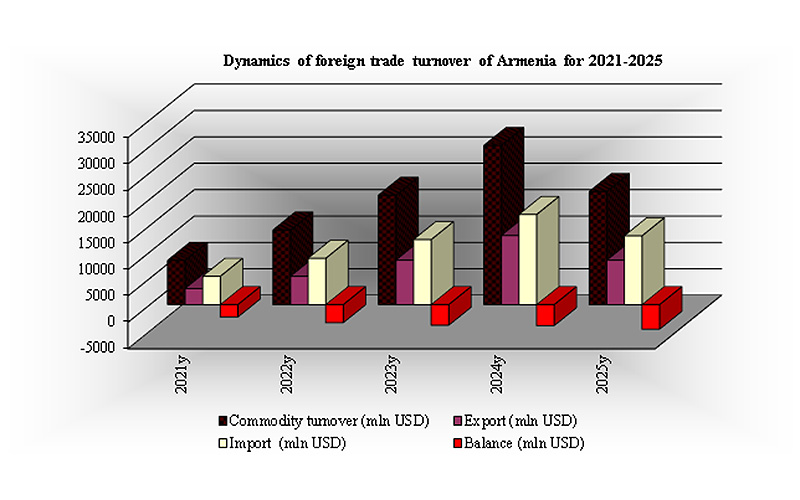
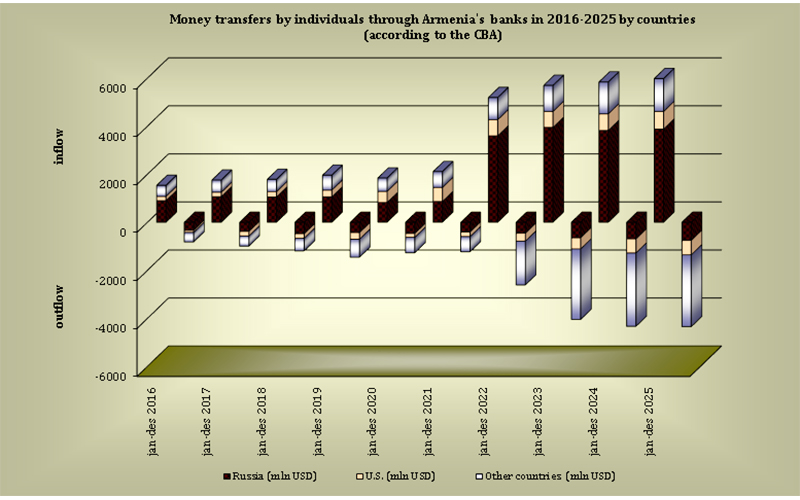
The negative developments in the Russian economy, observed since 2014, could not but affect the economy of Armenia. In particular, private transfers from the RF to the RA reduced by about 38% or $ 830 million, while the share of Russian transfers in the total volume of private transfers of the republic is about 80%.
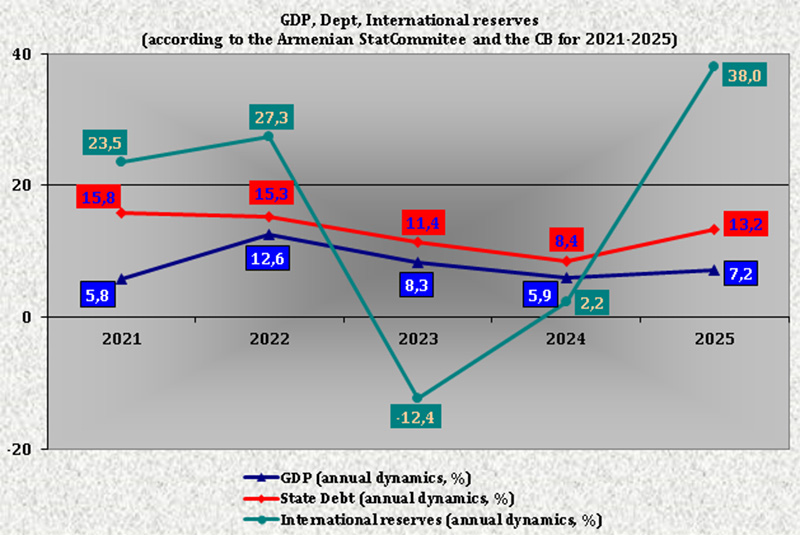
Against this background, the state debt, as the head of the Finance Ministry noted, certainly increased. But not increased the level of public debt, then the current year would have been marked not with a 0.2% GDP growth indicator, but with a negative one. The total state debt of Armenia by the end of 2016 increased to 54.5% of GDP and amounted to 2 trillion 876 billion AMD ($ 5 billion 942 million) or 56.7% of GDP, which is due to the growth of both external and internal debt. In the structure of external debt, 89.5% or $ 4.3 billion accounted for by the government, and the remaining 10.5% or $ 504.7 million - by the Central Bank. During the year, the national debt grew by 419.3 billion AMD or by $ 864.4 million. Already in 2017, according to the forecasts of the Ministry of Finance of Armenia, the figure will reach 56.2% of GDP - $ 6.250 billion. About $ 230 million was spent on servicing the national debt, from They $ 190 million - payments on the state's debt, $ 40 million - on the CB's debt. Debt payments in 2016 accounted for 9.4% of budget revenues, compared with 16% in 2015.
Capital investments compared to the year of 2015 in real terms decreased by 8.5% due to a real reduction in private investment by 12.1%. In order to mitigate the negative impact of the decline in private investment, a stimulating fiscal policy was implemented, as a result of which state investments in real terms recorded growth of 9.1%.