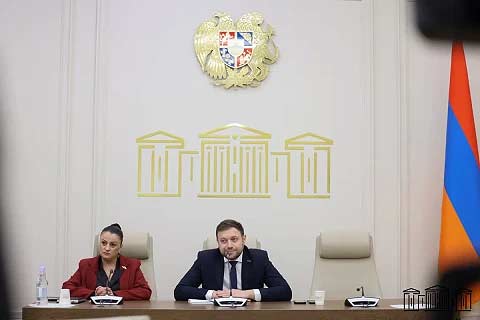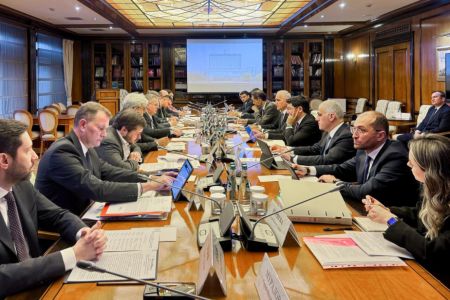


ArmInfo. At the March 4 meeting, with a reservation in the second and final reading, the Armenian parliament voted against the amendments to the law "On Energy".
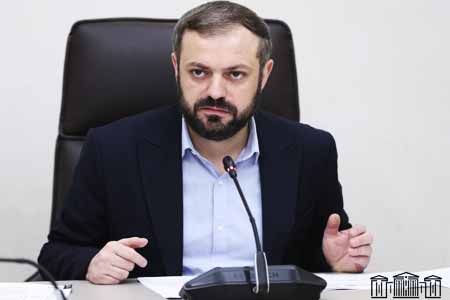
According to the co-author of the bill, the deputy of the National Assembly of the Republic of Armenia Artak Manukyan, who actually proposed to vote against the submitted document, the parliamentarians intend to return to the discussions of the amendments in the first reading after receiving and discussing the proposals and comments. It is proposed, in particular, to extend the Transparency Initiative to the sphere of Armenian energy. According to Artak Manukyan, the presented bill is intended to resolve issues related to ensuring transparency in the energy sector and identifying the real owners of small hydropower plants, hydro and thermal power plants. At present, as the deputy recalled, within the framework of the Transparency Initiative, measures are being applied to mining enterprises, the same measures are envisaged to apply to energy facilities. Artak Manukyan noted that if emphasis is placed on the logic of transparency, accountability in relation to public resources, then hydroelectric power stations, thermal power plants and other public resources are also in this classification. "And we proposed to make transparent information on the part of shareholders of those enterprises that produce electricity," Manukyan said. He added that the publication of the real owners of energy facilities is subject to owners owning at least 10% of the shares.
However, in the course of the discussion, questions arose regarding the beginning of the deadlines for the application of the bill and the proposed limit of 10%. According to deputies, a 10% indicator should be excluded altogether, as well as a review of the timing of the bill. For this reason, at the proposal of the authors of the bill, parliamentarians voted against in the second reading, leaving the document in its original form for the purpose of discussing the proposals received.
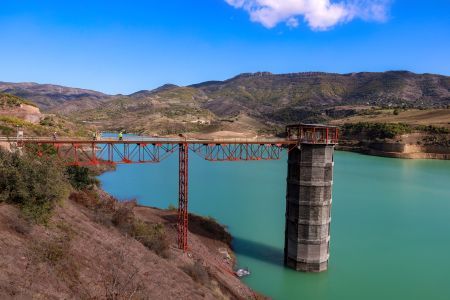
It should be noted that currently there are 185 small hydropower plants in Armenia, the real owners of which little is known to the public, information about them periodically appears in the media. So, according to available data, the former deputy from the previously ruling Republican Party Hakob Hakobyan and his brother own the Yeghegis 1 hydroelectric power station. A member of the Prosperous Armenia faction, Vardevan Grigoryan, also has a hydroelectric station. Regarding the three hydropower plants operating in the Hermon community, it is known that they are the property of the head of the Vayots Dzor Diocese, Bishop Abram Mkrtchyan, it is simply registered in the name of his brother and colleague. The owner of the hydroelectric power station is also the son of General Hovik Ohanyan - David Ohanyan. 50% of the Mina-Maya company, which operates two hydroelectric power stations on the Yeghegis River, belongs to the son of the brother of ex-president Serzh Sargsyan - Narek Sargsyan. The son of the former Prosecutor General and former chairman of the Investigative Committee, Aghvan Hovsepyan, Narek Hovsepyan also has a hydroelectric power station - he owns a stake in the Surb Hakhbyur hydroelectric power station. The former Minister of Economics Suren Karayan and his brother Hazhak Karayan, the son-in-law of former Prime Minister Tigran Sargsyan Hayk Suvaryan, have shares in the Vayots Dzor hydroelectric power station. Hayk Suvaryan is also attributed to the Gokhtanik hydroelectric station. Hydropower plants have former Syunik governor Surik Khachatryan, chairman of the Free Democrats party Khachatur Kokobelyan, former governor of the Lori region Henrik Kochinyan and many other former officials. The vast majority of hydropower plants have been built over the past decade. Until 1999, their number in Armenia did not exceed two dozen. From 1999 to 2008, during the presidency of Robert Kocharian, a permit was issued for 50 hydroelectric power stations. After 2008, when Serzh Sargsyan became the head of state, about 130 hydroelectric power stations have already been built, and today 185 small hydroelectric power stations operate on the rivers of Armenia.
Recall that the abuses committed by small hydropower plants were in the spotlight of the prosecutor general after the velvet revolution. Prosecutor's office I found out that most of the small hydropower plants operating in Armenia for many years worked with gross violations of the law, but the relevant officials of the Ministry of Nature Protection did not take measures to correct them. As a result, significant damage was caused to the legitimate interests of the state and the environment. And Prime Minister Nikol Pashinyan described the scope of the small hydropower plant as a "giant sphere for abuse.
"Extractive Industries Transparency Initiative (EITI) - is an international standard for transparency and accountability in the extractive industries, oil and gas. Armenia has become the 52nd country that is on the path to implementing the Initiative standards - March 9, 2017 in Colombian Bogota was Armenia's candidacy approved The Government of Armenia collaborates with the United States Agency for International Development (USAID), the World Bank (WB) and other structures in developing a transparency policy for the mining industry of Armenia.
EITI is a coalition of governments, companies, civil society, investors and international organizations. It was created in 2002 at the initiative of then Prime Minister of Great Britain Tony Blair at the conference on sustainable development in Johannesburg. The goal of the Initiative is to increase transparency and improve the quality of governance in the extractive industries through periodic publication of reports, compliance with standards and strengthening institutional capacity. As part of the Initiative, extractive companies should disclose the amount of their tax and non-tax payments to governments, and governments should publish reports on their income. The transparency of information on the amount of income achieved by EITI standards allows parliaments of countries, non-governmental organizations, as well as citizens themselves to control the activities of companies and the Government. Such civilian control will not only complicate abuse in this area, but will also contribute to more efficient development of countries as a result of improved economic conditions and more active attraction of foreign direct investment. As international experience shows, mining companies only benefit from greater transparency, thanks to the creation of equal and predictable economic relations. Today, EITI covers 52 countries that have submitted 332 fiscal reports, which brought profit to the budget of the participants of the initiative in the amount of $ 2.3 trillion.