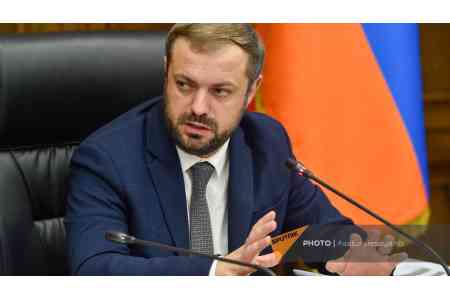
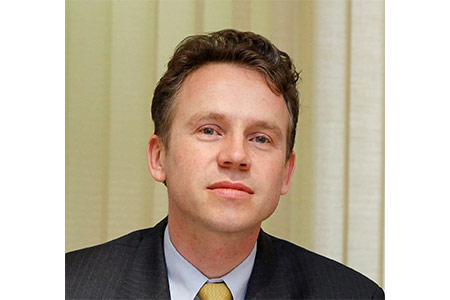
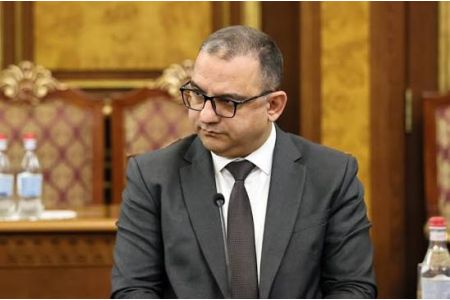
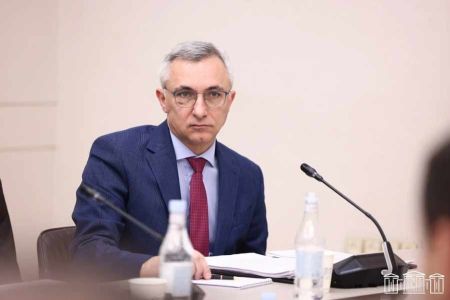
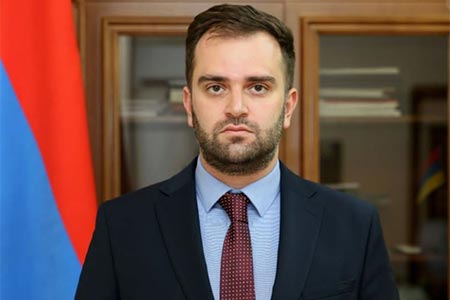
ArmInfo. From January 1, 2021, Armenian business entities developing mines will have to pay taxes on production waste. Minister of Environment of the Republic of Armenia Erik Grigoryan announced on January 9 at a meeting of the Parliamentary Inquiry Committee for Studying the legality validity and reliability of financial and other reports submitted to the bodies of executive power and adopted by them in the framework of investment programs in the area of industrial metal mining. According to him, from January 1, 2021, payments to the state budget will begin, which has never happened before. At the same time, the amount of taxes will vary depending on the degree of environmental hazards of the mine and will start from 40 thousand drams. Moreover, in this case we are talking about both polymetallic and non-metal mines.
The Minister also said that it is planned to begin to monitor the exported ore. The ministry proposes to establish a special point at customs where ore volumes and quality will be monitored, and laboratory tests will be conducted. In turn, the partners, according to the minister, offer to conduct research in international laboratories before the start of export deliveries. "In any case, everyone agrees with the need to control exports," Erik Grigoryan said.
He also said that the RA government is exploring the possibility of land reclamation in 10 tailing dumps out of 49, inherited from Soviet times. To solve this problem, about 14 billion drams will be needed, which will be provided for in the state budget of the country in 2021.
Instead of the 5th class hazard, the Ministry established a 4th hazard class for tailings. The existing legislative and regulatory acts also include such a thing as a sanitary zone.
The Ministry also intends to tightly control the real resources of a particular field. As an example, the minister cited one of such mines, where gold resources were estimated at 8 tons, after which they were increased at 35.6 tons, which turned out to be overrated, and the company that was developing the mine refused to further develop it and left his. As a result, the state suffered millions of dollars worth of damage. The draft law "On Environmental Impact Assessment" has also been submitted to the Prime Minister's office, one of the most important components of which will be an impact assessment before the start of large-scale work.
In general, as the minister noted, the task of the state will not be the application of penalties, but the prevention of the possible impact of a project on the environment - water, air, and land. In this regard, the work done will be monitored quarterly, which will be carried out in licensed laboratories. In case of violations, revocation of permits for the development of the mine is possible. It is also envisaged to revise land impact assessment. For these purposes, the base and cadastral value of land will be used, which will increase the volume of corresponding deductions by 50 times. If the specified volumes of water are exceeded, a fine of 2 drams per 1 cubic meter will be applied. Thus, the size of fines can reach up to 70 million drams instead of the current 50-60 thousand drams.
The Minister also touched on the situation around the Artsvanik mine, which developed by the Zangezur Copper-Molybdenum Plant. According to the minister, the company has already received $ 12.5 million for the development of the mine, however, the Ministry refused to expand the area of the company, demanding in return to solve a number of environmental issues. In particular, the company pledged to restore about 70 hectares of land. A criminal case has was opened on the fact of violation of water pollution in the Voghji River, and criminal cases were opened against Agarak copper-molybdenum mining and processing complex and the Teghut mine, where the condition for the restoration of 300 hectares of forests has not been fulfilled.
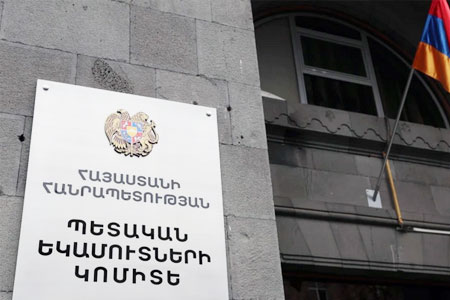
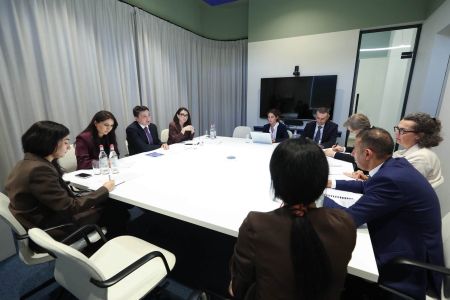
It should be noted that at the end of last year, Inquiry Committee for Studying the legality validity and reliability of financial and other reports submitted to the bodies of executive power and adopted by them in the framework of investment programs in the area of industrial metal mining was established in the Parliament of RA. The structure will operate for six months with the possibility of prolonging this period. The total budget for upcoming studies will be at least 100 million drams. Not only MPs will be involved in the work of the Committee, but also public organizations, the expert community, and international structures. The task of the parliamentary structure will be to conduct an investigation into the legality of the development of certain metal mines and the reliability of the declared investments.
The Committee's work will mainly be focused on conducting investigations at mines that have received public outcry - Teghut, Amulsar, Akhtala, etc. In 2017, companies engaged in the development of metal mineral mines invested a total of $ 235 million. No data for 2018. Meanwhile, as previously noted by the Ministry of Energy Infrastructures and Natural Resources of the Republic of Armenia (currently the Ministry of Territorial Administration and Infrastructures, Ed.) according to the licenses granted, about 3 billion drams will be invested in geological development over the next three years. In contrast to the extraction of metal ores, the volumes of which did not undergo significant changes last year, the output in total terms replenished by 30%, which is associated with an increase in world ore prices.
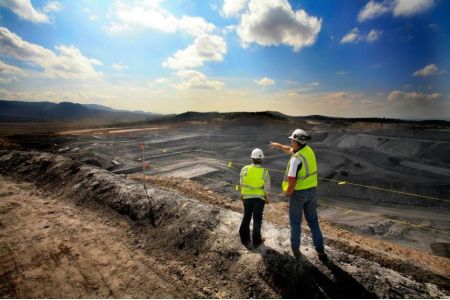
It should be noted that on the state balance of mineral reserves at present more than 670 mines of solid minerals with confirmed reserves, including 30 metal, are registered. About 400 of these d mines are developed, including 23 metal ones. There are 7 copper-molybdenum mines, 4 copper, 14 gold and gold- polymetallic mines, 2 iron ore and 1 aluminum ore in metallic minerals. Immediately after the "velvet revolution" and the change of power in the country, massive actions began in Armenia aimed at hindering the activities of mining companies.