ArmInfo.The International Monetary Fund (IMF) forecasts a drop in Armenia's GDP in 2020 at 1.5%. The negative GDP forecast is associated with restrictions on internal mobility and activity due to the COVID-19 pandemic, a significant decrease in external demand, tightening financial conditions and due to disruptions in global trade and supply chains.
This is stated in the IMF press release, which presents the results of discussions held from March 12 to April 8 by the IMF group led by the head of the IMF mission in Armenia Nathan Porter.
The budget deficit of Armenia in 2020, according to the IMF, will increase to almost 5% of GDP, due to lower revenues and increased spending on health and economic support. The national debt of Armenia, according to IMF forecasts, will exceed 60% of GDP in 2020.
"As elsewhere, the current global crisis will significantly weaken Armenia's near-term economic outlook. Although projections are subject to very high uncertainty, since the duration of the containment measures is hard to predict, economic growth is expected at -1.5 percent in 2020 given COVID-related restrictions on domestic mobility and activity, substantially lower external demand, tighter financial conditions, and disruptions in global trade and supply chains.
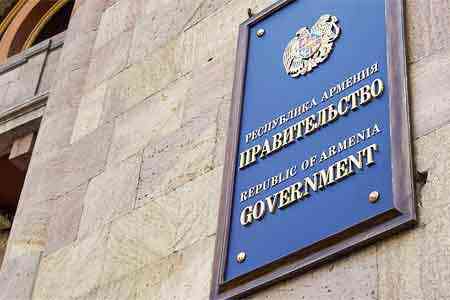
"The authorities are appropriately focused on measures to contain the spread of COVID- 19 and ensure that Armenia's health system is ready to meet the needs of the population. They have been working to equip the Ministry of Health with additional resources and legislative powers to expeditiously acquire necessary goods and equipment. Staff also welcomes the authorities' economic policy response aimed at aiding businesses and vulnerable people in order to avoid more permanent socio- economic damage. This response is framed around a set of measures announced to be about 2 percent of GDP that include liquidity provision to businesses, direct labor subsidies, and lump sum transfers to vulnerable individuals. The authorities are committed to ensure strong governance and transparency in implementation of these programs. Staff encourages the authorities to continuously monitor the implementation of these measures to ensure their effectiveness and evenhanded coverage'', Nathan Porter stated.
"The fiscal deficit in 2020 is expected to widen to about 5 percent of GDP, due to lower revenues and higher spending on healthcare and economic support. The emerging financing gap would be closed by mobilizing financing from the IMF (increasing the Stand By Arrangement to 280 mln USD) and other partners to complement that available from domestic capital market. While the government debt is projected to exceed 60 percent of GDP in 2020, as the crisis abates, the authorities are committed to the medium-term fiscal goal of debt sustainability, which will see government debt-to-GDP gradually decline over the medium term in line with Armenia's fiscal rule, while maintaining space for investment and social spending.
"The Central Bank of Armenia has moved quickly to respond to the COVID-19 crisis within its dual mandate of price and financial stability. It promptly reduced the policy rate to boost inflation and support economic activity, yet it stands ready to adjust policies in case of capital outflow pressures and disorderly exchange rate movements to preserve financial stability. Domestic financial markets have generally functioned smoothly since the onset of the pandemic helped by CBA liquidity provision. The CBA's regulatory and supervisory responses have been appropriately balancing the goals of preserving financial stability, maintaining banking system soundness, and sustaining economic activity'', Porter added.
"Beyond the short term, staff welcomes the authorities' intention to continued economic reform aimed at lifting inclusive and resilient growth, safeguarding social spending, bolstering financial sector resilience, and enhancing business climate and governance."
Meanwhile, the IMF's previous forecast, published long before the spread of COVID, provided for Armenia's GDP growth of 4.5% in 2020. To note, updated in March this year the forecast of the Central Bank of Armenia forecasts a slowdown in GDP growth in 2020 to a stagnant 0.7%. And Fitch in its April report predicted a slowdown in Armenia's GDP growth in 2020 to 0.5%.