


ArmInfo. The Armenian government forecasts a negative economic growth of 2% and a budget deficit of up to 5% of GDP. This was announced today by RA Minister of Finance Atom Janjughazyan, presenting the amendments to the budget for 2020 approved by the Cabinet of Ministers, dictated by the uncertainty caused by the COVID-19 pandemic.
According to the head of the Ministry of Finance, it was impossible to predict the current developments, as it was impossible to foresee unforeseen expenses. For this reason, it is proposed to amend the law, which will give the go-ahead to increase public debt and the state budget deficit. It is also planned to increase allocations to the government's reserve fund.
As Janjughazyan reminded, additional funds related to overcoming the coronavirus crisis will amount to about 150 billion drams, 25 billion of which will go to direct payments to socially disadvantaged groups of the population, about 25 billion will be directed to maintain current liquidity to the crisis-affected households, about 80 billion will be aimed at implementing long-term development programs, and 20 billion will remain at the disposal of the government as reserve funds, which, if necessary, can be spent on new measures to mitigate the situation. ''The scenario that was considered today in the government is instead of the 4.9% real growth of the economy programmed in the previous document, its negative value at the level of 2%. These are our forecasts, which suggest changes in the nominal volume of GDP and, accordingly, will be reflected in the adjustment of budget parameters. This means reduction of the volume of the economy>, the minister emphasized.
According to him, if the initial budget document provided for an absolute volume of GDP of 7,095 billion drams, now it was reduced to 6,485 billion due to the projected decrease in budget revenues by 169 billion drams. The Minister at the same time recalled that 94% of revenues to the treasury comes from taxes, therefore, with a decrease in activity, a forecast for their loss becomes inevitable. However, as Janjughazyan said, the government intends to pursue an active counter-cyclical broad fiscal policy, within which it does not intend to cut costs, which could aggravate the situation, but rather significantly increase costs, including capital expenditures of the budget. This will become possible both through the use of non fully spent capital investments for the past 2019 in the amount of 133 billion drams, as well as through the attraction of new loans from abroad and the domestic market of state loan obligations (bonds). The Minister noted that the government does not consider issuing new Eurobonds due to unfavorable external conditions.
In this regard, the minister informed that the total amount of expenditures will be 1 855 billion drams, which is only 5 billion lower than the budgeted figure, but without taking into account last year's savings.
<We decided to take a pragmatic approach to the issue, because except for the scenario for increasing the state debt, no one would provide funds to the country for all the intended expenses. It was important to calculate how much our economy can absorb financial resources, finding a balance so as not to unnecessarily increase the country's debt burden on the one hand, and on the other hand, not being able to effectively spend these debt funds that need to be serviced. In any case, we remain among the countries with average debt burden, although we will increase the national debt both in absolute and in comparative terms, "Janjughazyan said.
As the minister noted supposedly, the new document on amendments and additions to the 2020 budget will be more flexible to enable the government to act according to the situation, and on the other hand it will have certain restrictions related to the budget deficit.
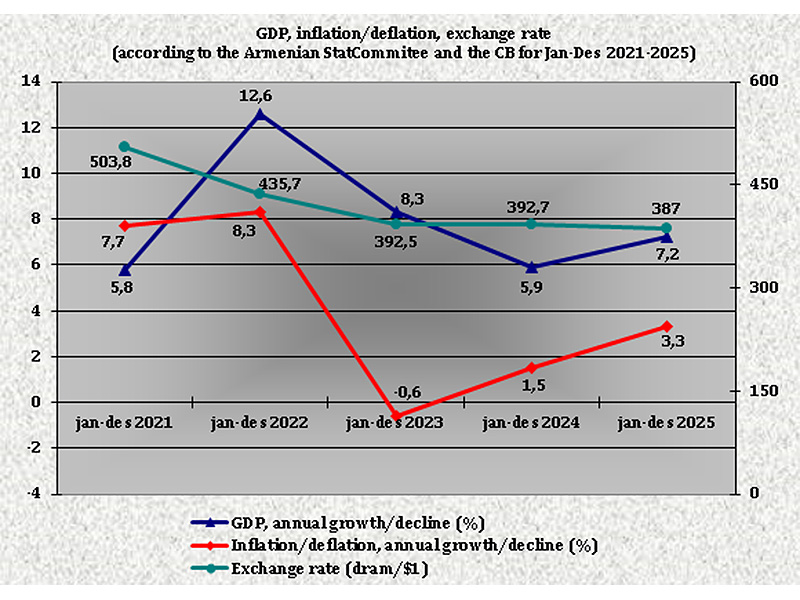
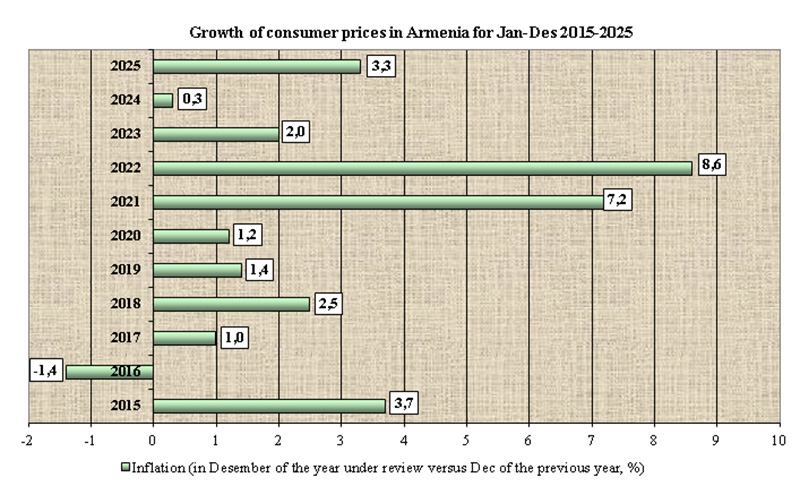
Janjughazyan also recalled that 2019 was a successful year in terms of economic growth of 7.6%, while the structure of the economy began to change for the better. The growth rates of the processing industry have been outlined. The average annual inflation rate was 1.4% with an increase in the average wage level of 5.8%. Moreover, the average salary in the private sector grew more slowly than in the public sector, although so far it is 15-20% higher than the average amount than in the public sector. He also recalled that at the end of 2019, the country's national debt amounted to 7 billion 324 million US dollars, the share of government debt amounted to 6 billion 839 million dollars, or about 50% of GDP