ArmInfo. The volume of industrial production in Armenia in January-May 2020, against the same period a year ago, slowed down the y-o-y growth rate - from 5.6% to 2.4%, which was due to the subsidence of manufacturing production volumes. So, according to the Statistical Committee of the Republic of Armenia, during the reporting period, the industrial production volume of Armenia amounted to 735.6 billion drams ($ 1.5 billion). In May alone, the Armenian industrial sector grew by 11.9% (after the April decline of 9.2%) to 150.4 billion drams ($ 310.6 million), with an y- o-y decline of 3.9%.
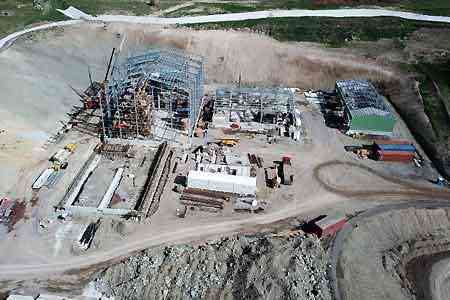
In January-May 2020 to the same period of 2019 the mining industry and quarrying recorded an increase of 25.7% to 147.7 billion drams ($ 305.2 million), against 2.5% a year earlier. In May of this year alone, growth in the mining industry slowed to 9.9% from April 12.9%, with a volume of 32 billion drams.
At the same time, the volume of manufacturing industry decreased by 3.4% per annum in January-May, 2020 (against the growth of 8.2% a year earlier), amounting to 471.1 billion drams ($ 973.5 million). In May, the volume of the manufacturing industry amounted to AMD 100.3 billion, with a yield of growth of 17.5% (after the April decline of 15%), but at the same time, a decline of 9.4% is recorded in y-o-y terms.
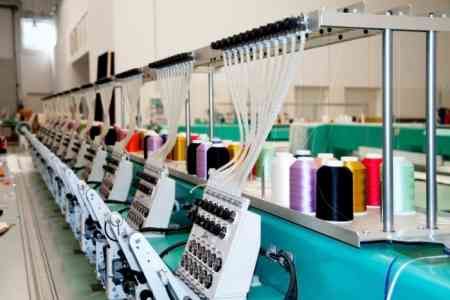
A decrease in production in the manufacturing industry was recorded in almost all directions in January- May 2020. In particular, in the production of drinks (by 7.2%), cigarettes (by 19%), textiles (by 31.9%), clothing (by 17.1%), printing and reproduction of recorded media (by 17, 2%), rubber and plastic products (18%), other non-metal products (6.9%), base metals (0.9%), computers, electronic and optical equipment (33.2%), electrical equipment (by 24.1%), machinery and equipment (by 25.6%). Production growth was recorded in food production (by 1.6%), pharmaceuticals (by 18.6%), chemical industry (by 17%), furniture (by 29.9%), jewelry (by 49.1%), finished metal products (by 49.8%).
In the manufacturing sector, food products (161 billion drams), base metals (74.7 billion drams), cigarettes (58.3 billion drams), and drinks (57.5 billion drams) are leaders in terms of production volumes.
The supply of electricity, gas, steam and air conditioning for January-May 2020 showed a 3.4% increase over the same period in 2019, ensuring the volume of 108.6 billion drams, while in May alone a decrease of 9.4% was recorded - up to 16.5 billion drams. Including generation, transmission and distribution of electricity in January-May increased by 2.3% per annum (with a monthly decline of 8.5%), while gas production, distribution of gaseous fuels through gas supply systems increased by 8.5% (with a decline in May by 15.4%).
Revenues from water supply, waste treatment and processing and the producing of secondary raw materials decreased in January-May by 20.7% per annum - to 8.2 billion drams, while an increase in May by 0.5% to 1.6 billion drams.
Moreover, the decline (by 73%) in this segment was mainly due to the collection, processing and destruction of waste, the producing of secondary raw materials.
It should be noted that in 2019, the industrial sector of Armenia accelerated the growth of volumes to 9%, amounting to 2.1 trillion drams ($ 4.4 billion), against slowdown in 2018 to 4.3% from 12.6% in 2017. The acceleration of growth was triggered by the trend of the mining sector from a 14% decline to 23.9% growth, while the growth of the manufacturing industry slowed down from 10% to 7.6%. To recall, in order to prevent the spread of coronavirus infection in Armenia, a state of emergency was introduced on March 16, which was to last until July 13, but there is a high probability of an extension of another month. Within the framework of the emergency, a ban on many types of economic activities was introduced, which, despite the gradual relaxation of these restrictive measures, and since May 18 the complete lifting of the ban, negatively affected macroeconomic indicators. Moreover, international air, rail and bus services have not yet been resumed, which has a direct impact on the tourism industry and related segments. And the extremely high uncertainty of the coronavirus situation further exacerbates expectations in the direction of the negative scenario.