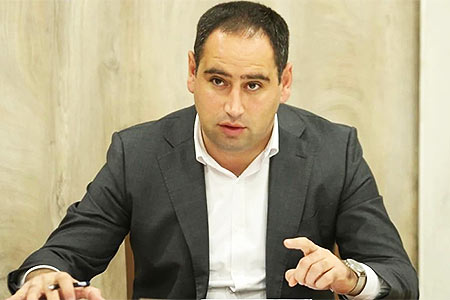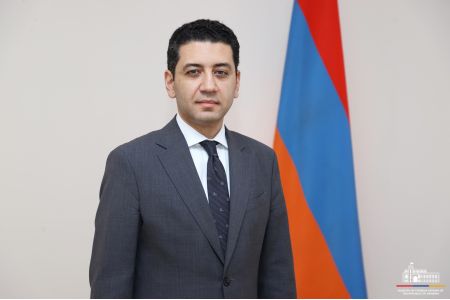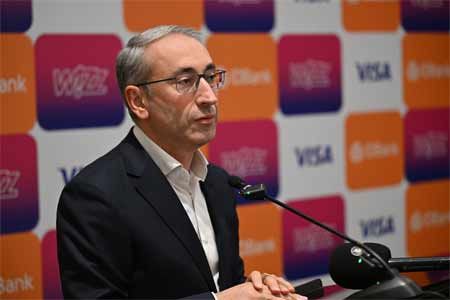
ArmInfo.The issue of extending the embargo on imports of Turkish goods to Armenia for another 6 months is currently being discussed. Deputy Minister of Economy Avag Avanesyan stated this in an interview with reporters on March 22.
Answering the relevant question, he stated that according to the procedures of the Eurasian Economic Union, the embargo can be imposed for a six-month period, and then, if necessary, extended for the same period. At the same time, he added that this issue is now on the agenda. Clarifying whether Armenia is able to extend this embargo, or whether its economic condition does not allow it, Avanesyan said that at the moment it is difficult to assess the economic losses. "In any case, we do not feel a catastrophic blow yet. In our country, the negative consequences from COVID-19 are so great that they seem to drown out the remaining possible effects. That is, it is sometimes very difficult to say whether consumption has decreased due to COVID, or because of the embargo, "the deputy minister said, adding that Armenia has the potential to produce those types of goods that are banned, or there are countries from which it will be replaced. Referring to new investments, he said that at the moment several are being discussed - from ideas to specific projects, but now he cannot say how many there are.
Clarifying whether there were investors who reconsidered their intentions after the hostilities, Avanesyan pointed out that today the entire region is experiencing a lack of investment. "Of course, there was a war, which in turn creates certain risks for a potential investor. This is obvious. And today's policy should be aimed at minimizing current economic risks. Now we are discussing this - starting from such tools as targeted support for investment projects and ending with the provision of infrastructures ", Avanesyan said.
Speaking in general about the deterioration of the investment environment, he once again emphasized the obviousness of this fact, but assured that in Armenia it has worsened no more than in Azerbaijan. "It has worsened both in Azerbaijan, and in our country. There was a war and it takes time to reassure investors," he said, assuring that in the long term Armenia has potential for growth, and it is still interesting for investors.
At the same time, he believes that in order to eliminate short-term risks, it is necessary to raise the awareness of potential investors, to reassure them.
It should be noted that since December 31, 2020, an embargo on the import of goods from Turkey has been in effect in Armenia in connection with the aggression unleashed by Azerbaijan and Turkey in Artsakh. The ban is valid from December 31, 2020 for a period of 6 months. On December 25, 2020, the State Revenue Committee of Armenia informed that the ban will not apply to goods imported before December 31, only if all the necessary customs operations are carried out with respect to these goods by the specified date, in particular, they will be declared under the customs procedure.
The SRC recalled that the import ban applies to all goods of Turkish origin specified in the list, imported from all countries - Turkey, Georgia and others, including the EAEU member states. From now on, commercial documents for goods should be marked with the country of origin and (or) at the request of the customs authority present a certificate or declaration of the country of origin. The department warned about the strengthening of customs control over these goods, including physical examination from cameras installed in places of customs control. Note that many Turkish brands in such areas as electrical goods and textiles are still operating and have their own stores and even entire retail chains in Armenia. The ban does not apply to them, since they do not formally belong to Turkey and are registered in third countries.