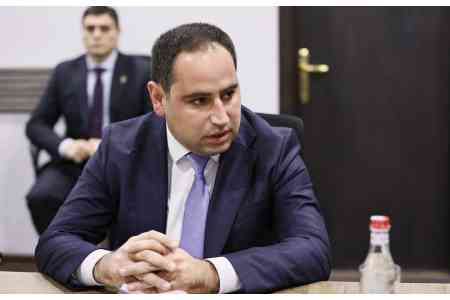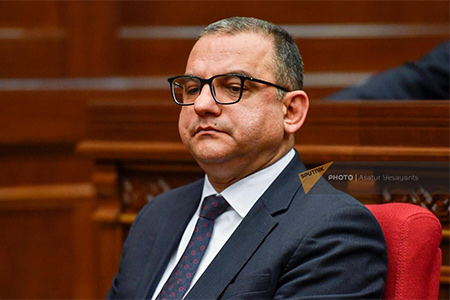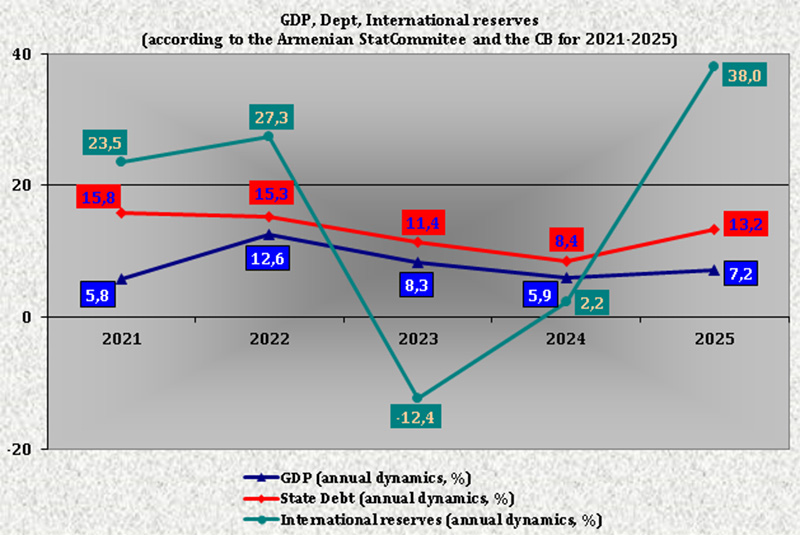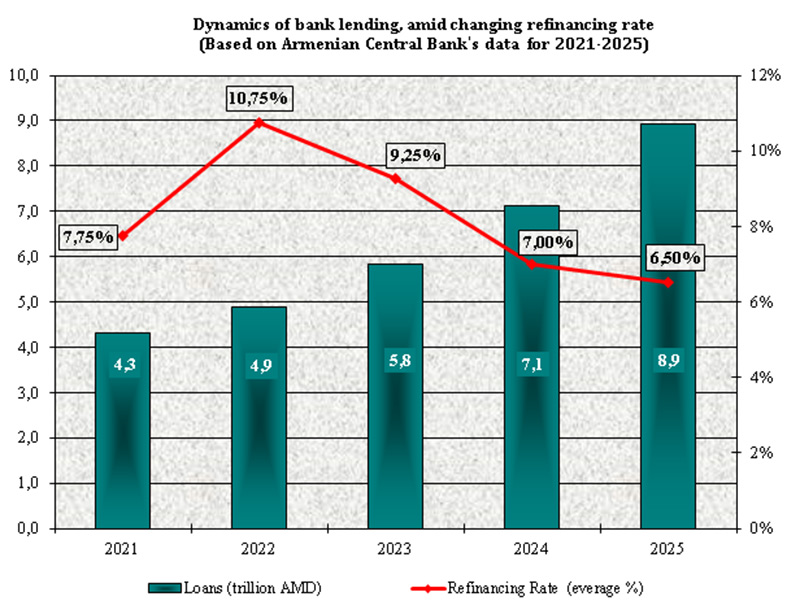



ArmInfo.The Central Bank of Armenia improved its forecast for GDP growth for 2021 to 4.6% (from the previously projected 1.4%). This was announced on June 15 at a press conference timed to increase the refinancing rate from 6% to 6.5%, Central Bank Chairman Martin Galstyan said.
He noted that the drivers of the projected growth will be the service sector and the industrial sector, with an increase in growth of 6.1% and 4.5%, respectively, and to a slightly lesser extent - the agricultural sector with an acceleration of growth to 2.3%. In the construction sector, the Central Bank predicts a slowdown in the decline to 0.2%. M. Galstyan also identified the activation of tourism among the factors pushing the GDP to higher growth.
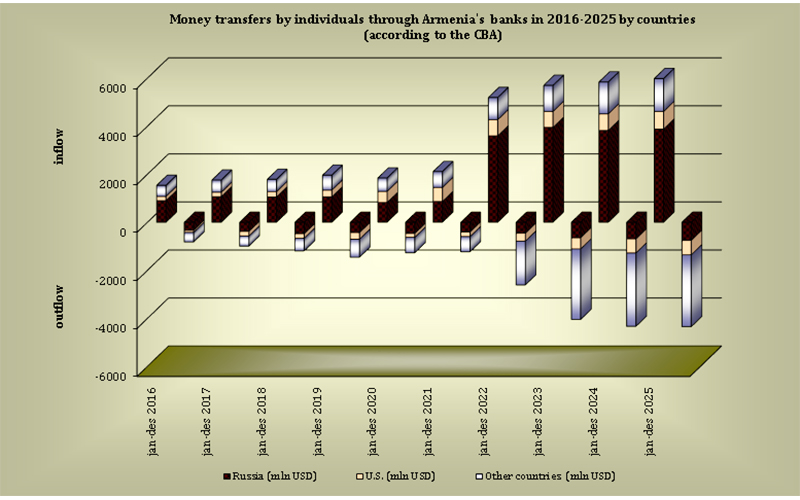
When asked by ArmInfo about the forecast of remittances of individuals, the chief banker replied that the growth range for 2021 has been revised from the previous 7-9% to the updated 15-17%. At the same time, drawing attention to the very high growth in the inflow of private transfers from the United States, he said that the previous growth rates of the inflow of remittances from Russia will recover and the preconditions for this are already visible in the current dynamics.
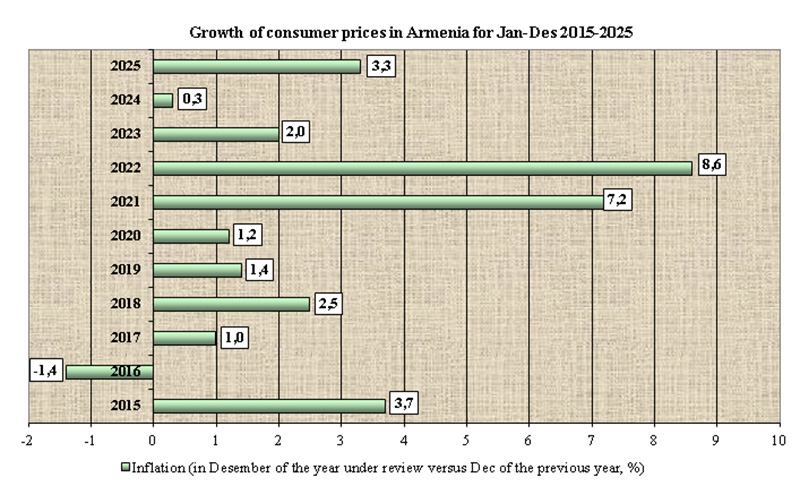
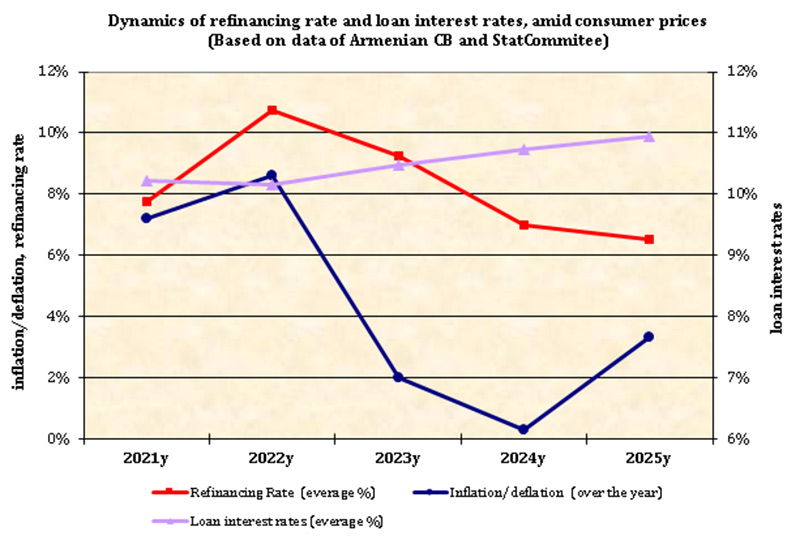
When asked by ArmInfo about the projected real inflation, M. Galstyan replied that by the end of 2021 (December against December 2020) the level will increase to 7% from 3.6% in 2020. He explained that growth will be observed in the short term, and in the medium term, inflation will correct near the target threshold of 4% (+/- 1.5). At the same time, he noted that in May 2021 compared to May 2020, real inflation reached 7.4% with official inflation of 5.9%, against 0.9% and 1.2%, respectively, a year earlier.
To note, according to the updated forecast of the World Bank, GDP growth in Armenia in 2021 will be 3.4%, accelerating to 4.3% in 2022 and 5.3% in 2023. Moreover, in the sectoral breakdown, the WB expects accelerated growth in 2021-2022 in the agricultural sector - from 1.3% to 2.2%, in the industrial sector - from 1.2% to 2.4%, in the service sector - from 5.1% to 5.8%. The World Bank predicts inflation in Armenia at 3.5% in 2021 with a slight increase in 2022 to 3.8%. In Russia, the WB forecasts GDP growth of 3.2% for 2021, maintaining this rate in 2022 and a subsequent slowdown in 2023 to 2.3%. For the US economy, the World Bank predicts growth by 6.8% for 2021 with a slowdown to 4.2% in 2022 and 2.3% in 2023.
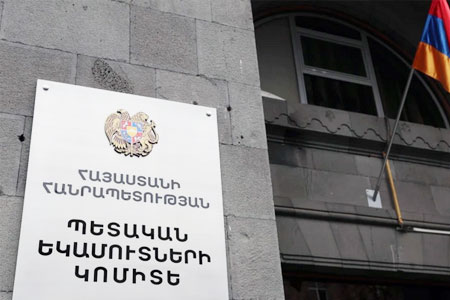
It should be reminded that according to the data of the RA Statistical Committee, the decline in Armenia's GDP in 2020 amounted to 7.4%. In particular, the decline in the service sector was 14.7%, the trade sector - 14%, the construction sector - 9.5%, the industrial sector - 0.9%, and the growth of the agricultural sector was 1.4%. Official inflation in January-December 2020 amounted to 3.7%, against inflationary 0.7% in January-December 2019.
According to the Central Bank of Armenia, the net inflow of transfers from individuals grew in January- April 2021 by 80% per annum (from a 19% decline a year earlier), which was largely supported by a multi- fold increase in remittances from the United States, with a moderate increase in transfers from Russia ... In total, the inflow of transfers from individuals to Armenia turned the annual dynamics in January-April 2021 towards 29.1% growth, amounting to $ 573.5 million. A similar improvement in the trend was observed in the outflow of transfers - a reversal towards 12% growth, with a volume of $ 370.3 million. In the inflow, the share of Russia, despite the decline, continues to dominate at 38% (January-April 2021), while increasing in outflow to 32.7%, while the share of the United States in inflow and outflow increased to 29% and 15.4%, respectively.