


ArmInfo.Inflation in Armenia is largely driven by supply rather than demand, as well as by the recent increase in vegetable prices (by 66.4% per annum in August), which in turn is due to an increase in export supplies of vegetable crops.
Governor of the Central Bank of Armenia Martin Galstyan stated this at a press conference on September 14. At the same time, he pointed out an important factor to which the Regulator is especially attentive. "This is demand. In the first half of the year, private consumption in Armenia increased by 5.9%, while private investment decreased by 6%. That is, demand is progressively growing with limited production opportunities, which also contains inflationary phenomena. We also notice that this is manifested in a certain rise in prices for domestic services as well," M. Galstyan said.
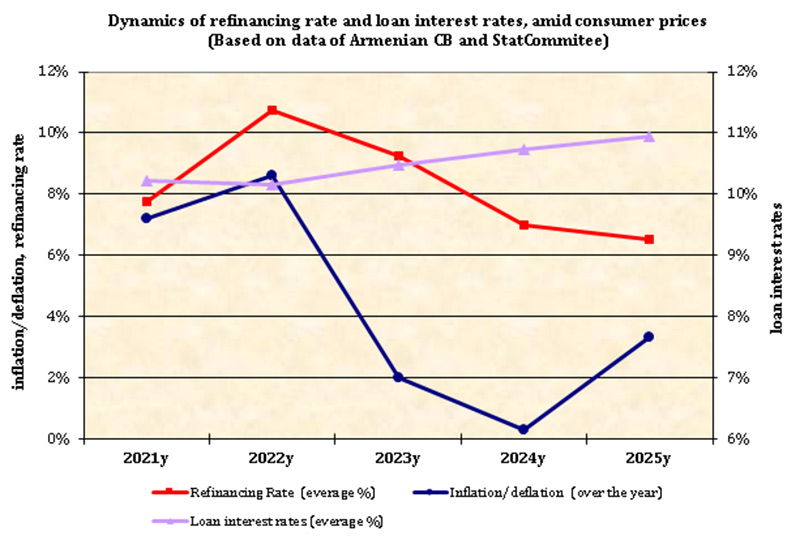
He also noted that the Central Bank, by its actions, is trying to convey a message to the public that in 2022 it will be possible to return to the target inflation threshold (4%), and now work is underway to fulfill the task of "anchoring" inflationary expectations.
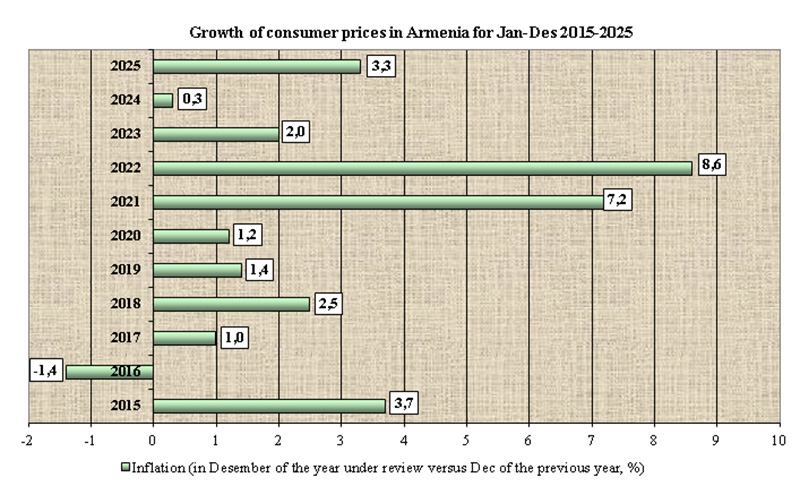
To note, in Armenia in August 2021, the official y-o-y inflation calculated by the Statistical Committee exceeded the y- o-y real inflation calculated by the Central Bank - 8.8% against 8%, respectively. The difference in the calculation methodology is that the Central Bank calculates real inflation seasonally adjusted for a separate list of goods and administratively regulated services.
According to the Statistical Committee of the Republic of Armenia, prices for food products (including alcohol and cigarettes) in August 2021 compared to the same month of 2020 increased by 14.5%, for non-food products - by 9.4%, and tariffs for services - by 1. 8%. Moreover, in the group of food products, the most noticeable rise in price in y-o-y terms was observed: vegetables - by 66.4%, sugar and granulated sugar - by 36.2%, vegetable and animal oils - by 29.1% (with an increase in prices for sunflower oil by 61.9%), fish and seafood - by 25.5% (with an increase in prices for trout by 29.3%), dairy products, cheese and eggs - by 12.2% (with an increase in prices for eggs by 46, 5%), cigarettes - by 10.4%, meat products - by 9.9% (with an increase in pork prices by 40.3%), and alcohol - by 8.7%.
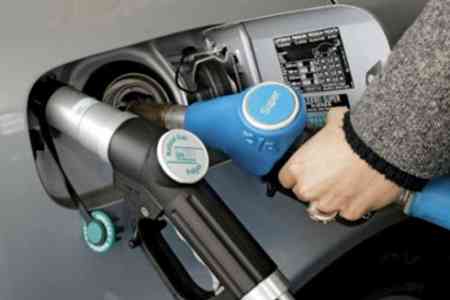
Among non-food products, gasoline and diesel fuel rose most significantly in August - by 47.5% and 44.3% per annum, respectively, and in 8 months of this year alone - by 35.1% and 41.7%. The growth of tariffs for services in August especially distinguished the transport sector - by 10% per annum, and healthcare - by 5.3% per annum, against which the restaurant / hotel business and the education sector looked more modest with a rise in the price of services by 2.6- 2.1 %.