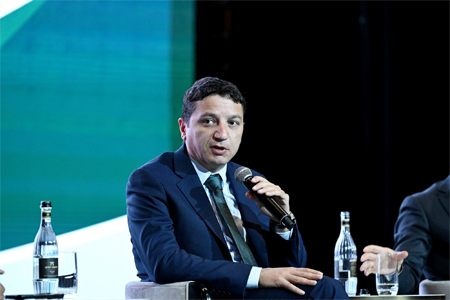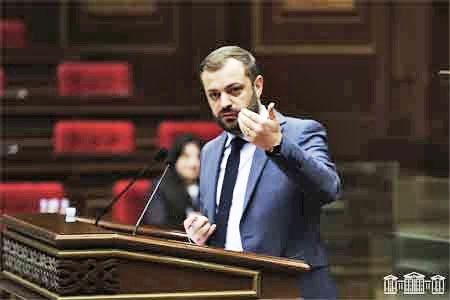


ArmInfo. The Armenian authorities raised a very expensive external debt at the beginning of the year to curb inflation and devaluation of the Armenian dram instead of investing in the economy. On December 6, MP from the opposition "Hayastan" faction Artur Khachatryan stated this in the National Assembly, referring to the main macroeconomic indicators laid down in the draft state budget of the republic for 2022.
The MP recalled that the state budget approved for 2020 envisaged raising additional debt from internal resources, but at the beginning of the year, the Republic of Armenia placed on the international capital market the 4th tranche of 10-year debt securities (bonds) in the amount of $ 750 million. According to the revised state budget of the Republic of Armenia for 2021, net financing of the state budget deficit through government bonds in foreign currency was envisaged in an amount equivalent to USD 500 million (AMD 241.9 billion).
At the same time, as stated in the draft state budget, the issuance of additional bonds in foreign currency in the amount of USD 250 million was the result of a favorable situation on the international capital market, high demand for bonds and low bond yields, and the excess amount received from the placement of foreign currency bonds in the amount of 136.8 billion drams, was directed to replenish the deposit stabilization account.
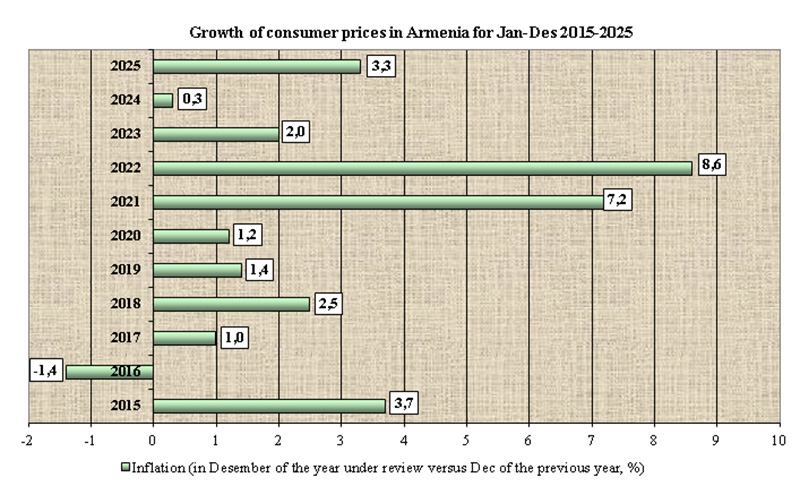
"That is, we borrowed money, and it's expensive and they convert it right away. And if you have a question about how it happens that the Armenian dram is relatively stable, then look for the answer here - we attracted external debt in order to curb the devaluation of the dram. If it were not for this, then the inflation rate that has been recorded today (the industrial product price index increased in January-October 2021, against the same period in 2020 by 9.9%, ed. note), would have been much higher, "Arthur Khachatryan explained. The rest of the funds, as the MP pointed out, instead of investing in the economy in the form of drams, were left inactive in the deposit account, or sent to stabilize the national currency.
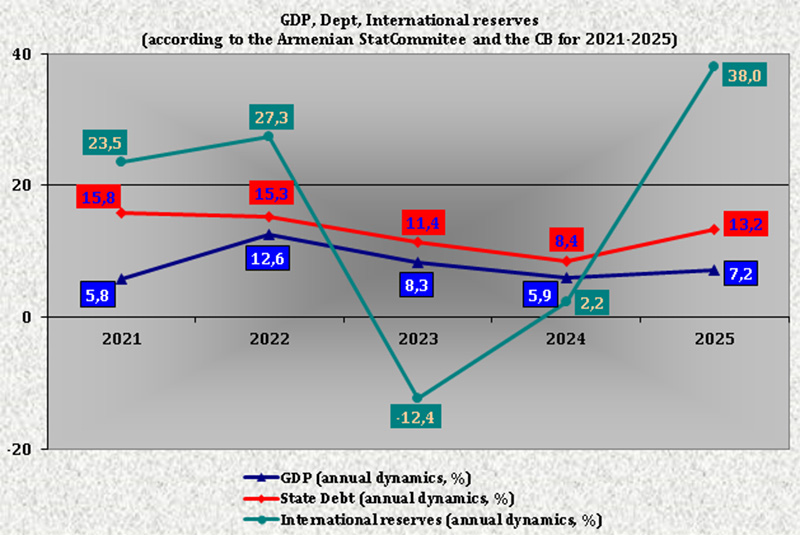
To recall, over 10 months of 2021, Armenia's public debt increased by about $ 1.241 billion, reaching $ 9 billion 209.2 million. In 2025, Armenia will have to allocate almost $ 1.4 billion to pay off and service the government debt (excluding the debt of the Central Bank of Armenia), formed at the end of October 2021. Thus, according to the data of the Ministry of Finance of Armenia, the state debt of the Republic of Armenia is from $ 7 billion 968, 5 million, formed by December 31, 2020, by October 31 of this year increased by 15.6% or $ 1bn. 240.7 million. At the same time, over its 28-year history (since Armenia gained independence), the Republic of Armenia has attracted borrowings in the amount of about $ 6.8 billion, and over the past three and a half years, it "managed" to increase the national debt by $ 2 billion 342 million.
In January-October 2021, the government debt increased from $ 7 billion 508.5 million (by the end of 2020) to $ 8 billion 734.9 million - by about $ 1 billion 226.4 million, or 16.3%. External debt (debt obligations of Armenia to international organizations and foreign states, funds received from the emission of Eurobonds) increased from $ 5 billion 599.5 million to $ 6 billion 232.5 million by 11.3% or by $ 663 million. In particular, on January 26 of this year, Armenia placed among international investors, the 4th issue of 10-year debt securities in the amount of $ 750 million. The established annual yield of the bonds of the 4th issue was lower than the yield on the 3rd issue in the amount of $ 500 million - 3.875% (coupon rate was 3.6%) against 4.2% in 2019, 7.5% in 2015 for the amount of $ 500 million and 6.25% in 2013 (in the amount of $ 700 million with a maturity of 7 years. (The securities were repaid by September 30, 2020). According to the Bloomberg information system, investor demand for Armenian debt securities in 2021 exceeded $ 2.5 billion. The initial target for the yield of Eurobonds to maturity in February 2031 was 4.375-4.5% per annum. The main underwriters of the 4th tranche securities were: City Bank, J.P. Morgan Securities plc. and HSBC Bank Plc.
As ArmInfo previously reported, with reference to the Strategic Program for Government Debt Management for 2022-2024, it is until the moment of payments on the state debt in 2025 that Armenia plans to carry out the next and fifth tranche of Eurobonds in the international market in 2024. The funds received from the emission of Eurobonds will be used to buy back bonds of 2025 maturity. Meanwhile, as evidenced by the data of the RA Ministry of Finance on the schedule of repayment and servicing of government debt until 2053, the state budget of Armenia will have to be "tested for strength" both in 2025 and in 2029 and 2031. Then the financial system of the republic will have to "lay out" about $ 1.3 billion.
According to the draft state budget for 2022, 2021 Armenia, in the conditions of ensuring 6.5% GDP growth (the state budget provides for an economic growth of 3.2%), will close with government debt at the level of 60.8% of GDP, and the future the year the indicator will decrease by another 0.6 percentage points. (if GDP grows by 7%). Armenia's public debt will increase by 482 billion drams and reach 4 trillion 991 billion drams (63.4% of GDP), from 4 trillion 509 billion drams or 64.1% of GDP expected by the end of 2021. By December 31, 2022, the government debt will be reduced by 0.6 pp and will amount to 4.740 billion drams and 60.2% of GDP (about $ 9.603 billion). By the end of the current year, the financial authorities expect an increase in the indicator to 4.274 billion drams (about ($ 8.656 billion) and 60.8% of GDP. Thus, the increase will be about $ 947 million (the estimated exchange rate of the Armenian dram to the dollar is 493.6 drams).
As a result, next year Armenia will direct about 10% of all state budget expenditures or 2.7% of GDP only for servicing the government debt. In 2022, 517.2 billion drams (about $ 1.048 billion) will be required to service and repay the government debt, of which 302.8 billion drams (about $ 613 million) will be debt repayments, and 214.4 billion drams - interest payments (about $ 434 million against 185.5 billion drams this year). In 2022, the weighted average interest rate on government debt will be 5%, up from 4.6% in 2021.