ArmInfo. The Russian-Ukrainian war and sanctions against the Russian Federation have caused great volatility in the region's financial markets. In terms of the possible impact on Armenia's economy and financial system, the Central Bank has collected possible potential questions and tried to answer them. This is mentioned in the message of the Central Bank of Armenia, presenting the answers to the 8 most important questions.
1. How will the disconnection from the SWIFT system affect the Armenian banking system?
- The SWIFT system is an international interbank system for exchanging information on financial transactions and making payments according to international standards. Disconnection from SWIFT does not apply to all banks in the Russian Federation, mainly large banks fell under this sanction. Armenian banks are free to conduct their operations through other Russian banks. In addition, Armenian banks can exchange information about transactions in an alternative way, which will ensure the smooth conduct of financial transactions. At the same time, the Central Bank of Armenia states that it has no information that the sanctions may affect non-commercial money transfer systems.
2. How will financial transactions be carried out between Russian and Armenian enterprises?
- The technical aspect of financial transactions is described above. The economic conditions for carrying out transactions (currency, bank accounts, etc.) should be carried out on the basis of an additional agreement between business entities, their foreign partners and servicing banks. All banks in Armenia are making efforts to identify possible problems and eliminate them. The Central Bank of the Republic of Armenia considers the listed problems to be solvable and assesses them as insignificant risks for financial stability.
3. How will the sanctions against Russia affect the Armenian economy?
- The impact of these sanctions on the Armenian economy can be conditionally divided into two groups - the impact on economic operations and the impact on financial operations. The impact on financial transactions is described above. The impact of economic transactions on exports and remittances is presented below. At the same time, these impacts can be not only negative, but also open up some positive opportunities in terms of the inflow of human resources and capital from the region.
4. What impact will the devaluation of the Russian ruble have on the export of Armenian goods and services?
- The impact of the ruble exchange rate in the short term, of course, will be somewhat negative on the export of goods from Armenia to Russia,, in particular, the external demand for goods and services of the Republic of Armenia will slightly decrease in the short term. And the degree of long-term influence depends on many factors: the currency of the transaction, the timing of payments, the flexibility of exporting companies, inflation rates in the Russian Federation, etc. One of these natural reactions may be the diversification of export transactions of enterprises, when enterprises try to reduce their risks.
5. How will the devaluation of the Russian ruble affect remittances entering Armenia?
- The devaluation of the ruble will have little effect on ruble money transfers, but the impact on dollar transfers will be noticeable, as a result of which the latter will decrease to some extent. The Armenian economy has experienced similar shocks several times. Unlike previous years, today the Armenian economy is much less dependent on the volume of remittances, and the share of the Russian Federation in them has become much less than a few years ago. The Central Bank of Armenia believes that some reduction in remittances will have a negative impact on domestic demand, but this impact, according to the regulator, is not too significant.
6. How will all these developments affect inflation in Armenia? -It is currently difficult to assess the impact of these events on inflation. There are many factors, and their volatility is high. To assess the overall impact, it is necessary to sum up the impact of all these factors, which can only be done in conditions of some reduction in volatility. And in the conditions of high volatility, the Central Bank of the Republic of Armenia focuses on scenario programming, when various possible scenarios and the reaction of the Central Bank to various scenarios of the development of the situation are developed. In any case, the Central Bank is committed to its mandate to ensure price stability and will ensure it in the event of any development.
7. How will all these developments affect the physical movement of goods?
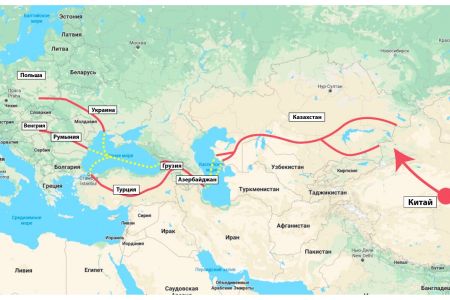
-The physical movement of goods is currently difficult along the Black Sea, especially along the line of trade with Ukraine. The Central Bank of the Republic of Armenia does not have additional information on the actual directions of the physical movement of goods in order to give a more professional assessment of the situation.
8. How will all these developments affect financial stability in Armenia?
-All banks operating in the territory of Armenia operate within the legal field of the Republic of Armenia, are regulated and controlled by the Central Bank of the Republic of Armenia. All commercial banks in Armenia have sufficient liquidity, are highly capitalized, and carry out their activities in a regular mode. The Central Bank has already issued a clear statement on individual cases. The Central Bank of the Republic of Armenia is always ready to provide the necessary liquidity to the participants of the financial system for the proper fulfillment of their obligations.