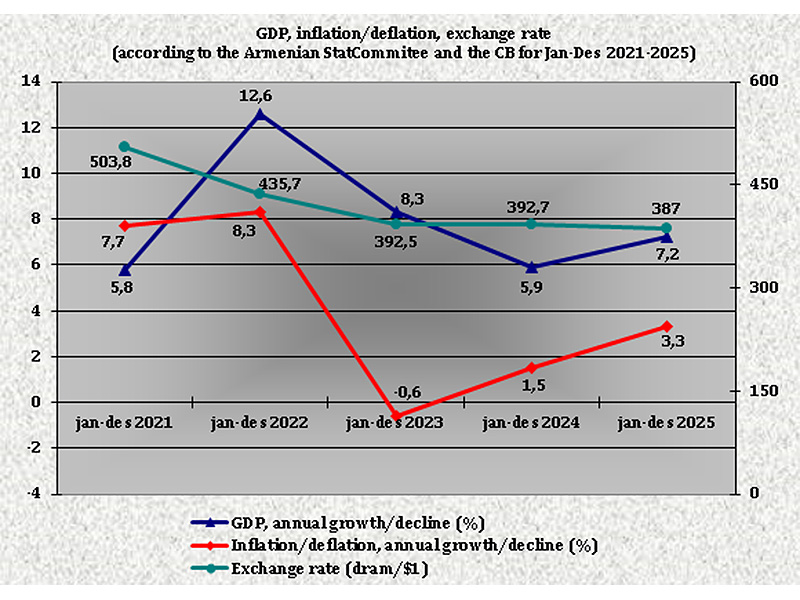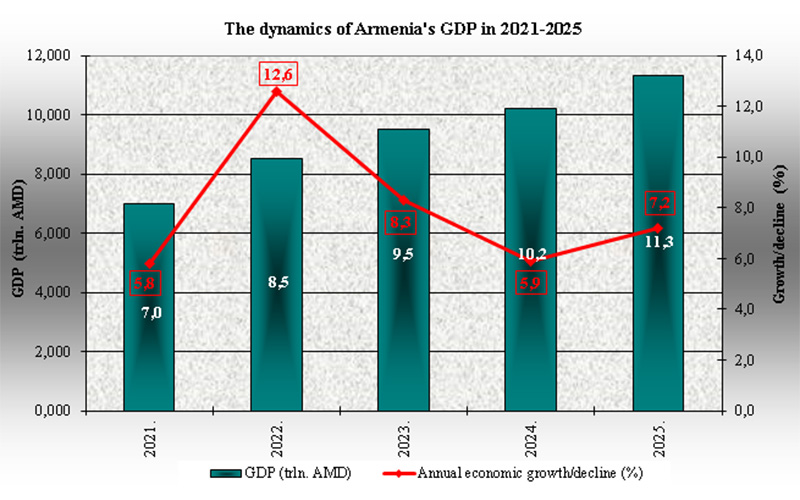


ArmInfo. The Central Bank of Armenia forecasts a slowdown in GDP growth in 2022-2023 from 12.9% to 4.4%, and a decrease in inflation from 10.3% to the target 4%. This is noted in the Monetary Policy Program (MPP) of the Central Bank for the third quarter of 2022, published at the end of September.
It is worth noting that the improved forecast for GDP growth for 2022 to the updated 12.9% from the previous 4.9% was announced by the Central Bank before the start of Azerbaijan's military aggression against Armenia this month, and in fact this factor was not taken into account in the expectations of macroeconomic indicators.
In the sectoral context, the Central Bank forecasts an acceleration in construction to 14.1% (from 3.1% in 2021) and in services to 19.4% (from 7.9% in 2021). The dynamics of the agricultural sector will also improve with the CB expectations, reaching 3.2% growth in 2022 from a 0.6% decline in 2021. At the same time, the upward dynamics of industrial production will slow down somewhat - from 3.5% in 2021 to 3.2% in 2022. Against this background, in 2022, the growth of tax collections will accelerate to 10.1% from 7.4% in 2021.
The growth of gross fixed capital formation will accelerate in 2022 to 19.6% from 6.3% in 2021. In particular, a slight acceleration in the growth of gross fixed capital formation in the private sector is forecasted - up to 20.2% from 11.2% in 2021, while public investment will reach 17.4% growth in 2022 (from 9.9 % decline in 2021). At the same time, government consumption in 2022 will drop by 1.8% (against 8.4% growth in 2021), while real consumption growth in the private sector accelerates from 3.4% to 13.8%.
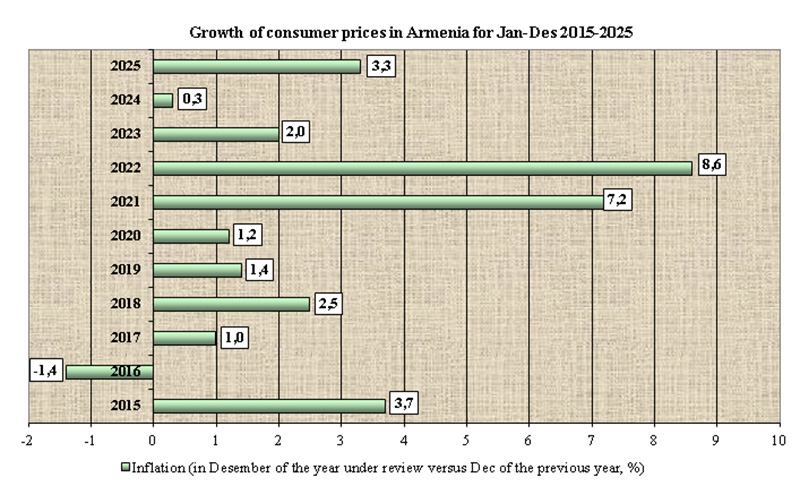
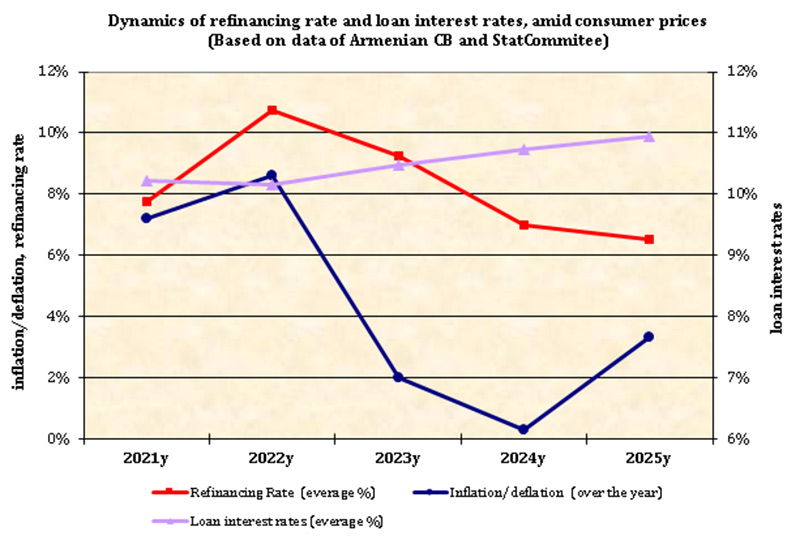
According to the new forecast of the Central Bank, the official inflation in Armenia will be 10.3% at the end of 2022, and the base inflation will be 8.7%, against 7.7% and 7.2% in 2021, respectively, which significantly exceeds not only the indicators of the corona crisis in 2020 ( respectively 3.7% and 1.3%), but also the pre-crisis meager inflation levels of 0.7% (official) and 1.2% (basic). But by the end of 2023, official inflation is expected to decrease to the target 4%, and base inflation to 6.7%.
The forecast report of the Central Bank of RA also foresees the expectations of the US, Eurozone and Russian economies and inflation in 2022. Thus, the growth of the US economy will slow down to 1.6% (from 5.8% in 2021), the Eurozone will slow down from 5.4% to 3.3%, and Russia's GDP will decrease by 4.2% (against 4.7% growth in 2021). Inflation in the US will accelerate in 2022 from 4.7% to 8.1%, in the Eurozone - from 2.6% to 7.8%, in Russia - from 6.7% to 14%.
The price of oil will rise in 2022 to $101.2 per barrel (from $71 in 2021), copper - to $8820.1 per ton (from $9314.7 in 2021). The FAO Index, which increase from 98 to 125.7 in 2021, will continue to rise to 144.9 in 2022, after which it will drop to 142.1 in 2023, but then the y-o-y growth will resume again, presumably to 148.4 in 2025. .
In the June forecasts of the World Bank and the International Monetary Fund for 2022, the expected growth of Armenia's GDP was improved to 3.5% and 5%, respectively (from the previous 1.2-1.3%). And the international Fitch Ratings agency, which much later (in early September) updated its forecast for Armenia's GDP growth for 2022, announced a much higher bar - 6.4% (against the previous 1.3%).
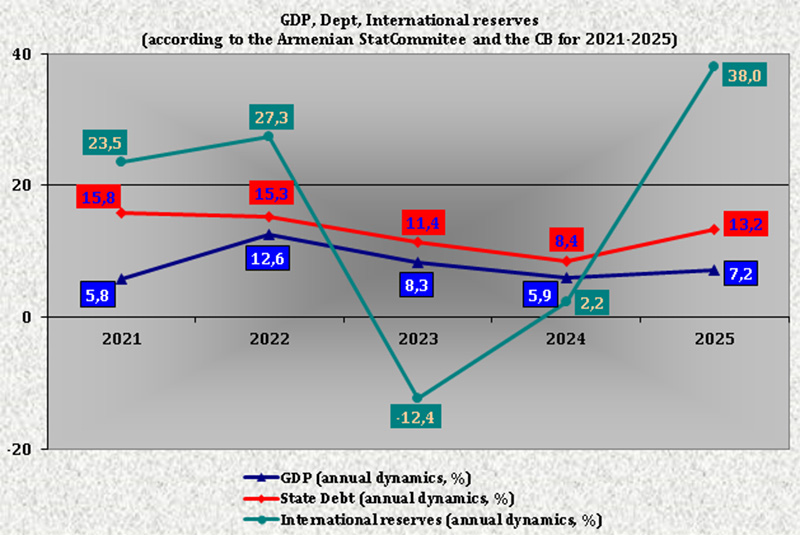
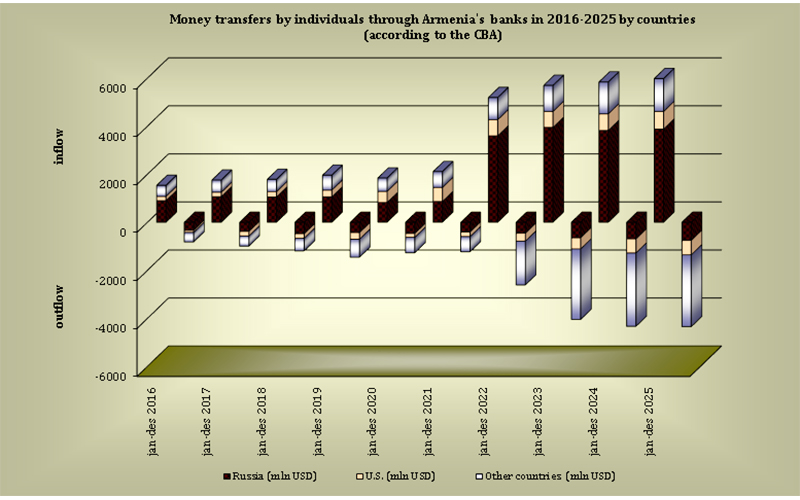
Much later, on September 28, the EBRD updated its forecast, voicing an even higher bar for Armenia's GDP growth for 2022 - 8% (against the previous 4.5%), thereby expecting more sustainable growth, but warning of a slowdown in 2023, and noting that the current economic growth is mainly due to temporary factors that can easily be reversed. These international agencies note not only geopolitical risks (cautious approach in relations with the US, UK and EU in terms of anti-Russian sanctions, continued high tension in relations with Azerbaijan), risks of overheating (growing demand from expatriates), risks of stagflation in their forecast reports, but they also pay attention to the decrease in external liquidity risks (due to the growth of external reserves to a 20- year high of $3.5 billion, including the Stand-By loan from the IMF, as well as due to an increase in the inflow of transfers), and reliable support from creditors. As a comparison, we note that the pre-Covid GDP growth in Armenia was 7.6% (in 2019), after which a decline of 7.2% was recorded in 2020 with a 5.7% growth in 2021. However, it is worth noting that economic activity in Armenia reached double-digit growth rates in February 2022, accelerating them to 13.9% per annum in January-August, while inflation in the food market has already reached 13%.