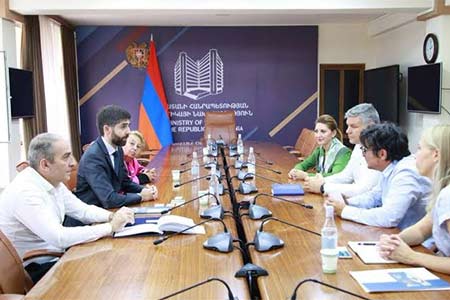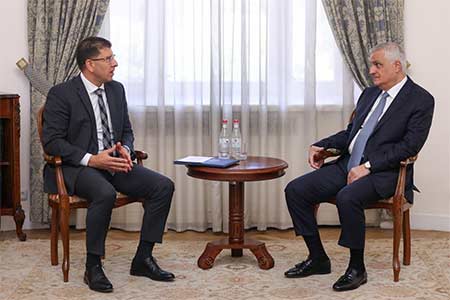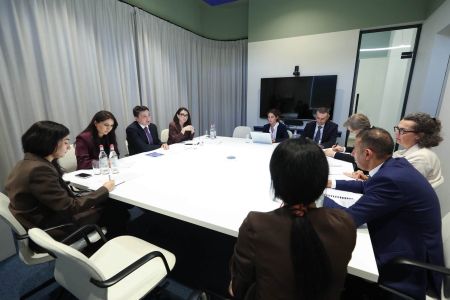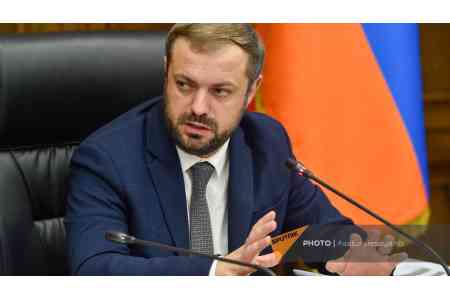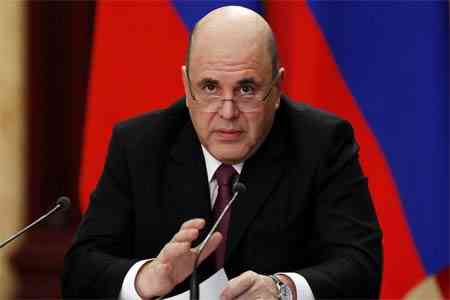
ArmInfo. One of the key tasks in the EAEU is to deepen industrial cooperation, and, of course, it is necessary to launch joint ventures in strategically important and high-tech industries. Head of the Cabinet of Ministers of the Russian Federation Mikhail Mishustin stated this during a meeting of the Intergovernmental Council of the EAEU on October 21 in Yerevan.
In this regard, he stressed that any cooperative projects should be welcomed, supported by all the tools that are available in the arsenal of the Union. In particular, the head of the Cabinet of Ministers of the Russian Federation pointed to the need to create systems for financing cooperative projects using the mechanism of subsidizing the interest rate on loans. "This will contribute to the technological development of all EAEU countries," he said.
Mishustin considered the participation of at least 3 out of 5 countries in each cooperation project as extremely important. According to him, this will guarantee the access of small economies to the development of new technologies, and will also stimulate integration processes in the Eurasian space.
As the Chairman of the EEC Board Mikhail Myasnikovich noted during the press conference, which followed the meeting of the Intergovernmental Council of the EAEU, the issue of subsidizing cooperation projects will be submitted to the meeting of the Supreme Eurasian Council in order for the EEC, together with the governments of countries, to have the appropriate opportunities to send certain amounts of anti- dumping and other protective duties that are formed in the Union. "Annually, this amount ranges from $190-230 million, and naturally 10% of these deductions can be directed to support these projects by reducing the cost of interest rates, which should not exceed the key rate," he said. Thus, according to Myasnikovich, it will be possible to support investment projects with an annual funding of at least $300 million annually. He noted that in the next 5 years these sources can be seriously collected and worked out.