ArmInfo.As of January 1, 2023, there were 3.184 million cards in the plastic market of Armenia (including co-badged ArCa-MIR and Russian MIR cards), with an acceleration of y-o-y growth from 8.3% to 17.8%.
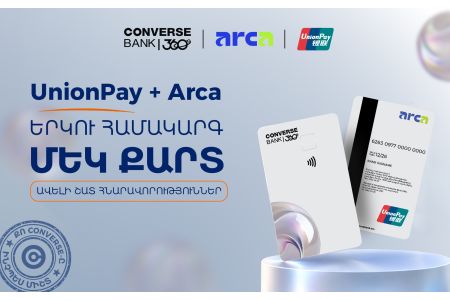
Moreover, among them, co-badged ArCa-MIR cards doubled in y-o-y terms (against 14.7% growth in 2021), reaching 12.237 thousand cards by January 1, and a high growth of these cards with a tendency to further accelerate the pace began to be observed from March 2022. This is evidenced by the data of the Central Bank of the Republic of Armenia.
Such growth of ArCa-MIR cards is explained by the influx of a huge number of immigrants to Armenia, which began in March 2022, mainly from Russia, who, having moved, also moved their capital in order to temporarily settle here with their families and register a business until the outcome of the war in Ukraine and anti-Russian sanctions is clarified, and with the announcement in the Russian Federation in September of mobilization, a new, no less impressive influx of immigrants followed.
In particular, out of the indicated number of ArCa-MIR co-badged cards, most of them are debit cards of individuals - 11.061 thousand pieces, and the remaining are payment cards of individuals 1.176 thousand - pieces. It is noteworthy that the impressive y-o-y growth of debit co-badged ArCa-MIR cards (2.2-fold) was accompanied by a reduction in payment ArCa-MIR cards by 27%.
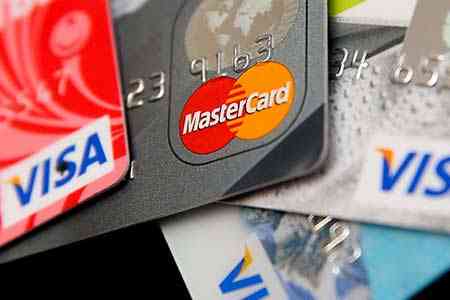
But considering the small share of ArCa-MIR cards in the total number of cards (only 0.4%), as before, Visa cards are the driving force of the overall y-o-y growth, the growth rate of which accelerated from 13% to 26.7%, reaching 1.512 million cards, thanks to which the dominant in the total volume increased from 44.1% to 47.5%.
MasterCard cards, on the contrary, slowed down the y-o-y growth rate from 10.3% to 5.4%, amounting to 737,012 thousand cards, the share of which in the total number decreased from 25.9% to 23.2%. At the same time, ArCa local cards, on the contrary, worsened the dynamics from 0.5% growth to 2% decline, amounting to 750.971 thousand pieces, which reduced their share in general from 28.3% to 23.5%.
However, compared to Visa and MasterCard, other international (mainly HSBC cards, as well as AmEx and Diners Club), provided much higher y-o-y growth, with a sharp acceleration in rates from 0.4% to 4- fold, reaching 183,860 thousand cards, which increased their share in general from 1.7% to 5.8%. In the total number of cards, debit cards continue to dominate - 64.6% or 2.057 million pcs, followed by payment cards - 33.4% or 1.062 million pcs, against which the share of credit cards decreased to 2% or 64.242 thousand. Moreover, the y-o-y growth in the number of debit and payment cards is observed - by 17.7% and 26.3%, respectively, and the number of credit cards has decreased almost 2-fold. As before, Visa has the largest share of debit and payment cards, its share is only slightly more than MasterCard.
In the total number of cards, the share of microprocessing cards with an NFC chip increased from 54.1% to 66.6%, amounting to 2.120 million in absolute terms, ( y-o-y growth of 45%), most of which are Visa cards (1.316 million pcs). The share of virtual cards also increased - from 1.3% to 3.2%, the number of which increased 2.8-fold over the year to 100.337 thousand pieces, and if earlier it was only Visa cards , then from Q3 there were also MasterCard cards. In parallel with this, the share of cards with magnetic tape decreased - from 30.4% to 24.2% or 769.949 thousand pcs (y-o-y decline of 6.2%), and these are mainly local ArCa cards (735.2 thousand pieces). The share of hybrid cards decreased from 14.1% to 6.1% or 193,423 thousand pcs (y-o-y decline of 49.1%), and most of these are both Visa and MasterCard.
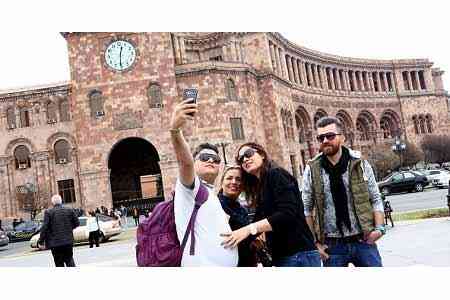
As the Association of Tour Operators in Russia (ATOR) stated back in October, Armenia became the leader in the segment of card tours for Russians, noting that the prices of such a "card" tour to Armenia are comparable to other countries. On average, a trip to Armenia with a card cost Russians from 50,000 to 55,000 rubles for two (excluding the cost of air travel).
It should be noted that the procedure for obtaining international bank cards in Armenia varies in its complexity depending on the internal risk management procedures in the banks themselves. As a rule, it takes about 2-3 weeks to receive a card due to the need to fill out a certain questionnaire on the part of the client and double-check its data. Basically, the applicant is required to prove the existence of certain business interests and even business activity in Armenia.
According to ArmInfo analysts, between March and September 2022, Armenian banks issued more than 150,000 Visa and MasterCard bank cards of international payment systems to immigrants, some of whom have already received residence permits and "card tourists". Thus, according to the agency, only from March to September, the number of Visa cards increased by 192.3 thousand pcs and MasterCard cards by 29.6 thousand pcs, and from March to December the number of Visa cards increased by 279 thousand pcs, and MasterCard cards by 36 thousand pieces. Moreover, in March-September the number of other international cards (AmEx, HSBC Card, DC) increased by 124.6 thousand pcs, and in March-December their number increased by 140.1 thousand pcs. Almost half of the more than 3 million bank cards used in Armenia are of the Visa international payment system.
Taking into account the dynamics of the growth in the number of cards in Armenia in previous years, analysts believe that in March-September 2022, Armenian banks issued more than a quarter of a million bank cards to immigrants and "card tourists", according to rough estimates, and taking into account the data of Q4, their number has become even more. Then the Russian media noted that in the fall of 2022, Russian tourists had new reasons for issuing bank cards abroad, since Turkey and other countries stopped working with the Russian MIR payment system, and this increased the demand for card tours by 15-20%.