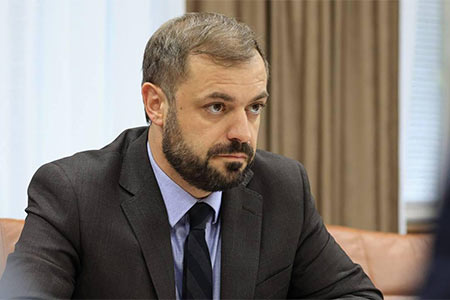



ArmInfo. Former Prime Minister of Armenia, economist Hrant Bagratyan speaks about the absolute impoverishment of the population of the Republic of Armenia over the past 5 years.
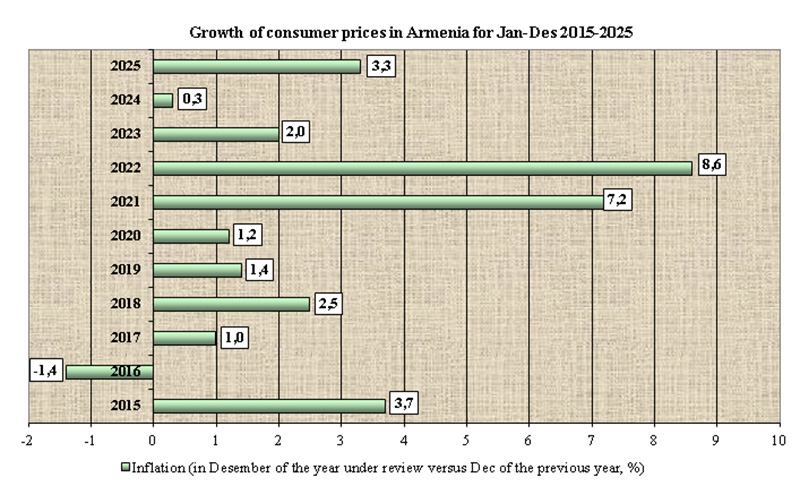
According to Bagratyan, in 2018-2022, 13234 billion drams (or about 34 billion US dollars) were spent from various sources to ensure GDP growth in the amount of 2298 billion drams. "This means that 5.8 drams of financial resources were spent on the growth of 1 dram of GDP," the economist said on his Facebook page. The former premier analyzes how this increase of 2298 billion drams was distributed among different groups of the population. So, according to him, in general, in 2018-2022, the consumer price index amounted to 23.9%: the average monthly nominal wage in the Republic of Armenia increased by 32.5% (from 177,817 drams in 2017 to 235,576 drams in 2022).
"It may seem that the life of salaried workers has improved by 8.5%. But let's not rush to conclusions. During the first 5 years (2003-2007), the average salary increased 2.7-fold (from 27,324 drams in 2002 to 74,227 drams, and inflation was 24%). As a result, the life of salaried workers improved 2.45-fold, or 145%.
In the second five-year period (2008-2012), the average monthly nominal wage increased by 52.5% (from 74,227 drams in 2007 to 113,163 drams in 2012), while prices increased by 31.9%. And now, with the same methodological approach, it turns out that in 2008-2012, salaried workers began to live better by 20.6%.
In the third five-year period (2013-2017), the average monthly nominal wage increased by 57.1% (from 113,163 drams to 177,817 drams in 2012), while prices increased by only 12%. So, it turns out that in 2013-2017, the life of salaried workers improved by 45.1%, and in 2018-2022, the lowest rates of improvement in the standard of living of salaried workers were recorded," the economist wrote.
Referring to the statistics on pensioners (465 thousand people), Bagratyan notes that the real size of pensions recorded a decline in 2018-2022 - pensions increased by 15% (the average state pension increased from 40,634 drams in 2017 to 46,734 drams in 2022), but prices increased by 23.9% and therefore the real incomes of pensioners decreased by (-)8.9 %. In the first five-year plan, the real incomes of pensioners increased by 97.7% (the average pension increased from 5748 drams in 2002 to 12746 drams in 2007, and inflation was 24%), in the second five-year plan - by 101% (the average pension increased from 12746 drams in 2007 to 29696 drams in 2012, and inflation was 31.9%). In the third five-year plan (2013-2017), the real incomes of pensioners increased by 24.8% (the average pension increased from 29,696 drams in 2012 to 40,634 drams in 2017, while inflation was 12%).
At the same time, returning to the growth of real wages by 8.5% for 2018-2022, the former premier speaks of "suspicious things." "For example, wage increases also indicate remuneration of the leadership of the state apparatus, but it would be right to exclude them, since these premiums relate to the administrative apparatus (the offices of the prime minister, the National Assembly, ministries and departments, governors, etc.). If do not exclude this line, then we are dealing with the "effect of the average temperature in the hospital." How many bonuses were paid in 2018-2022? Our "democratic" government has not answered this question, "he said, emphasizing that, if we subtract the declared 40 billion (1.6%) from the wage fund of salaried workers (about 2.5 trillion drams per year), then from the 8.5% mentioned above, 6.9% will remain.
As a result of all this, Bagratyan noted, the poverty rate in 2021 was 26.5% (data for 2022 have not yet been published). Meanwhile, in 2017, the figure was 25.7%. The number of the extremely poor also increased in 2021 - up to 1.5% (the increase in extreme poverty in the Republic of Armenia in 2021 compared to 2019 was 0.1% and 0.8% - from 2020). The share of food in consumer spending increased from 40.4% in 2018 to 47.1% in 2021. "Absolute impoverishment. At the same time, the share of wages of employees in GDP decreased to 31.9% (in 2003 - 40.2%). And it follows from this that in 2018-2022 the standard of living of the RA population recorded not only a relative but also an absolute decline," the former prime minister wrote.