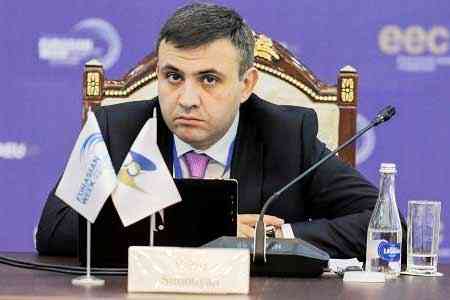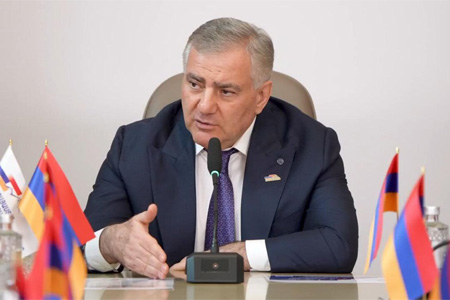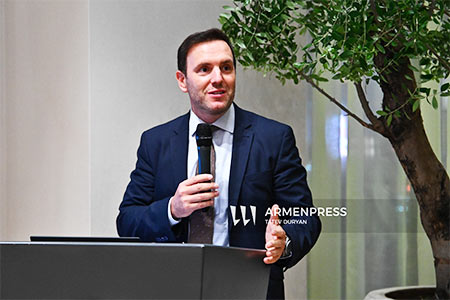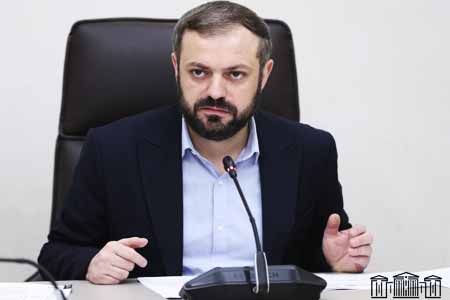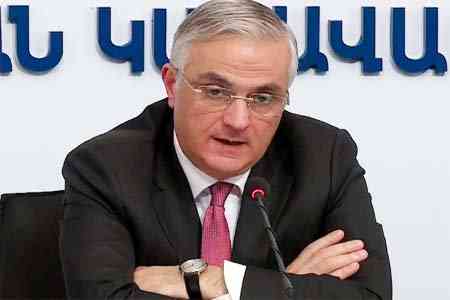


ArmInfo. Azerbaijan launched a hybrid war against Armenia. Chairman of the Union of Miners and Metallurgists of the Republic of Armenia, First Deputy General Director of Zangezur Copper-Molybdenum Combine CJSC Vardan Jhanyan stated on July 24 at a press conference.
According to him, in addition to military provocations, information war, Baku unleashed an economic war against Armenia, targeting one of the most important sectors of the country's economy - mining industry. This means unleashing the so-called hybrid war against Armenia.
Under the pretext of various speculations about the "damage" allegedly caused by the enterprises of the industry, Baku resorts to various provocations. Given that this policy of the Azerbaijani authorities will continue, the Union decided to respond to all the accusations that sound from Baku. Jhanyan stressed the need to inform the international community about the situation in the mining industry in Armenia from the point of view of managing environmental risks and eliminating the speculations of Azerbaijani "environmentalists" on the topic of managing environmental risks in the development of minerals in Armenia and their further processing.
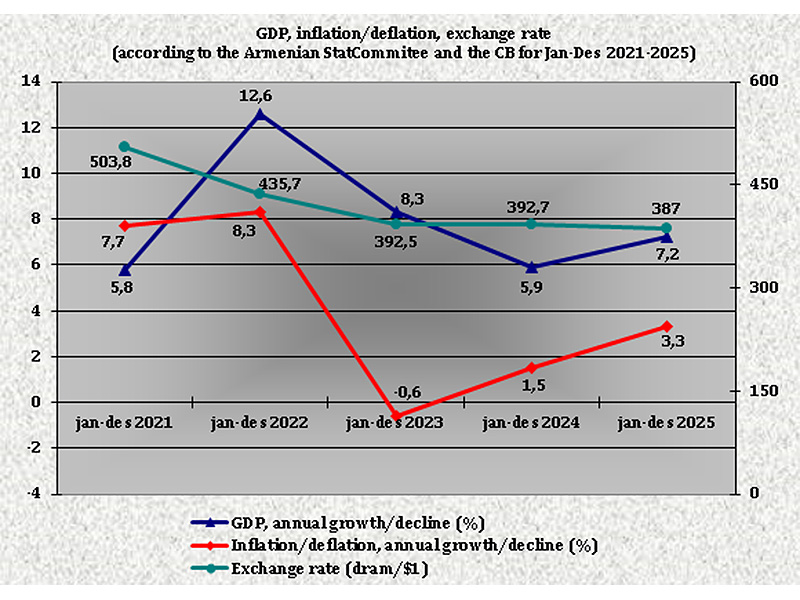
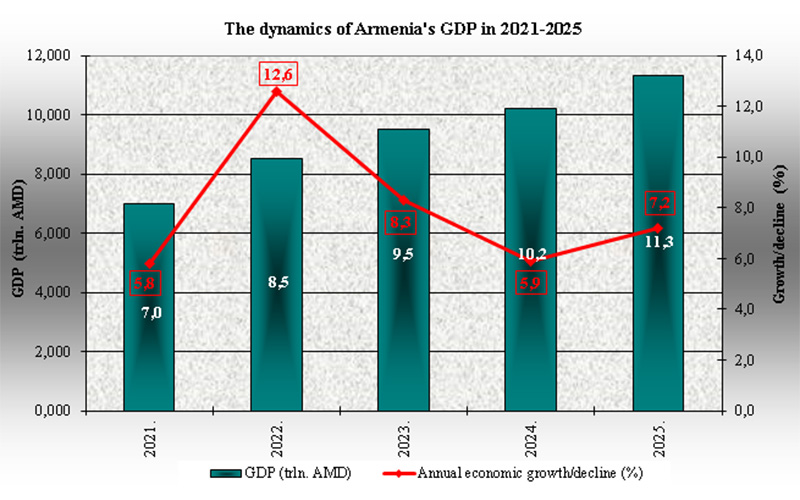
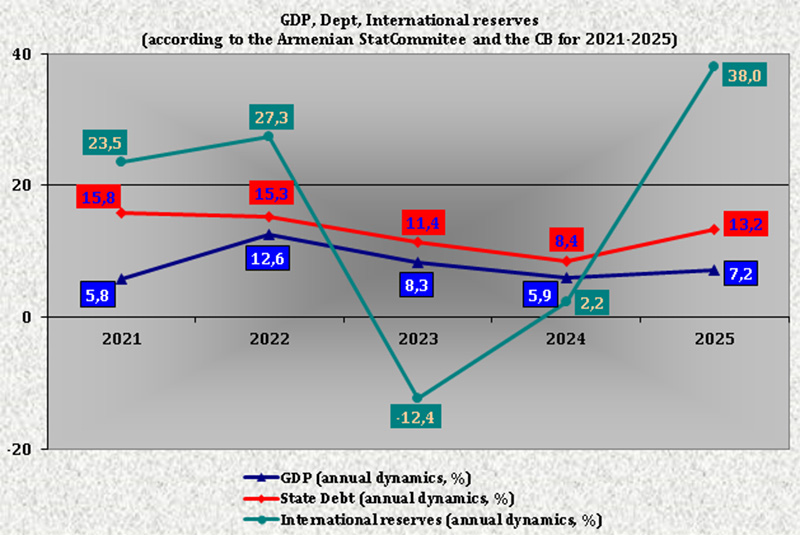
The specialist recalled that from 2014 to this day, the growth rate of the Armenian economy has always exceeded the growth rate of Azerbaijan's GDP. Although until 2014, the military budget of the neighboring state alone exceeded the entire state budget of Armenia, mainly due to oil and gas revenues. But for several years now, the Armenian economy has been demonstrating steady growth. Last year alone, Armenia's GDP growth rate amounted to 12.4% against Azerbaijan's 4%, according to all available forecasts, the two-digit growth of the Armenian GDP will be recorded by the results of the current year, while, according to the forecast of the S&P international rating agency, Azerbaijan's GDP growth rate will be at ground level. Over the past few years alone, the imbalance between the budgets of Armenia and Azerbaijan has been reduced 3-fold - to $6 billion against $18 billion. Naturally, Azerbaijan could not ignore this fact, and under various pretexts is trying to hit the most sensitive area of the RA economy - the mining industry.
Jhanyan noted that the mining industry has always been and remains one of the main drivers of the Armenian economy. According to the specialist, a significant part of foreign direct investment (FDI) goes into the mining sector, which provides jobs, solves social problems and promotes territorial development. Jhanyan noted that Armenia is among the first 25 countries out of 182 in terms of exports in the mining industry in the ICMM's "Role of Mining in National Economies" report. If 10 years ago, the mining industry of Armenia provided 2.6% of the country's GDP, today its share in the republic's GDP is already about 10%, and payments to the state budget have approached the 20% mark. The mining and metallurgical industry of Armenia is fully export-oriented, occupying at least 40% of the total export structure. The industry provides employment for about 15 thousand workers who receive a salary twice as high as the average salary in the republic (the average salary in Armenia is 255,785 drams, the average salary of the industry is 433,319 drams as of April 2023).
<But we do not stop there. In recent years, significant changes have been taking place in the mining and metallurgical industry of Armenia, the task is set to move from the production of metal concentrates to the development of a deeper processing of minerals with access to highly processed products. In this regard, the new owner of the largest Zangezur Copper-Molybdenum Combine (ZCMC), in close partnership with the government, which acts as a co-owner of the enterprise, is considering the possibility of building a large copper smelting complex, so the more copper is produced in Armenia in copper concentrate, the more economically feasible the work of the smelter will be. Currently, ZCMC is undergoing technical modernization in order to increase productivity from the current 22 million tons per year to 40 million tons>, the head of the Union emphasized.
He also added that there are intentions in Armenia to advance along the technological chain of gold production by building a refinery, and thereby creating an opportunity to switch from the production of dor‚ alloy with 70% gold content to the production of pure gold bullion. In addition, two large metallurgical plants are already being built in the country as of today: one at the expense of American investors, the other with the financing of the Tashir Group. "Thus, it becomes clear that broad horizons and prospects are opening up for the mining industry of Armenia. All this cannot but worry the current leadership of Azerbaijan, which is trying to weaken the systemic production cluster for the Armenian economy as much as possible. In particular, for several months now, an important mining enterprise on the border with Azerbaijan, the Sotk gold mine, has been regularly targeted, from which the value chain stretches to the Ararat Gold Extraction Plant, having a very significant impact on the economic activity of the South Caucasus Railway (<South Caucasian Railway>), which transports gold ore mined in Sotk for processing to Ararat.
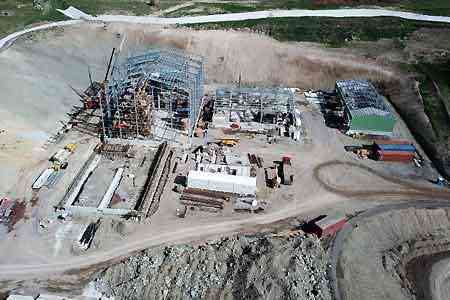
However, They are not limited to this. the construction site of the steel plant being built with large American investments is regularly shelled from the Azerbaijani positions on the peaks of the border village of Yeraskh. At the same time, pseudo Azerbaijani environmentalists, under the banner of the closure of the base taxpayer of Artsakh - the Kashen copper mine in the Martakert region (the developer of which is the VallexGroup's Base Metals company) - blocked the Lachin corridor and, accordingly, closed a tight suffocating ring around Artsakh, making it impossible to develop the mine in Tsaghkashen.
The contrived and politically motivated attacks of Azerbaijani "environmentalists" sponsored at the highest state level, on the most important sector of the Armenian economy, are exposed by the fact that, accusing the same Kashen mine of some environmental violations, Baku hastened to grant a license for its development to the Anglo-AsianMiningCompany registered in Azerbaijan. The latter, in order to gain access to the mine, has become a criminal tool in Aliyev's hands, so the Tatoyan Foundation recently filed a class action lawsuit against the company's CEO, Mohammad Reza Vaziri, in an American court. The Baku regime must also answer for the regular shelling of the steel plant being built with American investment in Yerasakh. The owners of the enterprise, represented by the American VirtualFunding and CSEGlobal Investments companies, warned Azerbaijan that they did not intend to abandon their plans and in the event of continued bandit shelling, "our actions will follow on international legal platforms, for which we will spare no expense and demand compensation for the investments made, losses incurred and lost benefits," Jhanyan stressed.
As for the Union of Miners and Metallurgists of the Republic of Armenia, he added that, as in the case of the Kashen mine, there are also primitive hints of Baku's pseudo-ecologists, behind whom the leadership of Azerbaijan stands, in the form of fictitious environmental threats of the construction plant.
"A similar plant called Baku Steel Company now operates in the capital of Azerbaijan, which casts 4 times more metal per year than is planned to be cast at our plant, and this plant is located at a distance of 400 meters from residential buildings. In a word, Jhanyan believes, it's no secret to anyone that Azerbaijan's true motivation is in trying to undermine an important branch of Armenian industry and answer the question of who, as it is said in a letter from "environmentalists" to Armenian Prime Minister Nikol Pashinyan, "violates environmental stability in the South Caucasus region>. At the same time, Azerbaijani "ecologists" suddenly became preoccupied not with just one or two mining plants, but approached the matter on a grand scale, accusing the entire mining industry of the Armenian economy of "working with violations of international environmental standards and criteria." It's the same as if Armenian environmentalists wrote a letter to Ilham Aliyev demanding to stop work in the oil and gas fields of Azerbaijan, not to mention mining, and with absolutely identical motivation.
<Today it is already quite clear that our neighbor is using all the means of a hybrid war, and the economic strangulation of both Armenia and Artsakh is their goal. Azerbaijan needs to deprive the Armenian statehood of its basic economic potential in order to fully dictate its rules to the weakened side. However, the false statements of Azerbaijani NGOs in detail and fully substantiated expose both the statement of Armenian NGOs dated July 20 this year, and the response to the open letter of Azerbaijani NGOs from the Ministry of Environment of Armenia dated July 21 this year.
The mining industry has its own challenges and is associated with risks, market fluctuations and adverse pricing, investment and return on investment. However, the presence of risk does not mean that the activities of the mining industry cannot be built on the principles of sustainable development>, said Jhanyan.
According to him, today, the mining assets of Armenia, working in the permanent conditions of crisis challenges, direct significant investment funds to increase productivity and maintain the competitiveness of production, implement significant resources in the field of sustainable development, and are ready to take the most effective measures to minimize the negative impact of production activities on the environment, introducing high standards of environmental and social responsibility. Thus, companies in the industry are working to improve the quality of corporate governance and systematize the policy of reporting on sustainable development, regular non-financial reporting according to ESG (Environmental Social Governance), TCFD (ask Force on Climate-related Financial Disclosures) and other ISO standards, since all parties are interested in disclosing non-financial reporting: investors, creditor banks, authorities, local communities. The state, in turn, conducts policies to mitigate and eliminate risks by developing appropriate strategies, laws and regulations, and supervising their application.
Thus, this year, for the first time in the history of Armenia, a strategy for the mining industry was developed and adopted in order to make effective decisions in the field of use and conservation of subsoil using international standards and approaches in the field of the mining industry. It is impossible to underestimate the significant investments of many years of work of international financial institutions in the mining sector of Armenia. The World Bank and USAID provide periodic support to Armenia in the development of a new subsoil code, provisions that are in line with international norms and standards. The European Bank for Reconstruction and Development is doing significant work to institutionalize the industry and the principles of its activities; from investment appraisal to the macroeconomic role of the industry, with the implementation of transparency and accountability standards and processes. The EBRD implements numerous projects with stakeholders, its beneficiaries are the competent government agencies, financial institutions and banks, private companies and public organizations in Armenia. In addition, Armenia became the 52nd country in the world that successfully implemented the international standard EITI ( Extractive Industries Transparency Initiative). The implementation of EITI standards has led to the transparency of the mining industry and its accountability to citizens. The EITI in Armenia has created a platform for the government, companies, environmental NGOs and civil society to debate the industry's issues and address its challenges through constructive dialogue. At the same time, Vardan Jhanyan noted that Azerbaijan does not take part in this international initiative.