


ArmInfo. The upgrade of Armenia's long-term issuer default rating in foreign currency from <B+> to <BB-> by Fitch Ratings indicates an increase in Armenia's investment attractiveness. RA Deputy Finance Minister Eduard Hakobyan expressed a similar opinion in an interview with the Public Television of Armenia.
He conditions his opinion on the recent increase in foreign investors' interest in the foreign exchange market and the stock market of Armenia.
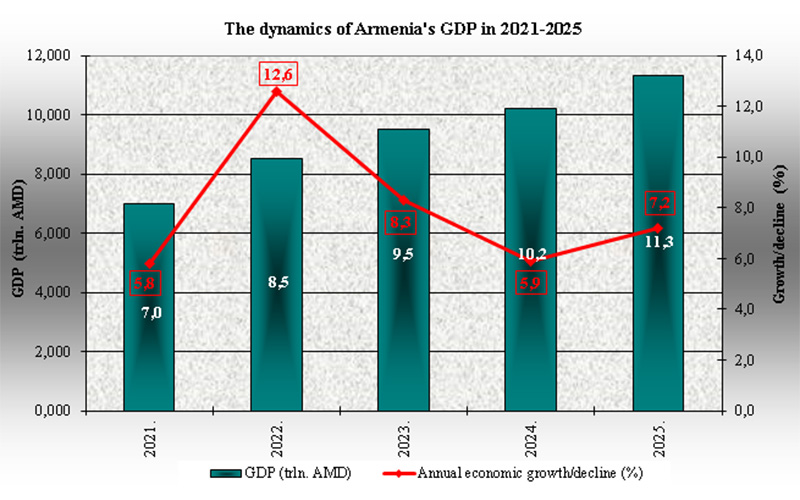
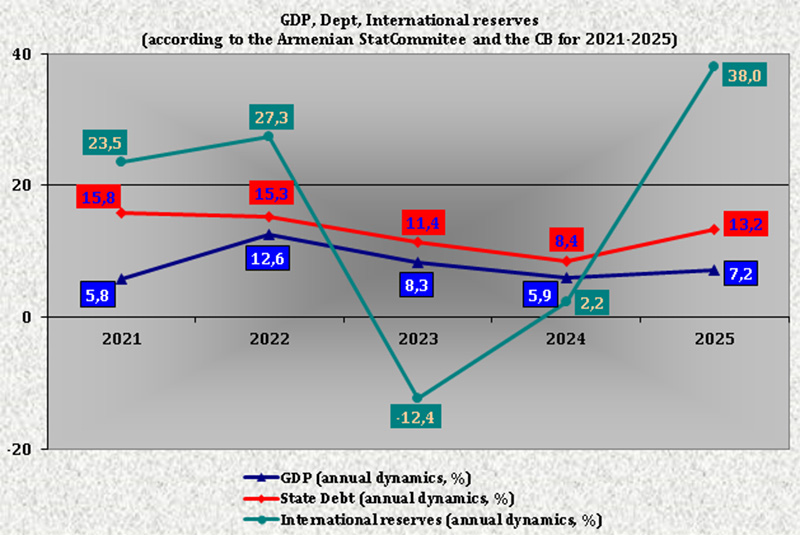
The Deputy Minister drew attention to the fact that Fitch raised its forecasts for GDP growth, improved the debt-to-GDP ratio, and Armenia's performance among comparable countries improved significantly. Hakobyan also noted that if last year international organizations said that the high growth rates of the Armenian economy would have a short-term effect, today the latter have high expectations in this regard. "The state continues to be more than solvent, the public debt is at a manageable, stable level, and the rating upgrade indicates a reduction in the country's risks, which is a good signal not only for the state, but also for business," he said.
Yesterday Fitch Ratings has upgraded Armenia's Long-Term Foreign-Currency Issuer Default Rating (IDR) to 'BB-' from 'B+', conditioning the rating increase on strong economic growth. Fitch Ratings also stressed that "Government debt/GDP fell sharply to 46.7% in 2022 from 60.2% in 2021 due mainly to currency appreciation, but also the strong nominal GDP rebound and fiscal consolidation. Fitch expects stabilisation at around 44.6% in 2023-25, below its pre-pandemic 2019 level of 53.7% and the current 'BB' median of 54.1%. The share of FX-denominated debt of 60.5% as of 1Q23 is above the 'BB' median of 55%, although this has declined from 71.2% at end-2021 due to sharp dram appreciation as well a shift to greater local borrowing. Risks to debt dynamics are mitigated by the relatively large share of concessional debt, and the high proportion of fixed rate debt (84.1% as of May)."
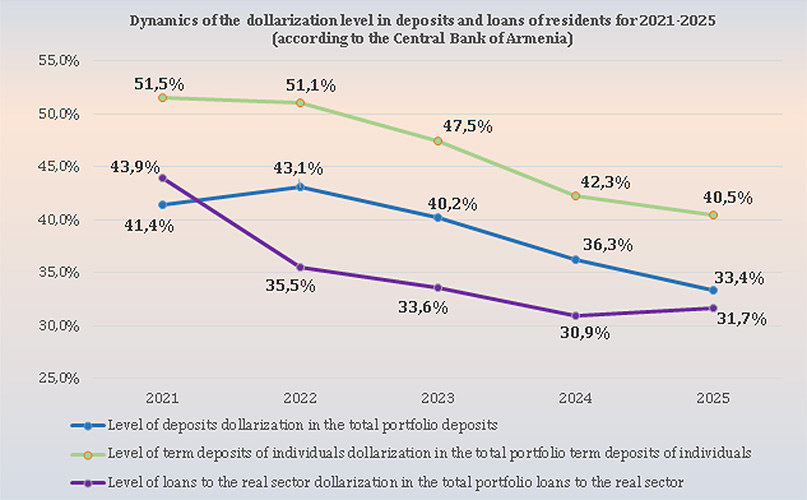
"Armenia's 'BB-' ratings are supported by a robust macroeconomic and fiscal policy framework, and credible commitment to structural reforms, and favourable per capita GDP. These factors are balanced against a high share of foreign-currency-denominated public debt, and relatively high (albeit reducing) financial dollarisation."