ArmInfo.. Since 1993, Armenia's GNI (gross national income) per capita based on purchasing power parity (PPP) has for the second time exceeded Azerbaijan's indicator, by all $1,590. Haykaz Fanyan, head of the ACSES (Armenian Center for Socio-Economic Studies), informs on his Facebook page, referring to the data of the World Bank, noting that this indicator is more informative than GDP for assessing the well-being of the population.
So, according to the source, in 2022, the gross national income (GNI) per capita in Armenia (calculated by the Atlas method) totaled $6 thousand, which is equal to $18.1 thousand according to PPP. <In other words, in 2022 it was possible to purchase by $6 thousand goods and services in Armenia, equivalent to $18.1 thousand in the USA>, the economist explained.
In addition, Fanyan clarifies that in 2022, the largest difference between GDP per capita and GNI was recorded in terms of PPP: $ 822, which is probably due to the influx of a large number of non-residents into Armenia.
In 2022, in terms of PPP per capita, Armenia ranked 5th among the countries considered by GNI, exceeding Azerbaijan's PPP per capita by $1,590.
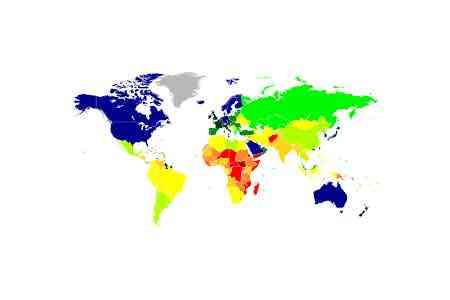
The Gross National Income, GNI, formerly referred to as gross national product (GNP) measures the total domestic and foreign value added claimed by residents at a given period in time, usually a year, expressed in international dollars using purchasing power parity rates. GNI comprises GDP plus net receipts of primary income (compensation of employees and property income) from nonresident sources. GNI provides an aggregate measure of income. An international dollar is defined as the currency unit that has the same purchasing power over GNI as the US dollar in the United States. GNI figures are those estimated by the World Bank from the corresponding ones in the United Nations's systems of National Accounts, expressed in domestic currency. Purchasing power parity conversion factors are estimated by the World Bank based on data collected by the International Comparison Programme (ICP), which is coordinated by the United Nations regional economic commissions and other international organizations. Per capita figures are based on the World Bank's population estimates and projections.