


ArmInfo. The European Bank for Reconstruction and Development (EBRD) has further improved its GDP growth forecast for Armenia for 2023 from the previous 5% to an updated 6.5%, expecting a slowdown in 2024 to 4.5% (versus the previously announced retention at 5%). And this is the highest GDP growth that the EBRD expects in 2023 for the Eastern Europe and Caucasus region. This forecast is given for 2023-2024, taking into account geopolitical events, which are an important source of risks of slowing economic growth.
The EBRD expects GDP growth to slow in the second half of this year as temporary factors that contributed to Armenia's double-digit growth fade. This is noted in the EDB September report of " Regional Economic Prospects in the EBRD Regions."
The EBRD report notes that the isolation of Russia, a major trading partner for Armenia, from western markets could have negative long-term consequences for the Armenian economy. Further escalation of the conflict with Azerbaijan is another major risk to economic prospects. On the upside, progress in re-opening the land border with Turkiye could yield economic benefits in the medium term."
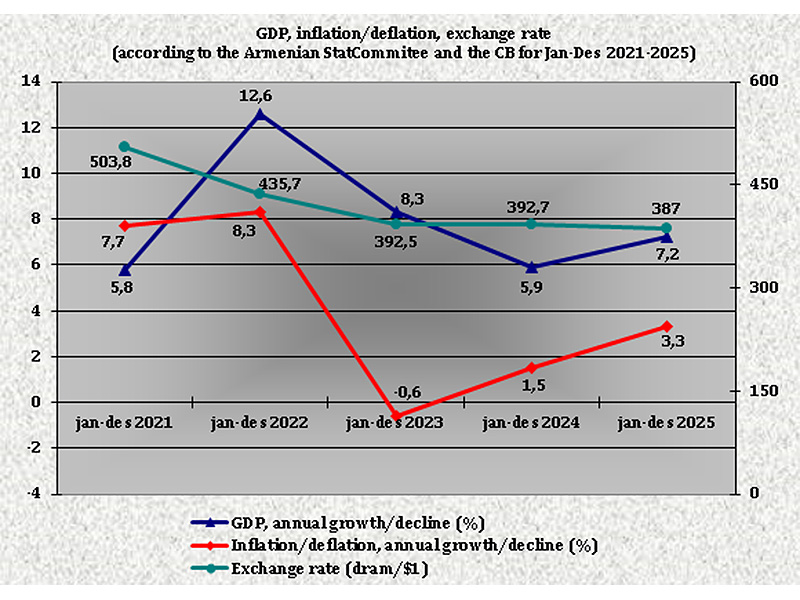
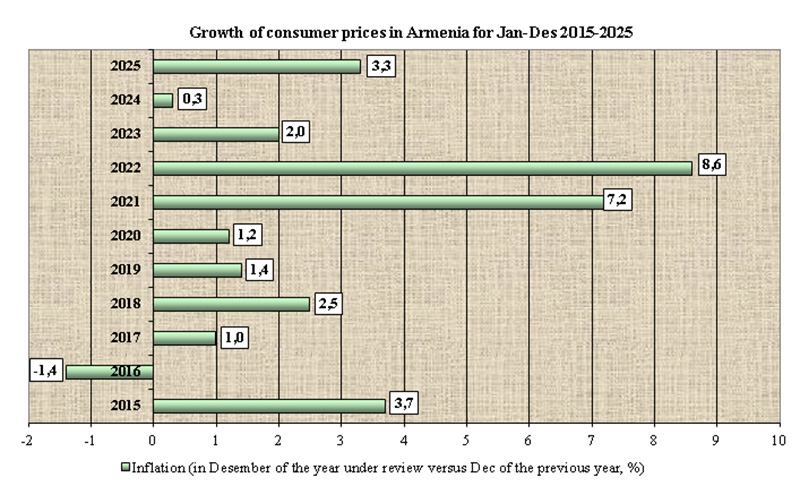
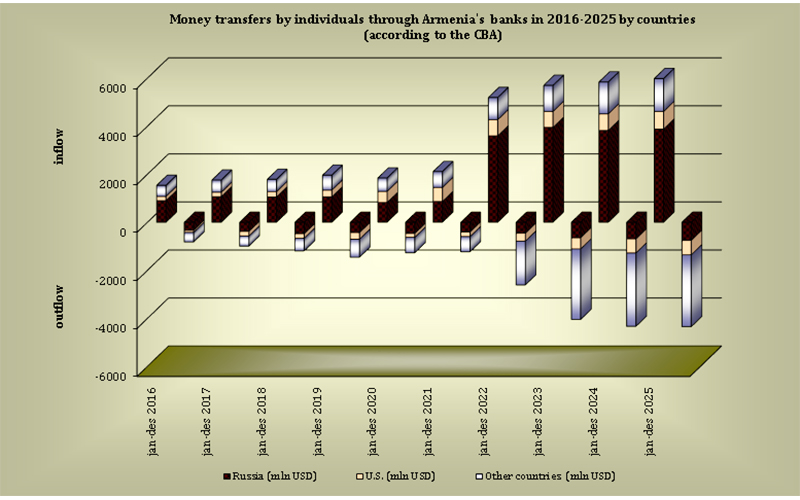
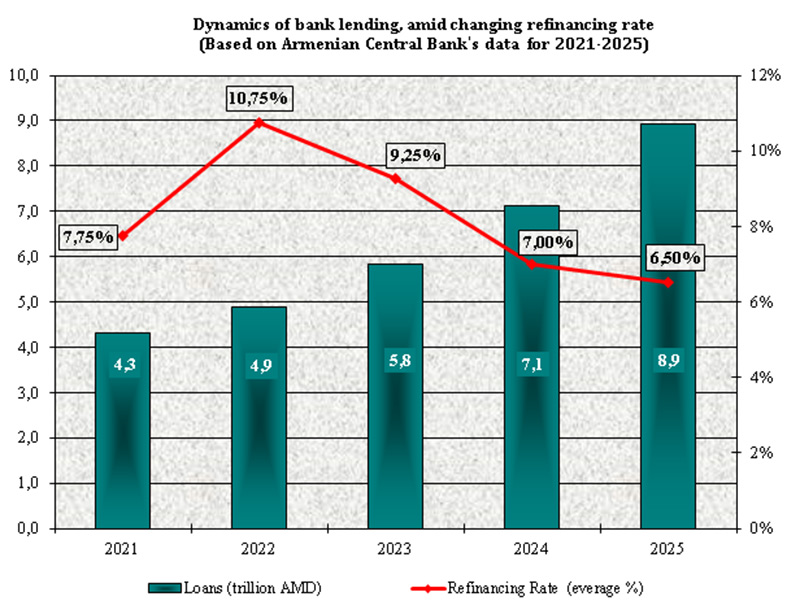
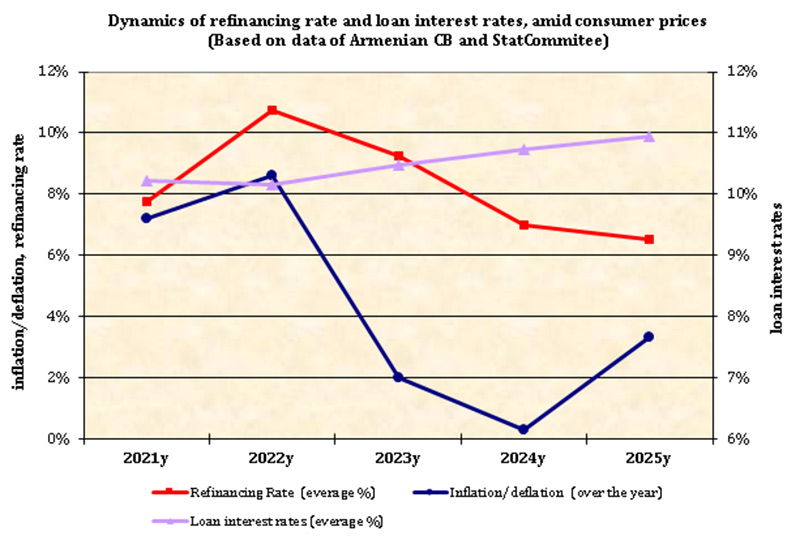
The report also notes: "The economy continued its exceptionally strong performance in 2023, but the first signs of a slowdown are already visible. GDP growth reached 10.4 per cent year on year in the period from 27 January to July 2023, driven by the strong performance of service industries in particular. Net inflows of money transfers, which have been driving demand for services, declined by 10 per cent year on year in the first half of 2023, but the growth rates of exports and imports of goods remained robust. The exchange rate and foreign reserves have been broadly stable since the beginning of 2023. At the same time, the inflation rate fell below zero in July 2023, contributing to the reversal of the real effective exchange rate appreciation seen in the past two and a half years. The Central Bank of Armenia has started a gradual reduction in the policy rate, with two 25- basis point cuts in June and August 2023, bringing the policy rate to 10.25 per cent. Growth is likely to moderate in the second half of the year, as the temporary factors that contributed to Armenia's double-digit growth are dissipating. Therefore, GDP is expected to grow by 6.5 per cent in 2023 and 4.5 per cent in 2024. Geopolitical developments remain an important source of downside risks. The isolation of Russia, a major trading partner for Armenia, from western markets could have negative long-term consequences for the Armenian economy. Further escalation of the conflict with Azerbaijan is another major risk to economic prospects. On the upside, progress in re- opening the land border with Turkiye could yield economic benefits in the medium term. Azerbaijan After two strong years, GDP growth decelerated to 0.7 per cent year on year between January and July 2023. Growth in the non-oil sector slowed to 3.4 per cent from 9.0 per cent in 2022, mainly due to weaker growth of disposable incomes. The oil and gas sector continued to decline, by 2.2 per cent year on year over the same period. Nevertheless, export and fiscal revenues remained robust amid an oil price above the prewar level and rising demand for Azerbaijan's gas. In mid-2023, the government amended the budget to increase public sector wages and public investment, providing fiscal stimulus to the sluggish economy. Domestic demand also benefited from the strong increase in loans to households by 25.8 per cent (year on year) between January and July 2023. However, demand pressures have kept inflation relatively high at 9.4 per cent in July 2023 and the Central Bank responded by increasing its policy rate to 9.0 per cent in May 2023. High energy export revenues are likely to support GDP growth in the short term. Therefore, GDP is forecast to increase by 1.5 per cent in 2023, with growth strengthening to 2.5 per cent in 2024. The forecast is highly dependent on developments in the oil and gas markets."
The EBRD paid special attention to the actions of the Central Bank of Armenia to gradually ease monetary conditions by reducing the refinancing rate in June and August 2023 twice by 25 basis points - to 10.25% (and by another 50 basis points in September to 9.75% - ed. note).
"The Central Bank of Armenia has started a gradual reduction in the policy rate, with two 25- basis point cuts in June and August 2023, bringing the policy rate to 10.25 per cent. Growth is likely to moderate in the second half of the year, as the temporary factors that contributed to Armenia's double-digit growth are dissipating. Therefore, GDP is expected to grow by 6.5 per cent in 2023 and 4.5 per cent in 2024. Geopolitical developments remain an important source of downside risks."
For the Eastern Europe and Caucasus region, the EBRD indicates: " In 2023, economies in Eastern Europe and the Caucasus have been adjusting to the extreme shock to their economies caused by the war on Ukraine. The Ukrainian economy is likely to show modest growth in 2023, subject to high uncertainty related to the war's intensity. Moldova is struggling to leave recession behind in the face of multiple structural challenges. In the Caucasus, growth decelerated in 2023, from the extraordinary levels observed in 2022, to rates closer to long-term potential. Inflation has slowed down considerably throughout the region, though at a different pace in different countries. In Armenia and Georgia, inflation is already below the target level, but it remains in high single-digits in Ukraine, Moldova and Azerbaijan. In all economies, the war on Ukraine remains a major risk to the economic outlook."
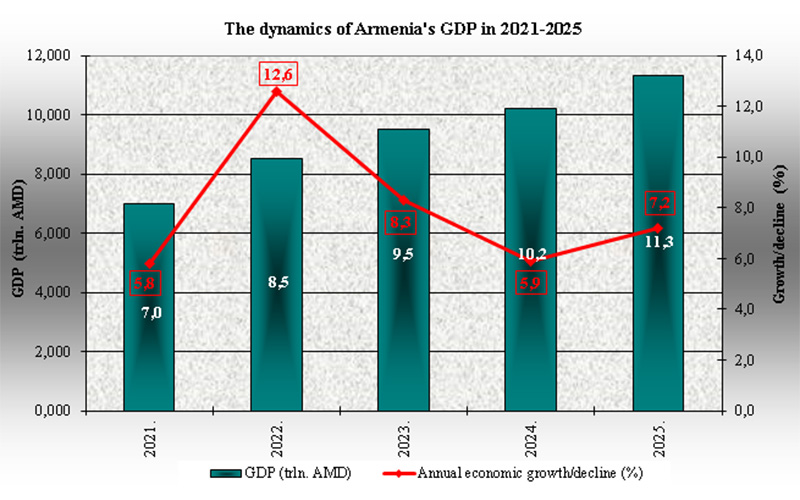
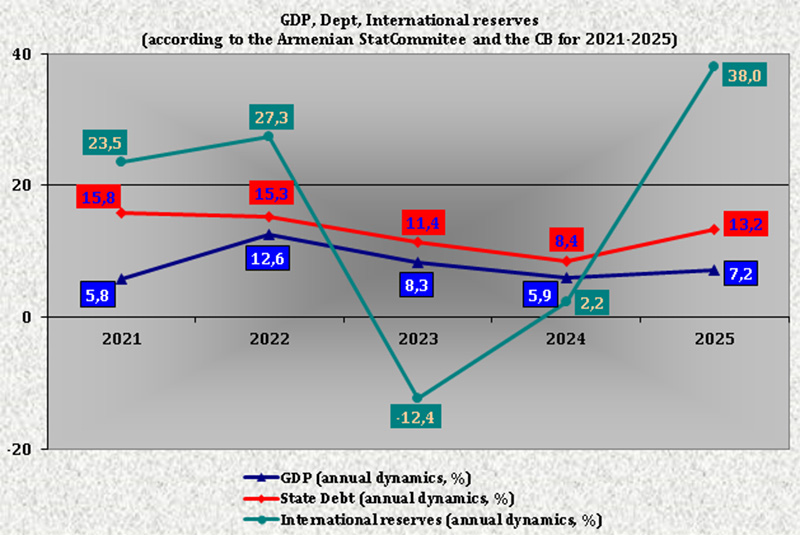
International financial institutions, as well as the Central Bank of the Republic of Armenia, forecast a significant slowdown in GDP growth from the double-digit 12.6% in 2022 to single-digit rates for 2023. f Thus, the World Bank (WB) and the International Monetary Fund (IMF), having updated their forecasts in May-June, pointed to a more visible slowdown in Armenia's GDP growth this year to 4.4% and 5.5%, respectively. Slightly higher GDP growth rates for 2023 are projected by the American rating agencies S&P, Fitch and Moody's - 7.5%, 7.2% and 7%, respectively. The Central Bank of Armenia, which updated its forecast in mid-September, once again improved it - this time from 6.9% to 7.2%.