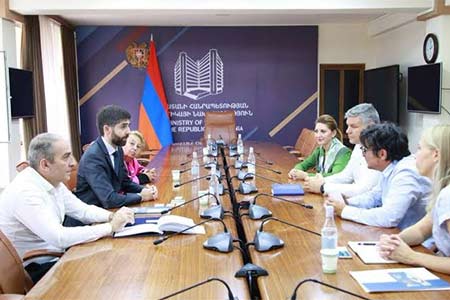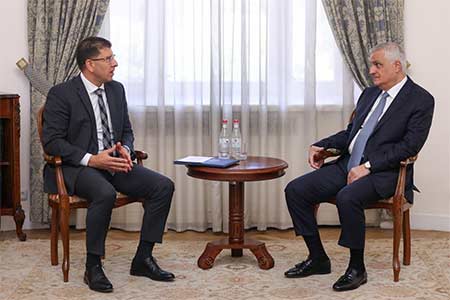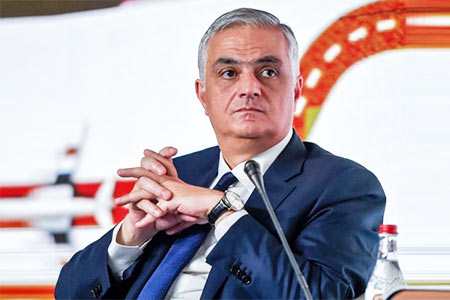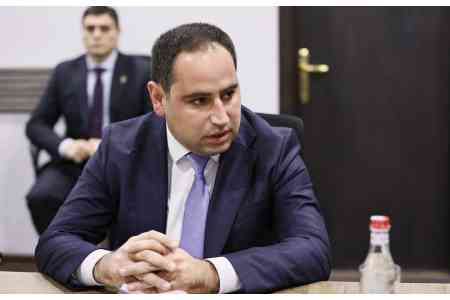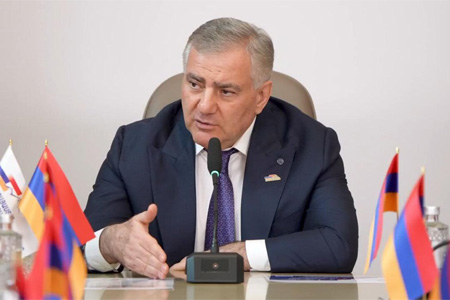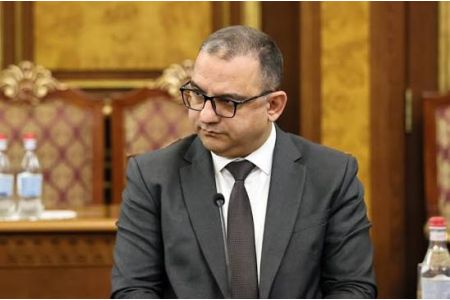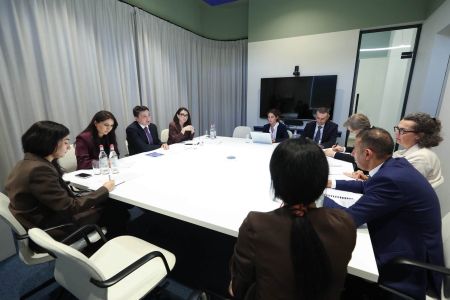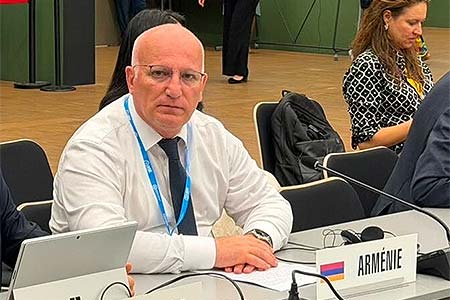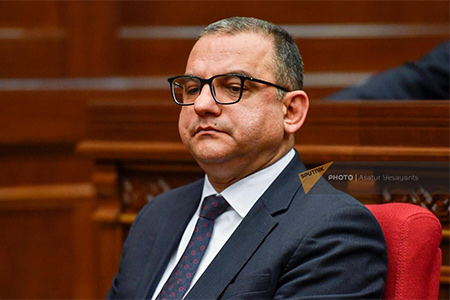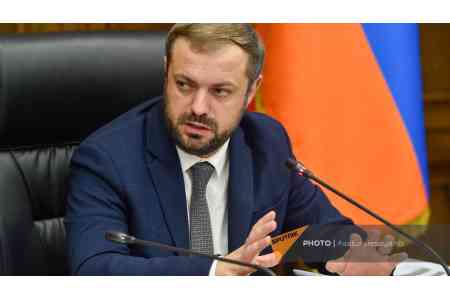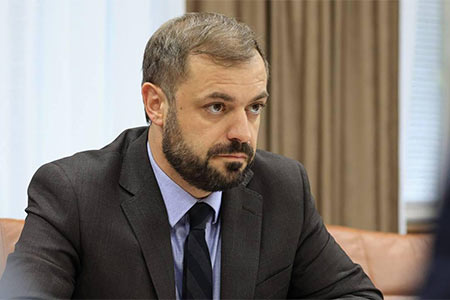


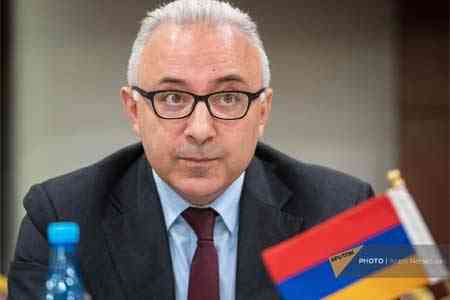
ArmInfo. Armenia could serve as a bridge between India, Iran and EAEU member-states, Armenia's Deputy FM Mnatsakan Safaryan stated at the conference entitled "New Regional Realities and the 'Crossroads of Peace'" which has opened in Yerevan.
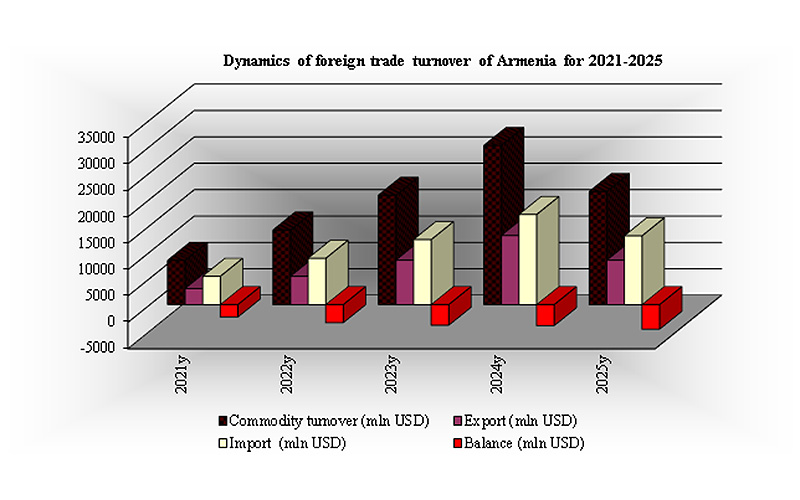
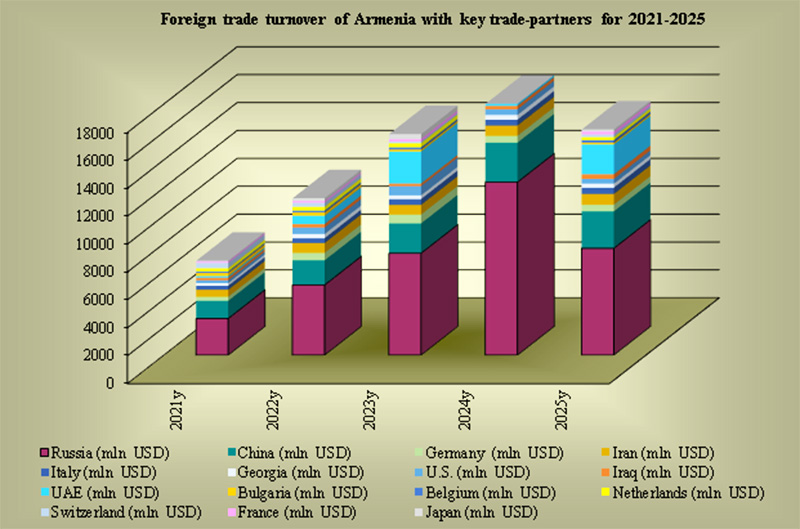
According to him, Armenia strives to develop traditionally good neighborly relations with Iran, and active steps are being taken to build up the economic component in bilateral relations, including within the framework of multilateral cooperation. In this context, Yerevan notes the importance of joint efforts in implementing programs aimed at developing regional cargo transportation, infrastructure, transport communications, as well as energy projects of mutual interest. Iran is Armenia's fourth partner in terms of trade volumes, and the most important transit route for cargo transportation towards Asia and the Middle East.
As the Deputy Minister emphasized, the opening of borders with Turkey can also play a decisive role. An agreement has already been reached to open borders to third-country citizens holding diplomatic passports. "We hope that this significant step will be implemented in the near future," Safaryan said.
As for India, as the Deputy Minister emphasized, Armenia has always shown interest in the cultural heritage of this country. Over the past 30 years, traditionally friendly relations with India have been consistently strengthened, and over the past three years, these ties have begun to develop at an accelerated pace, especially when it comes to political dialogue. The development of relations between Yerevan and New Delhi is one of Armenia's foreign policy priorities. Most recently, a new format of cooperation between Armenia, Iran and India was launched. In April of this year, the first negotiations between representatives of the Foreign Ministries of the three states were held, during which economic problems and ways to solve them, as well as areas for deepening cooperation in the field of culture were discussed.
"Armenia can become a bridge between India, Iran and the EAEU countries. "Since Iran has an agreement on a Free Trade Area with the EAEU, and India is at the stage of negotiations on a similar legal mechanism, Armenia as a member of the Union can be a bridge for Tehran, New Delhi and other members of the Organization," Safaryan said, adding, that in this regard, the Persian Gulf - Black Sea corridor can become an additional incentive for expanding cooperation.
In turn, Iranian Ambassador to Armenia Mehdi Sobhani emphasized that the transport corridor from India through Iran and Armenia will become a reliable direction towards Europe. He added that Iran's border with Armenia is short in length, but one of the best in quality. It has always been the border of peace and friendship.
The diplomat emphasized that relations between Armenia and Tehran are developing in different directions. Trade turnover between the two countries has reached $1 billion. Both countries have mutually beneficial projects in energy and infrastructure. "We are also trying to explore the hidden potential of our countries. There is no doubt that transit infrastructure, as well as the opening of regional communications, will not only help strengthen bilateral relations, but will also open the way to regional development," the Iranian ambassador said.
In this context, the diplomat pointed out the importance of the transport corridor from the Indian port of Chabahar to Armenia and further to Georgian ports on the Black Sea, which will become a reliable route for sending goods to the North and Europe. The development of this road, according to Sobhani, will insure countries from the effects of external factors. "The more communication routes countries have, the more important they will become in the world. Iran supports the territorial integrity of Armenia, peace and stability in the region," concluded the Iranian diplomat.
Meanwhile, as Indian Ambassador to Armenia Nilakshi Saha Sinha noted, New Delhi welcomes Yerevan's decision to become a participant in the Chabahar port development project and is ready to work with Yerevan within the framework of the North-South road transport corridor. "India and Iran are closely cooperating within the framework of the North-South corridor, which connects the Persian Gulf countries with the Caspian Sea, the Russian Federation and the EU. Armenia is also part of the project, and we are ready to work with it to understand how it can benefit from the functioning of this corridor," the diplomat said. She also emphasized that increasing economic flows to Asia opens up new opportunities for countries in the region. The Ambassador emphasized that India proposed to include the Chabahar port in the North- South ITC project, and this will soon become a reality. "Armenia is developing its infrastructure and logistics capabilities from the Iranian border in the south to the Georgian border in the north. Some Indian companies are interested in this project. We are ready to participate in the implementation of infrastructure programs in Armenia," said the Indian diplomat.
Back in 2016, Iran put forward a regional initiative to expand the international transport and transit corridor "Persian Gulf - Black Sea", which, in addition to the Islamic Republic itself, includes Armenia, the Republic of Azerbaijan, Georgia, Bulgaria and Greece. This multimodal corridor starts from the Persian Gulf and southern Iran, then runs north across the country and then into Armenia and/or Azerbaijan, from where it reaches the Georgian ports of Poti and Batumi on the Black Sea. From there, ships with wheeled vehicles carrying cargo cross the Black Sea, heading to the Bulgarian ports (Burgas and Varna), after which the cargo is sent again by road to Greece and further to the EU. After four rounds of expert negotiations - in Tehran (2016), Sofia (2017), Tbilisi (2018) and again in Tehran (2019), the fifth meeting of experts on this corridor was organized by the Ministry of Foreign Affairs of the Republic of Armenia in Yerevan April 19, 2021.