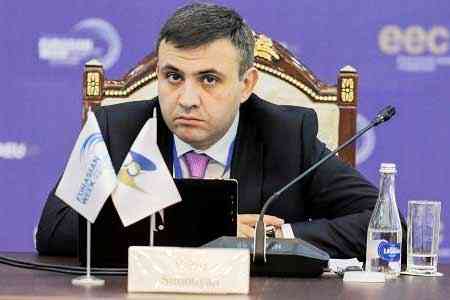



ArmInfo.A weak deflationary impact on the Armenian economy is expected from the external sector. Governor of the Central Bank of the Republic of Armenia, Martin Galstyan, stated on at a press conference January 30, presenting the rationale for today's reduction in the refinancing rate by 0.5 pp - setting it at 8.75%.
In particular, he explained: "In the fourth quarter of 2023, economic activity in the world and the main partner countries of Armenia continued to slow down. The inflationary environment in international commodity markets is softening, and global inflation is slowing down somewhat. However, the positive dynamics of the partner countries' labor markets "continues to contribute to the expansion of demand. At the beginning of 2024, due to the aggravation of geopolitical developments in the Middle East, a certain increase in energy prices was recorded and risks of disruption of supply chains emerged. In this situation, the central banks of leading countries will gradually ease restrictive monetary conditions in the near future." The head of the Central Bank noted that the high rates of growth of the construction and service sectors continued to contribute to the maintenance of high economic activity in Armenia in the fourth quarter. External demand slowed down somewhat due to slowdown in tourism growth. At the same time, domestic demand remains high, which is reflected mainly in the high growth rate of private consumption. Given the weak deflationary impact from the external sector and the contractionary monetary policy implemented in previous years, a low inflation environment remains. The latter also continues to be reflected in the labor market through a slight slowdown in wage growth and lower inflation expectations.
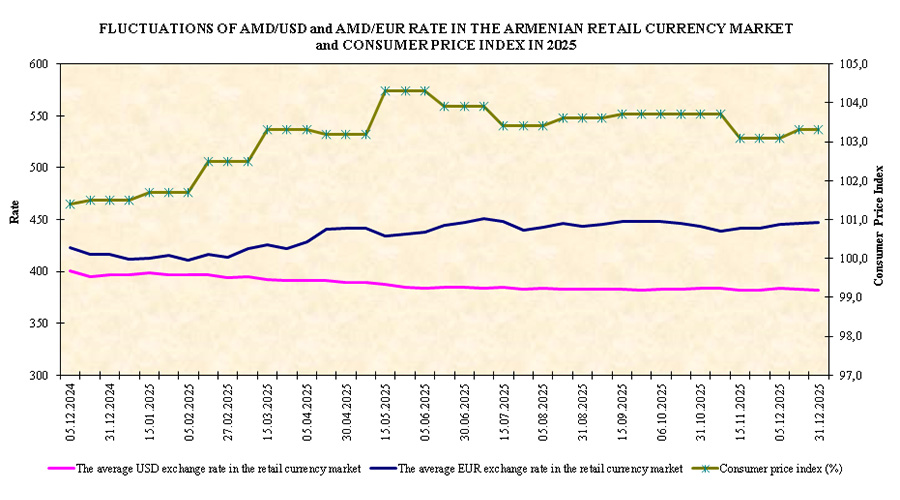
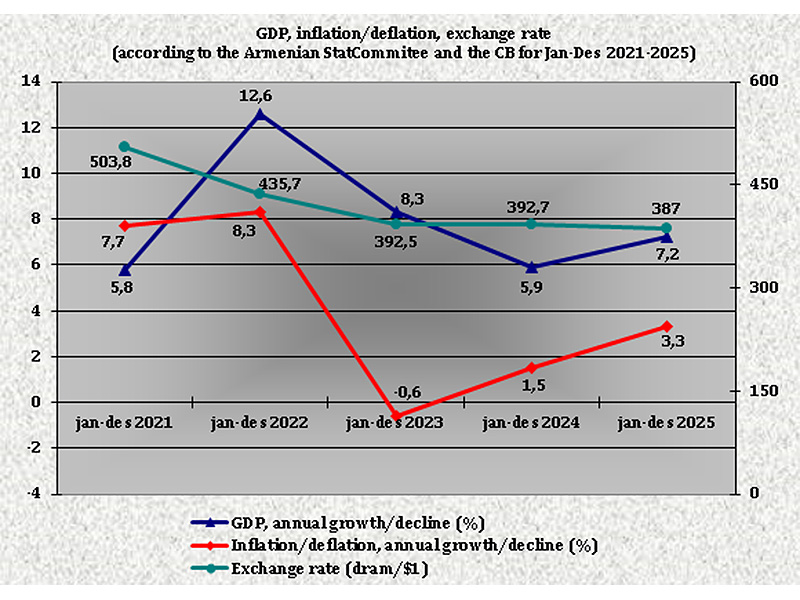
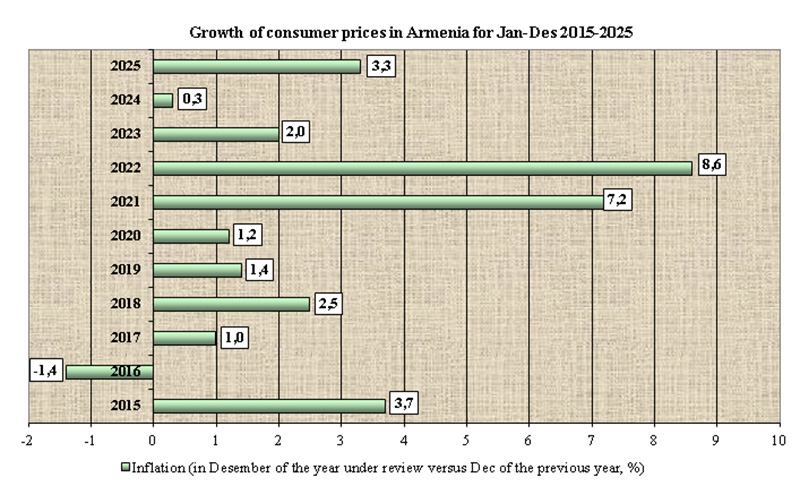
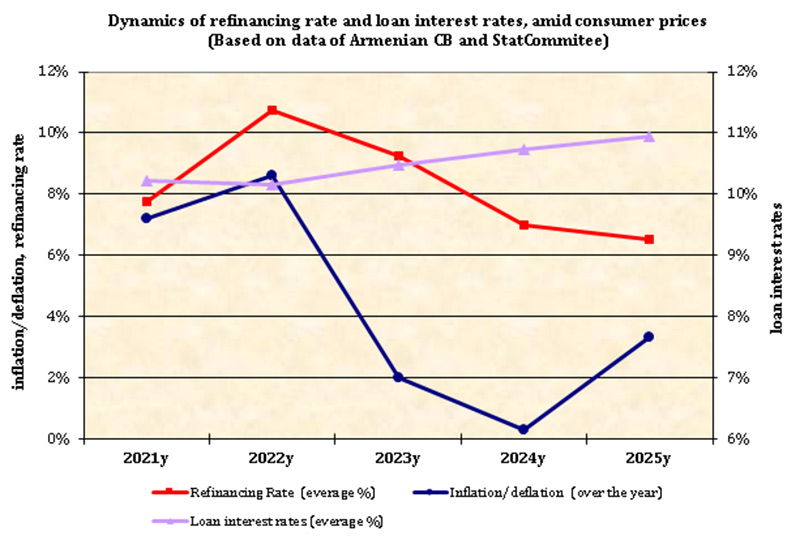
As Galstyan emphasized, in the current situation, the Central Bank' Board considered it appropriate to reduce the the refinancing rate setting it at 8.75%- from 9.25%.The Central Bank will continue to be consistent in its actions to ensure demand adjustment and stabilization of inflation expectations. In the monetary policy scenario, y-o-y inflation will remain below the target threshold in the near future, but will then gradually increase and stabilize in the medium term near the target of 4%. He noted that in December 2023, compared to December 2022, deflation of 0.6% was recorded in Armenia (according to statistical data), and the base indicator (calculated by the Central Bank) for this period was at the deflationary level of 0.4% (against the corresponding y-o-y inflation of 8.3% and 9.5% in December 2022, ed. note).
According to the Central Bank Board, the risks of inflation deviating from the planned trajectory are largely balanced. If risks of any direction arise, the Central Bank will respond appropriately in order to ensure price stability.
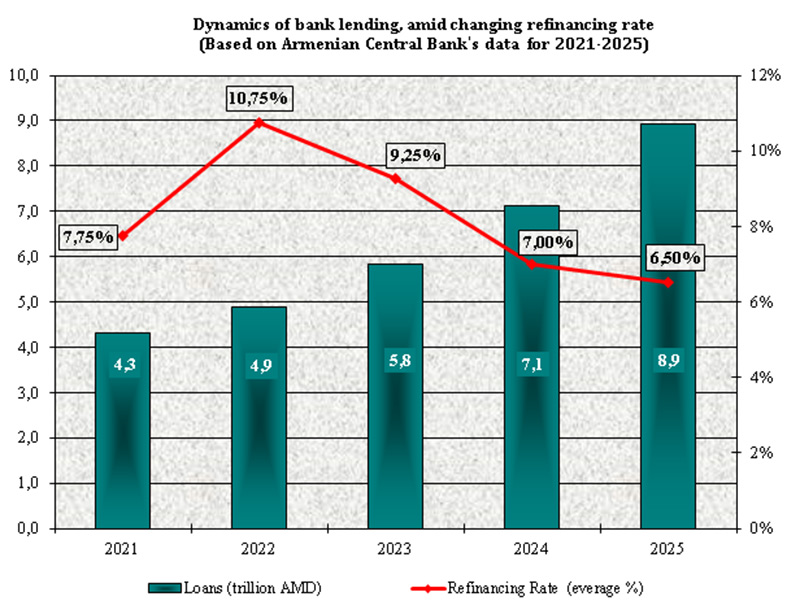
A year ago, in January 2023, the refinancing rate remained at the historically maximum level of 10.75%, remaining at this level until June 13, when the first reduction followed after two years of repeated increases. So, on June 13, 2023, the key rate was first reduced by 0.25 p.p., then on August 1 - by the same amount, then on September 12 the decline was more noticeable - by 0.5 p.p., after which on October 31 the rate was reduced by 0.25 p.p. and the same on December 12th. Before this, the rate had been increasing for 2 years, reaching a record level of 10.75% at the end of 2022; in particular, in 2021-2022, the key rate was revised 12 times upwards, and in 2023 - 5 times downwards. However, today's key rate level of 8.75%, even after the reductions made 6 times (in 2023 and January 30, 2024), far exceeds the minimum level of 4.25%, which was recorded in September 2020 before the start of the period of increases (from December 2020 to December 2022).