

ArmInfo. Global economic growth will slow, according to the Macroeconomic Outlook 2024-2026 by the Eurasian Development Bank (EDB).
The major central banks will soon complete their monetary tightening cycle that has extended longer than anticipated. Inflation, albeit subdued in developed countries, will remain elevated for a while, driven by supply constraints, setting the stage for prolonged tight monetary conditions. As a result, U.S. GDP growth is forecast to be low at 1.0% in 2024, potentially dipping into a shallow recession in early 2024. U.S. economic growth will remain below 2% per year in the medium term, while the Eurozone economy will grow by 0.9% in 2024 and by around 1.5% per year in 2025-2026. China's economic activity will weaken in the medium term due to soft global demand and domestic structural problems, and its GDP growth will decrease from 5.6% in 2023 to about 4% per year in 2024-2026.
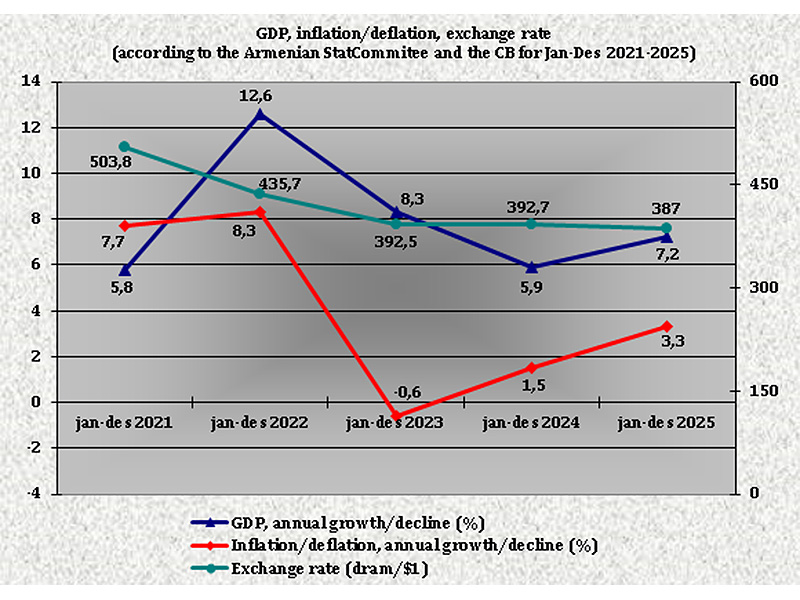
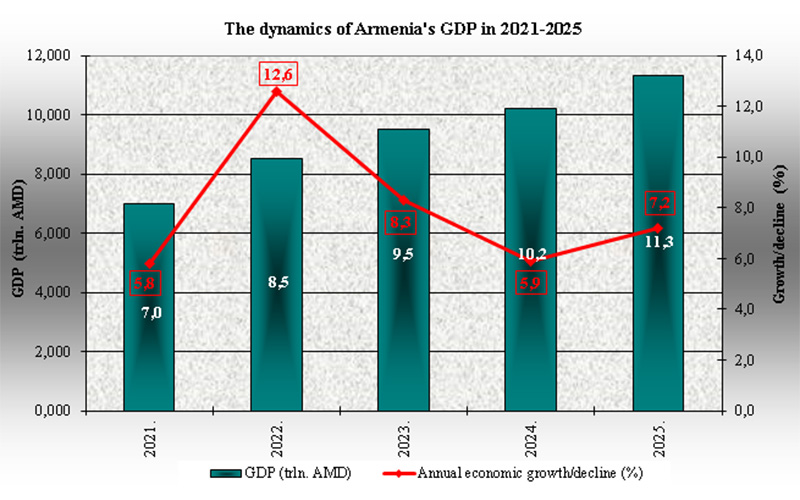
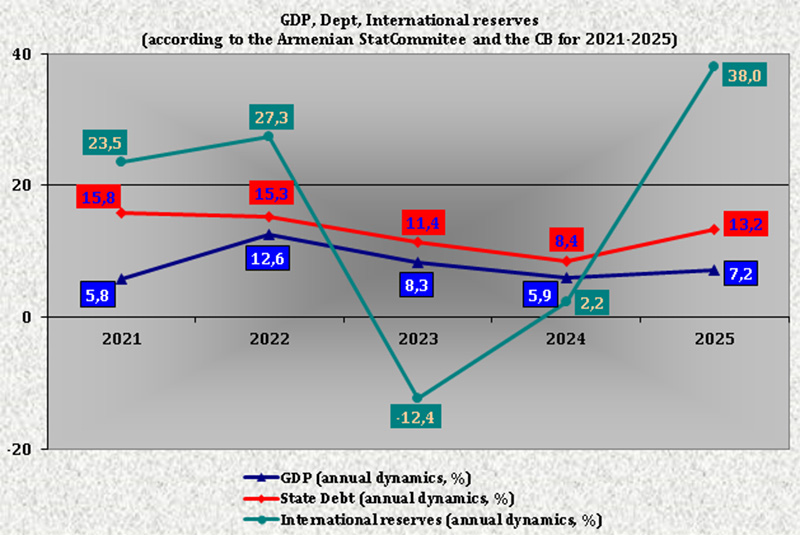
Thanks to domestic sources of growth, the GDP of the EDB operating region will increase by 3.4% in 2023. The economic outlook for the region in 2023 has improved in line with growth estimates for all countries. The economies of Russia and Belarus have adapted to the new conditions and restored GDP to its pre-crisis levels in 3Q2023. We expect GDP to grow by 3.9% in Belarus in 2023 and by 3.1% in Russia. We have raised the economic growth forecasts to 4.8% for Kazakhstan, 8.3% for Armenia, 4.6% for Kyrgyzstan, and 8.2% for Tajikistan.
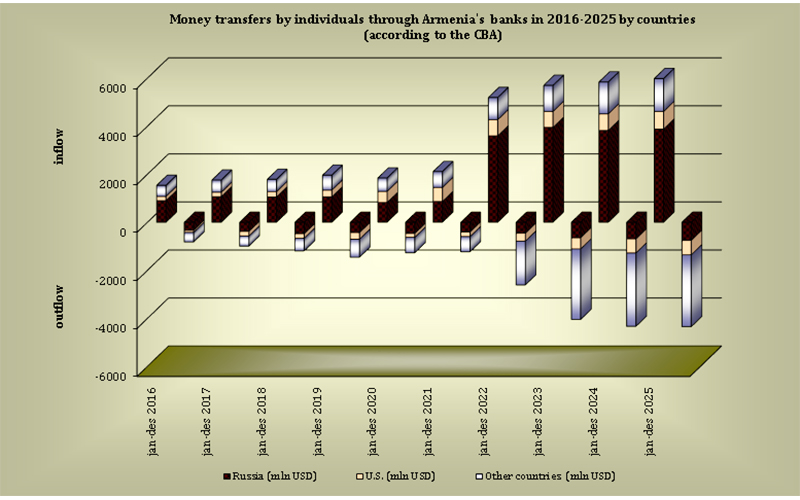
In 2024, the region's economic growth will reach 2%, driven by the Russian and Belarusian economies returning to their equilibrium after rapid recovery in 2023. With domestic demand shrinking, Russia's economy will grow by 1.5% in 2024, affecting GDP in most countries of the region due to decreased exports from these countries and lower remittances to them. We expect economic growth to slow to 5.7% in Armenia, 2% in Belarus, and 7.3% in Tajikistan. Investment policy will stimulate Kazakhstan's GDP growth, bringing it to 5.0%. An increase in the output of base metals in Kyrgyzstan will raise GDP by 4.5%.
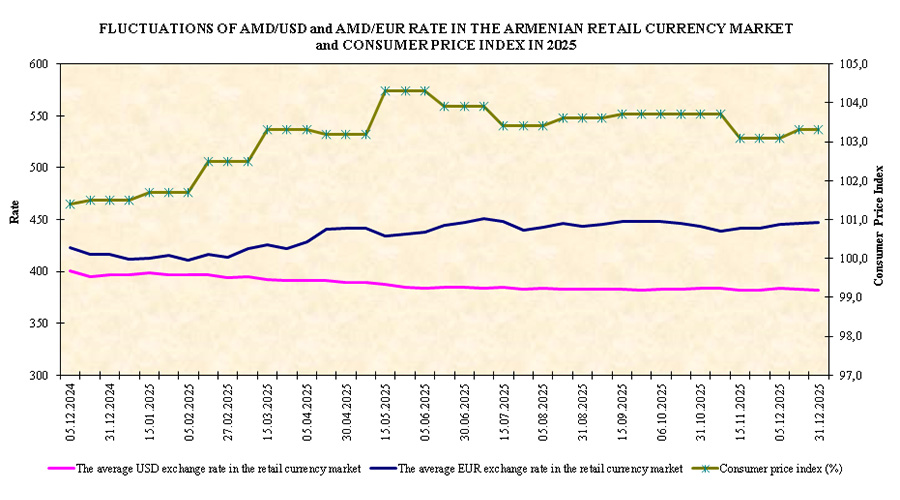
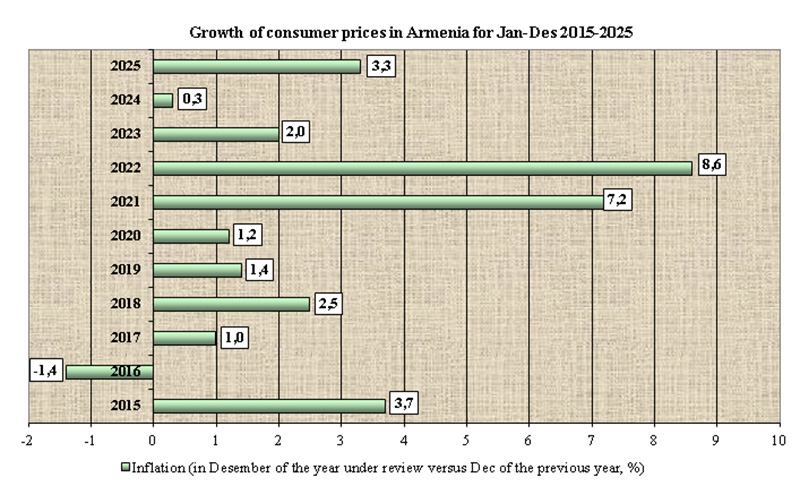
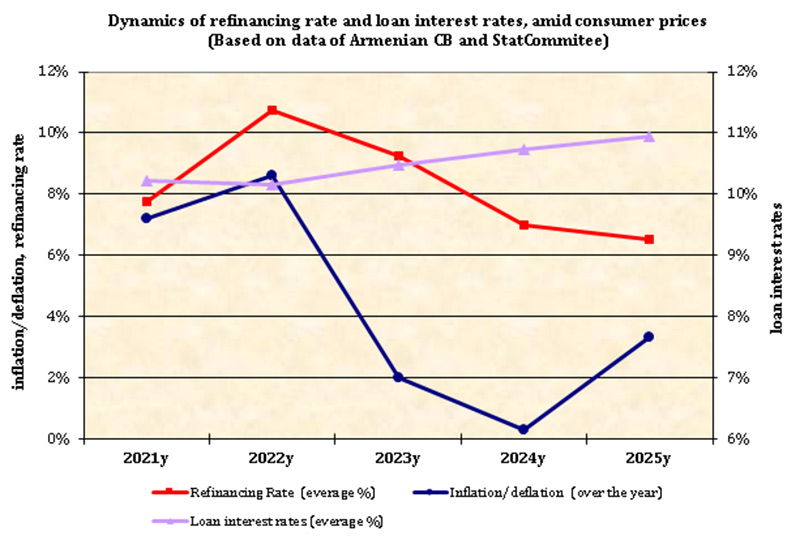
Inflation in the Bank's operating region will be about 5.8% in 2024, down from 7.8% in 2023. It was 13.1% in 2022, but a tight monetary policy adopted by central banks slowed it down considerably. However, some countries in the region have experienced price pressure in the second half of 2023 due to the overheating labour market and large-scale economic stimuli. These pressures will ease in 2024, encouraged by the central banks' policies to cool domestic demand, but inflation will still remain above target. High interest rates will cause consumer price growth in Russia to slow to 5.4% in 2024 from 7.9% in 2023. Inflation in Armenia will approach its target range of 3.6%. Price growth will continue to slow down in Kazakhstan to 7.1% in 2024 and in Kyrgyzstan to 7.8%. The inflation overhang in Belarus caused by price regulation has paved the way for price growth to accelerate to 8%. Tajikistan's inflation will accelerate to 6.6% amid a spike in domestic demand.