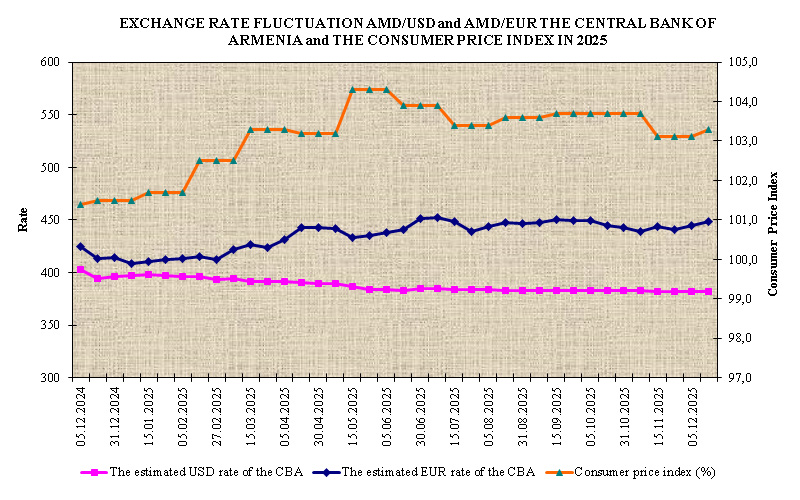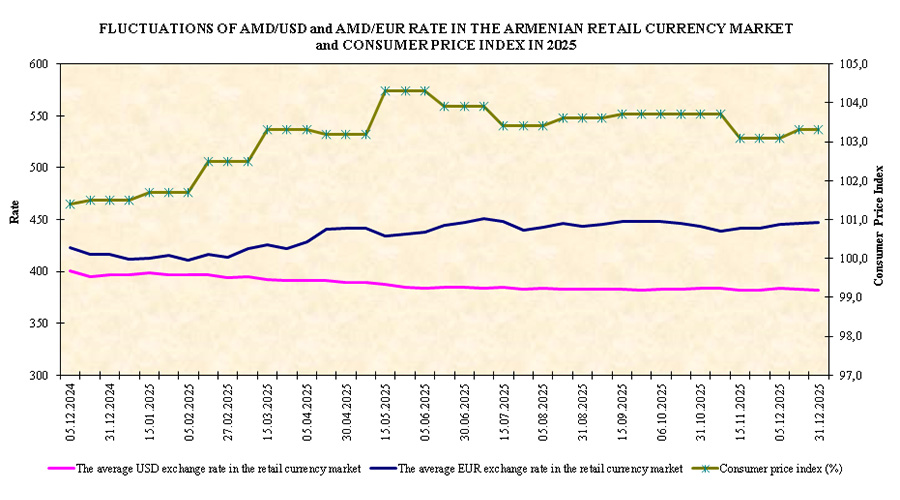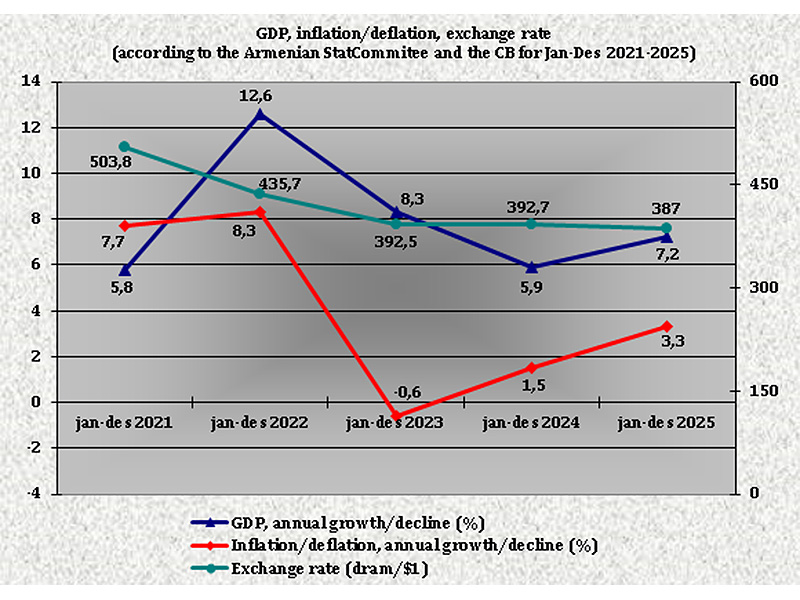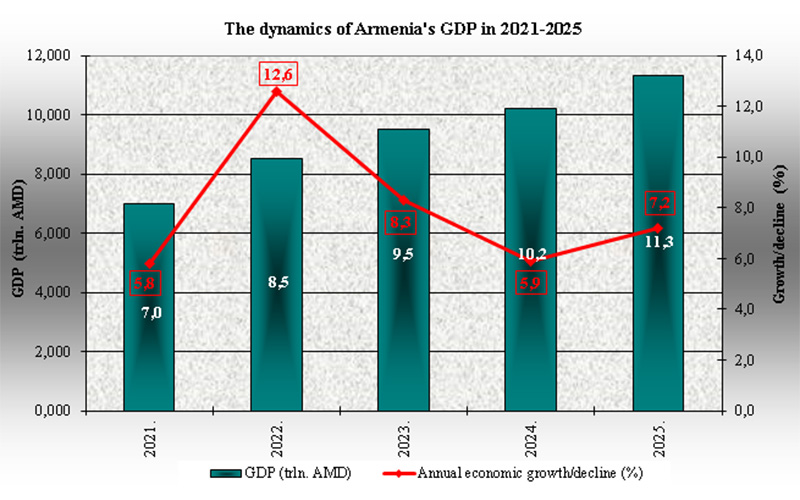



ArmInfo. The external inflationary impact on the Armenian economy continues to weaken significantly. Governor of the Central Bank of the Republic of Armenia, Martin Galstyan, said on March 12 at a press conference on the reduction of the refinancing rate to 8.5% from 8.75%, noting that lowering the key rate is necessary to achieve the target inflation level of 4% and ensure price stability in the medium term.
"In Q1 2024, economic activity in the world and in Armenia's main trading partners continues to slow down, and y-o-y inflation continues to decline. However, the inflation environment remains elevated due to inflationary pressures emanating from the labor market. It is expected that in the near future, the central banks of the main Partner countries will maintain a contractionary monetary policy stance, which could create risks of contraction in global demand and reducing inflation. With rising geopolitical tensions in the Middle East, supply chain disruptions and worsening financial and economic problems in China, there are risks associated with a slowdown in global economic growth and price volatility on international commodity markets," he explained.
Galstyan noted that in Q4 2023, economic activity in Armenia remained at a high level, which continued to be supported by high growth rates in the construction and trade sectors. External demand is slowing, but domestic demand remains relatively high. Inflation in Armenia continues to remain low, which was mainly due to the contractionary monetary policy of the Central Bank, deflationary effects emanating from the external sector, as well as the consequences of the dram appreciation. At the same time, the increase in labor supply contributed to some extent to reducing the imbalance between aggregate demand and supply, which was reflected in the dynamics of wages and the cost of goods and services, with rigid prices, a decrease in inflation and inflation expectations.
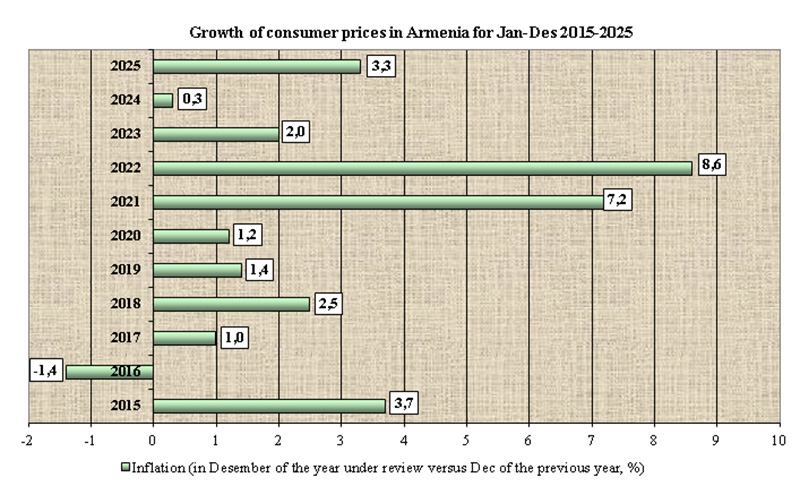
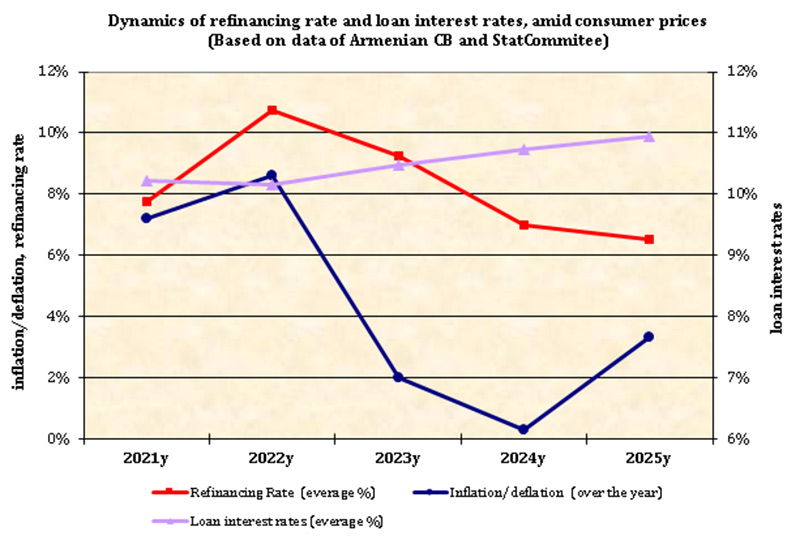
For clarity, he cited inflation data: according to statistical data, in Feb 2024, consumer prices continued to decline, recording y-o-y deflation at 1.7% (versus inflation of 8.1% in Feb2023). The core y-o-y indicator for February has not yet been calculated by the Central Bank, but the core y-o-y indicator for January was deflationary at the level of 0.4% (versus inflation of 9.1% in January 2023). Being committed to its goal of price stability, the Central Bank of Armenia is considering several scenarios in conditions of high uncertainty. In some scenarios, major developments, including still-high inflation expectations as well as uncertainty over the country risk premium (CRP), require stronger policy action to contain domestic demand, anchor inflation expectations and ensure price stability in the medium term. In other scenarios, however, possible economic developments, including continued expansion of labor supply and some weakening of demand, will create excess supply, leading to prolonged low inflation. This suggests a path for a faster and more significant reduction in the key rate in the medium term to stabilize inflation at the target level.
As a result, having balanced the risks in the two abovementioned directions, the Board of the Central Bank of the Republic of Armenia decided to continue to gradually soften monetary conditions at a slow pace. Continuing to monitor the economic development scenarios, the Central Bank is ready to respond appropriately to ensure inflation at the target level of 4% and price stability in the medium term.