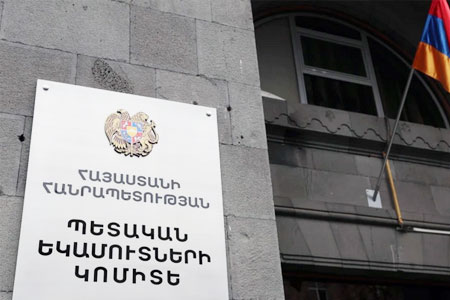
ArmInfo. At a meeting on May 2, the Armenian Cabinet approved the draft law "On the ratification of the "Agreement on a harmonized system for determining the origin of goods exported from the customs territory of the EAEU".
After the agreement comes into force (signed on December 4, 2023 in Moscow), as previously reported by the EEC, foreign trade participants exporting goods to third countries will have a document containing all the basic provisions on working with origin. This will help solve two problems simultaneously - simplifying access of Eurasian goods to foreign markets and preventing the emergence of barriers in the internal market of the Union>.
The agreement is aimed at creating uniform mechanisms for documentary confirmation of the origin of products exported from the EAEU and establishing uniform rules for the interaction of exporters with organizations that issue certificates of origin of goods.
In addition, the document lays the legal basis for the formation of a new institution in the Union that allows confirming the preferential origin of goods supplied to the EAEU free trade partner countries in a simplified format - the institution of authorized exporters.
Foreign trade participants who have received this status will be able to enjoy tariff preferences without the need to obtain certificates of origin for their goods. Thus, after receiving the appropriate authorization, instead of certificates, the receipt of which involves the need to contact authorized organizations, they will be able to draw up documents on their own, saving both their own time and financial resources.
An important role in the Agreement is also assigned to the issues of determining the origin of goods to which export regulatory measures are applied. A seamless internal contour is being created at the customs border of the EAEU, the emergence of which will allow the five countries to take a fresh look at the possibilities of fine-tuning export regulatory measures, thereby minimizing restrictions that periodically arise in mutual trade.