

ArmInfo. The Board of the Central Bank of Armenia, adhering to the policy of protecting individuals from currency risks, on May 24, 2024 decided to cancel the official clarification No. 1 to Article 7 (parts 5/1 and 8/1) of the Law "On Currency Regulation and Currency Control" introduced on March 11, 2007, according to which commercial banks were also allowed to issue card loans (including credit lines and overdrafts) in foreign currency.
According to the Central Bank's May decision, from now on commercial banks can only issue debit cards in foreign currency, and new card loans (including credit lines and overdrafts) can only be issued in AMD.
The Central Bank of Armenia justified its decision by the of cardholders, who, instead of using credit cards for current small purchases, mainly make one large purchase and then repay the loan over an excessively long period of time. The Central Bank believes that by doing so, credit card consumers deviate from the logic of this banking product, thereby creating long-term currency volatility risks and increasing the vulnerability of borrowers to currency risk. The Central Bank Board, also taking into account the convenience of this type of credit for some consumers who have card loans, which was also of concern to commercial banks, discussed a number of other options for containing the main risks arising from this type of credit, in particular residency, collateral, and the use of a differentiated approach to short-term loans and small loans. However, in the case of the options mentioned, the public costs of control over these types of loans were estimated disproportionately high, which was the reason for the withdrawal of the above- mentioned official clarification No. 1. The Central Bank also emphasizes that foreign currency card loans account for 7-8% of the total consumer loan portfolio. Thus, given the low share of foreign currency card loans, the implementation of the abovementioned changes at this stage will not have a significant impact on the economy in the context of financial intermediation, while it will refrain the population from assuming significant currency risk in the future. The Central Bank's message notes that during the analysis of the current situation, it turned out that about 70% of the issued foreign currency card loans are secured by collateral. In addition, the portfolio of foreign currency card loans is dominated by loans with a term of 7 years or more, and the average contractual term of the portfolio is 8 years. At the same time, long-term card loans increased significantly from January 31, 2023 to March 31, 2024 - by 9.73%, while over the same period, foreign currency credit lines with a repayment period of 12-15 years increased by 34.57%. At the same time, from April to May 12, 2024, the volume of foreign currency consumer loans issued to individuals exceeds the same period last year by 31.4%.
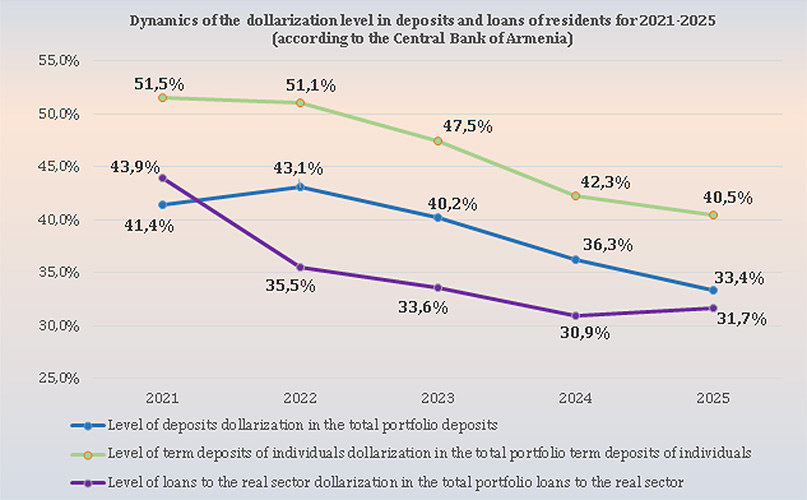
It is mentioned that the Central Bank's policy to protect individuals from foreign exchange risks was reflected in the amendments to the law "On currency regulation and currency control", which came into force in May 2023.
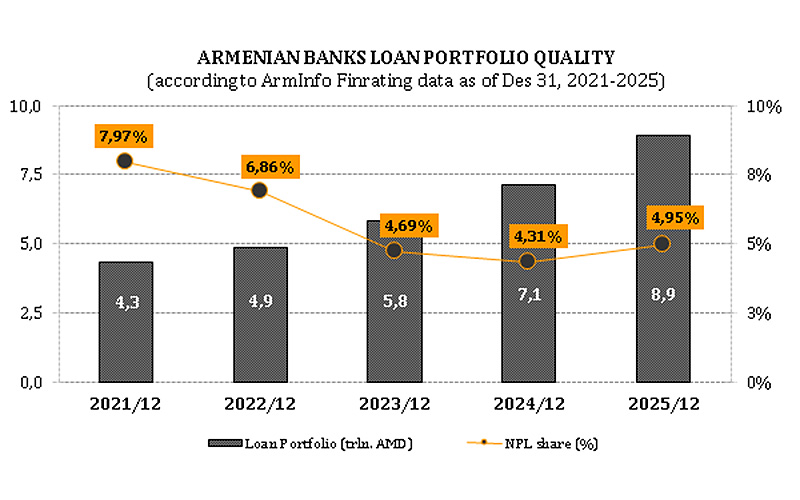
According to ArmInfo financial analysts, after 2022, additional demand obligations began to dominate the financing system, rather than time deposits as the main source. Therefore, issues of currency risk management have become one of the priorities for banks. However, it is not clear why the bank's clients themselves should be responsible for insufficient maintenance of the currency component of portfolios, insufficient management of currency risks and unprofessional GAP analysis, being deprived of suitable credit products. According to the Financial Rating of Armenian Banks as of May 31, 2024, prepared by ArmInfo, the volume of overdue consumer loans increased by 19% year-on-year, to 6.4% of the total volume of consumer loans and about 3% of the total loan portfolio. Moreover, overdue consumer loans traditionally dominate the total overdue debt - over 45.2%. And it is especially worth noting that the lion's share of overdue consumer loans is classified as high risk - this is a dubious and hopeless group, where about 67% has accumulated.