


ArmInfo.As of today, hail has damaged 8.7 thousand hectares of agricultural land. This was reported in Parliament on June 11 by Deputy Minister of Economy of Armenia in charge of agriculture Arman Khojoyan.
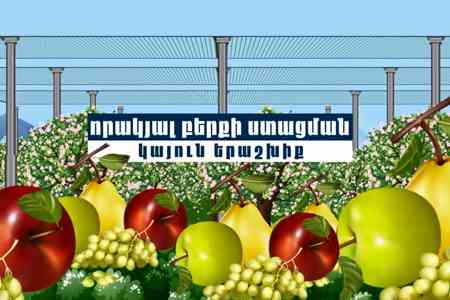
He noted that this is not a final assessment, since hail continues to fall. But at the moment, according to the deputy head of the department, the situation has developed in such a way that in certain regions the damage is 20-30%, in other areas it reaches 70-80%, and somewhere even 100%. <If hail was previously considered a risk that falls from time to time. Now it has become a recurring disaster. We have launched a program to introduce anti-hail networks and we think that with such tools we will be able not only to reimburse expenses, but also protect the harvest>, - said Khojoyan.
Today, as the Deputy Minister further reported, consultations are being held on this topic in an expanded format, during which it was possible to determine certain approaches necessary for implementation. The department will present a final assessment of the damage caused only at the end of June. <Then we will come up with a proposal, but it will be based on the assessment of expenses that was in effect in the insurance system>, he added.
Recall that in early May of this year, Economy Minister Gevorg Papoyan reported in Parliament that as a result of a strong hailstorm that hit the Ararat region of Armenia the day before, local farmers suffered significant damage. As an assistance measure, he then recalled the agricultural risk insurance program, according to which the state subsidizes 70 to 80% of the entire lost harvest. The farmers themselves pay insurance payments in the amount of only 20%, the remaining 80% falls to the government. Thus, as Papoyan emphasized then, the affected farmers will receive the necessary compensation. As for villagers who have not insured their risks and who have credit obligations, decisions will be made on each individual case together with the country's commercial banks.