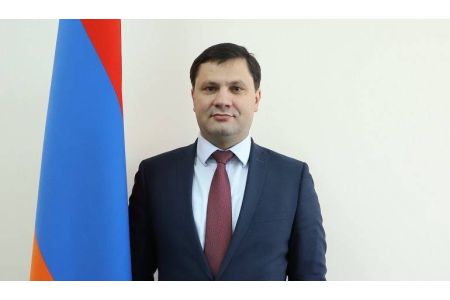
ArmInfo. As of now, 60-70% of the work defined in the roadmap for the implementation of the Comprehensive and Enhanced Partnership Agreement between Armenia and the European Union has been completed. This was stated by Deputy Minister of Economy of the Republic of Armenia Anushik Avetyan during working discussions in the country's parliament, as reported by the press service of the National Assembly of the Republic of Armenia.
In general, as the Deputy Minister emphasized, the implementation of work related to the Ministry of Economy of the Republic of Armenia is assessed as satisfactory. The remaining work on the approximation of legislation and legal acts continues. In the process of updating the roadmap of the Agreement, the emphasis is placed on actions subject to approximation and priority areas for reform.
The economic block of the Agreement includes four main areas within which relevant activities are carried out: consumer protection, improving the quality of infrastructure, agriculture and tourism. In the process of protecting consumer rights, legislative acts provide for institutional changes and the full formation of a single institutional function within the Commission for the Protection of Competition, which will be renamed and will deal with consumer rights protection issues. At present, the digital platform "Consumer Assistant" is also functioning, which allows you to file an online complaint, receive notifications about the status and progress of the complaint.
In terms of improving the quality of infrastructure, laboratories have been created to certify the quality of food products, where products that have passed the test can be exported to European markets. The next step is to work with local economic operators. The work consists of facilitating the compliance of products with the above standards. Some products are covered by a state subsidy. Some laboratories continue to operate, which are being brought into compliance with international standards.
As a result of the implementation of the agreement, the legislative and legal framework in the tourism sector has been improved. In particular, the Law "On Tourism" was adopted, defining the institutional bodies and basic legal norms of the industry, by-laws established standards for the activities of tour operators, procedures for protecting consumer rights in the tourism sector, and safety rules for extreme tourism are being developed. In the near future, a digital platform will also be launched, on which data on all operators and related services in the tourism sector will be centrally posted.
A shortage of highly qualified specialists in the industry was noted as a problem in the effective implementation of the agreement.