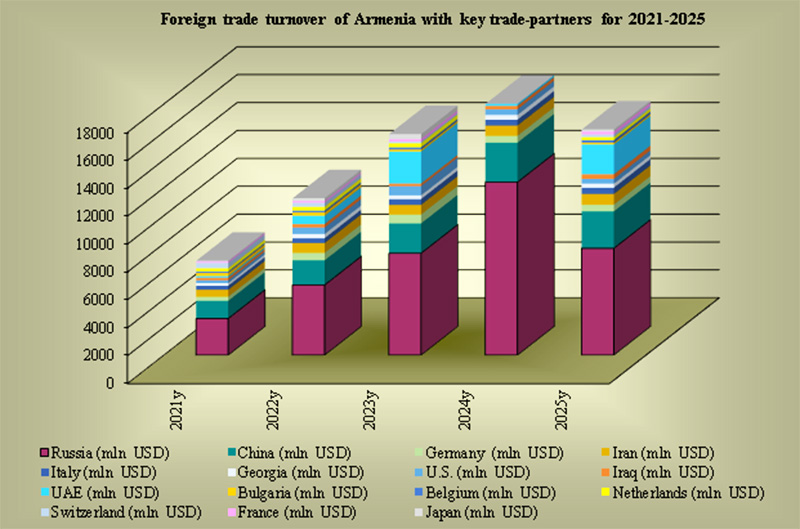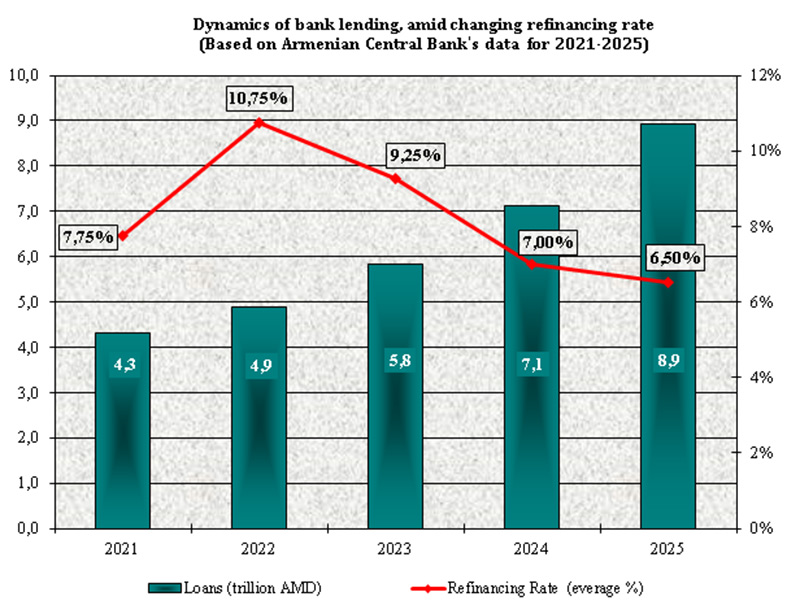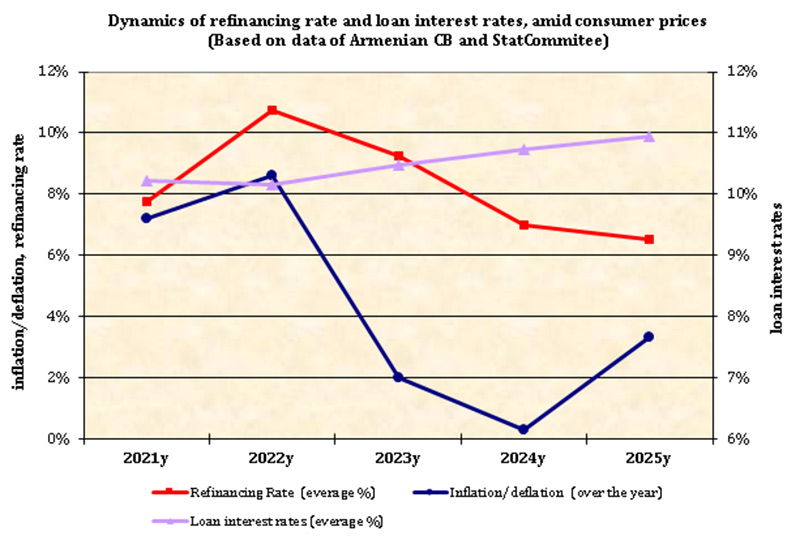



ArmInfo.High uncertainty in external demand remains due to t deterioration risks in the global economic growth prospects and the current trends in tourist flows and remittances to Armenia. Martin Galstyan, the Chairman of the Central Bank of Armenia, made this statement during a press conference on September 16, when presenting the rationale for the decision of the Central Bank Board to keep the key refinancing rate unchanged at 6.75%.
Galstyan explained that in Q3 2025, risks of a further slowdown in demand conditions globally and in Armenia's key partner economies persist, while inflationary pressures in the US have intensified. Uncertainty surrounding US trade policy and its macroeconomic implications remains elevated. Uncertainty has also increased regarding the medium-term implications of US fiscal policy, including the extent of aggregate demand support, the resulting rise in public debt, and its potential impact on long-term interest rates. At the same time, persistent geopolitical uncertainty and tensions in international trade relations continue to pose risks of supply chain disruptions and renewed global inflationary pressures. Further, global food prices have ticked up since the beginning of the year, primarily driven by supply factors. A persistence of these trends could be a primary source of further increases in global inflationary pressures. In this context, considering weakening demand conditions on the one hand and persistent inflationary risks on the other, central banks in major economies would be expected to either maintain or gradually ease their tight monetary stance.
In the third quarter of 2025, economic activity in Armenia continued to accelerate. Growth in demand- driven sectors continues to offset the gradual dissipation of certain short-term, non-structural growth drivers. Sustained, robust growth in the construction and services sectors has remained the key driver of overall economic activity. Following sustained declines in 2024 and Q1 2025, external demand for services has increased in Q2 and Q3. At the same time, uncertainty remains elevated regarding the sustainability of this growth, its long-term trajectory, and the future outlook for domestic demand. In this context, demand continues to have a neutral impact on inflation, while recent increases in headline and core inflation have been driven by supplyside factors. Wage growth, non-traded sticky price inflation, and inflation expectations continue to stabilize. At the same time, risks for medium-term demand pressures from fiscal policy persist. In the context of current macroeconomic developments, financial markets in Armenia generally expect the Central Bank of Armenia to gradually lower the refinancing rate over the next twelve months to approximately 6.25%. The Board resolutely affirms its commitment to adopting the appropriate policy actions and strategy to ensure the price stability objective of 3% inflation in the medium term.
In Q3 2025, the global growth outlook has continued to deteriorate.
The global growth outlook continues to deteriorate in the third quarter of 2025. Recent volatility in US growth, driven by large changes in imports and inventories, has created uncertainty about economic fundamentals. Consumption has slowed but remains relatively strong. The significant downward revision to the labour market indicators in the second quarter suggests that conditions in this market have improved. At the same time, a tightening of immigration policy could lead to a tightening of labour market conditions and increase inflation risks.
The outlook for US trade and fiscal policies remains highly uncertain. Given the expected significant increase in the budget deficit and public debt, the risks of a possible increase in long-term interest rates have increased.
The above developments could affect not only the outlook for the US Federal Reserve's monetary policy, but also the neutral interest rate and capital flows in emerging markets. Although US inflation has gradually approached the target level in recent quarters, significant upside risks remain. The sharp increase in imports and inventories in Q1 2025 has to some extent prevented the impact of tariffs from being reflected in inflation. However, prices of some consumer goods that are more sensitive to tariffs have shown an accelerating trend in June-August. This may contain the risks of a significant acceleration in inflation, but its scale and nature will largely depend on the outlook for domestic demand. This situation significantly complicates the US Federal Reserve's task of ensuring price stability and full employment, which is especially difficult in the context of questions related to the independence of the Federal Reserve. After a sharp acceleration in economic growth in the euro area in Q1 2025, driven by short-term factors, growth slowed significantly to 0.1% in Q2. This reflects structural problems in the economy and uncertainty related to global trade policy. The inflation environment has continued to stabilize in recent months, approaching the target level. Despite some decline in core inflation, it remains above the target level. The tight labor market situation points to mixed signs of easing. However, the medium- and long-term growth prospects remain uncertain and complex. On the one hand, structural problems and the trade agreement with the United States continue to put pressure on business sentiment and growth potential. On the other hand, fiscal stimulus measures aimed at addressing structural problems may have a positive impact on some manufacturing sectors. However, the focus on the military industry may lead to disproportionate economic development, as well as inflationary consequences. Global oil prices and inflation expectations continue to decline, although there remains considerable uncertainty about the outlook for oil prices. On the one hand, weakening global demand and actual and expected supply expansion by OPEC+ countries may lead to further decline in oil prices.
On the other hand, the escalation of geopolitical tensions, as well as the introduction of secondary sanctions against Russia, could lead to potential disruptions in supply chains and create inflationary pressure. Russia's economic growth in Q2 2025 slowed significantly to 1.1%. Inflation, as well as core inflation, despite some slowdown in recent months, remained significantly above the target threshold. Slower lending growth and continued weakening growth in trade and services create risks of a further decline in demand. At the same time, the ongoing tight situation in the labor market remains a source of additional inflationary pressure. Uncertainty about oil prices creates risks for fiscal policy, and deterioration in growth prospects could negatively affect oil and gas revenues. A significant slowdown in demand growth and the continuing tense situation on the labor market and high inflation expectations create serious problems for the Central Bank of the Russian Federation in terms of effectively managing the balance between inflation and economic growth in the short term, since the Central Bank of Russia continues to reduce the key rate (to 17% - from September 12 this year - Ed.).
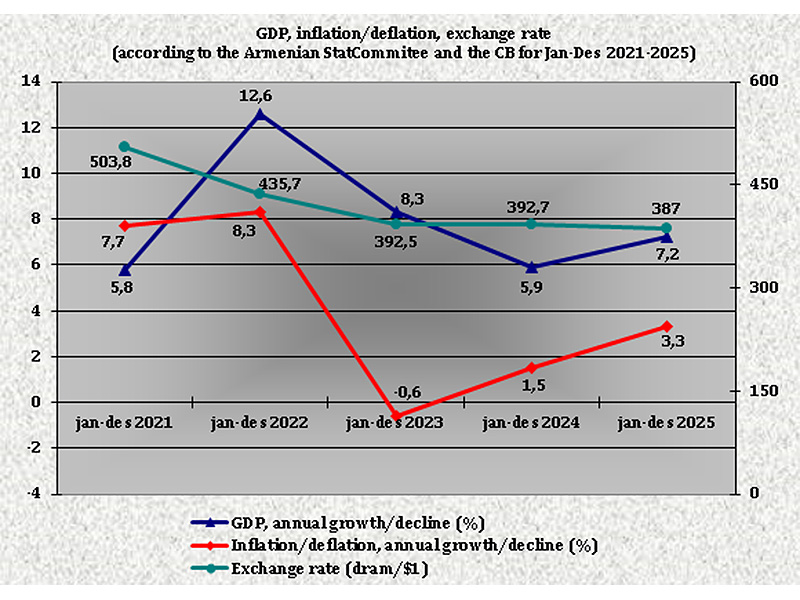
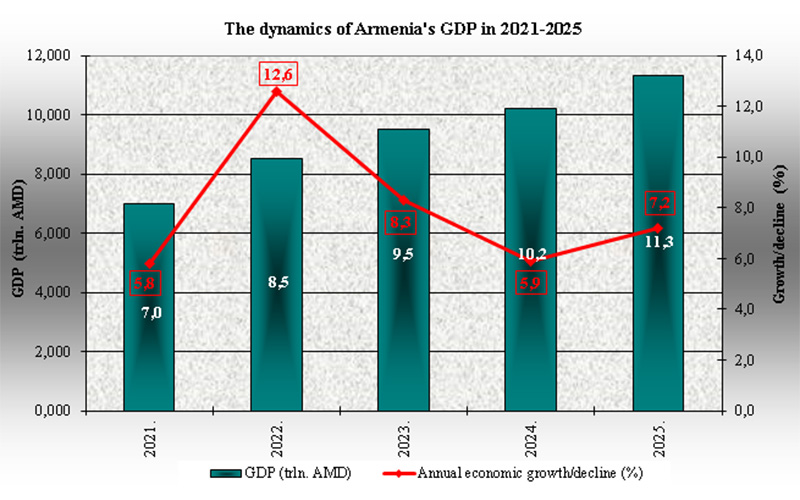
Domestic demand conditions remain subject to uncertainty Armenia's economic growth accelerated to 5.9% per annum in Q2 2025, approaching the upper bound of the estimated long-term sustainable growth rate. Moreover, this growth remained concentrated mainly in demand-driven sectors (including construction and services), which creates risks for the long-term growth prospects and sustainability. The construction sector continues to grow at a rapid pace, but with real estate prices adjusting, risks of growth in the construction sector and related industries, weakening aggregate demand and, as a result, deflationary risks remain. Although growth in the services sector remains concentrated in the IT and financial services sectors (a combined contribution to growth of 2 percentage points), the acceleration of growth in other segments, especially in recent months, points to a possible expansion of demand conditions.
As some short-term non-structural factors gradually weaken, trade and industrial growth are slowing. However, some segments of the industrial sector continue to demonstrate positive dynamics, which is reflected in the growth of production volumes, exports, demand for loans and production capacity. Tourist flows to Armenia, after a record acceleration in 2023, slowed down significantly in 2024 and the first quarter of 2025. However, since May 2025, the flow of tourists has increased significantly, reaching a historically high level, which was due to both the restoration of flows from Russia and the growth of tourism from other countries. The continuation of such trends in the future may entail risks of further expansion of external demand and acceleration of inflation in services that are highly sensitive to it.
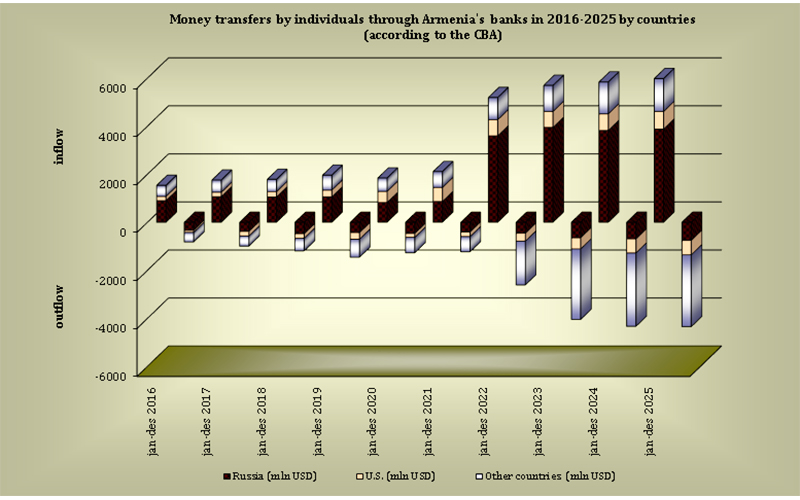
There is uncertainty regarding the trends of seasonal migration to Russia and methods of money transfers. On the one hand, long-term maintenance of the ruble exchange rate at the current level may increase incentives for labor migration from Armenia to Russia, while on the other hand, high uncertainty regarding the medium-term prospects of the Russian economy and tightening of migration policy may somewhat restrain migration flows to Russia, contributing to the growth of labor supply in Armenia and weakening the inflationary environment. Domestic demand conditions are still subject to uncertainty. The growth of lending, domestic tourism and a high level of accumulated savings that can be directed to consumption indicate strong domestic demand conditions. However, the structural features of economic growth may contain risks of forming a relatively weak demand environment.
There is high uncertainty regarding the impact of fiscal policy on demand. Despite the current high efficiency of tax revenues, there remain risks of possible underfulfillment of planned tax collections in the future. A possible increase in current expenditures due to the need to implement social assistance programs may negatively affect the budget deficit and public debt. A possible increase in some capital expenditures (especially road construction programs) may contain risks of additional demand growth. At the same time, the risks of underfulfillment of capital expenditures, as well as a weaker impact on demand due to their structural features, remain significant.
Uncertainty remains regarding conditions in labor market
Despite a slight increase in the unemployment rate in the first quarter of 2025 to 13.9%, which is in line with seasonal trends, it remains close to the long-term equilibrium level. According to the results of the labor force survey, compared to the same period last year, the number of unemployed has decreased, and the number of employed has increased, which is consistent with the growth in the number of officially registered workers (according to the State Revenue Committee of the Republic of Armenia). Although the above trends can be interpreted as a continuing reduction in the shadow sector of the labor market, signals from this market also indicate continued high demand in the economy. On the other hand, annual wage growth continues to stabilize in the range of 5-6%, and the concentration of growth has significantly decreased. This indicates a more balanced situation in the labor market and a reduction in structural imbalances in the economy. In the medium term, a possible increase in labor supply may further soften the situation in the labor market and reduce the associated pressure. The main uncertainties relate to the prospects of the Russian economy, trends in seasonal migration to Russia, the level of participation in the Armenian labour market, and the pace of integration of the economically inactive population into the labour market. Inflationary pressure transmitted from the global economy has increased
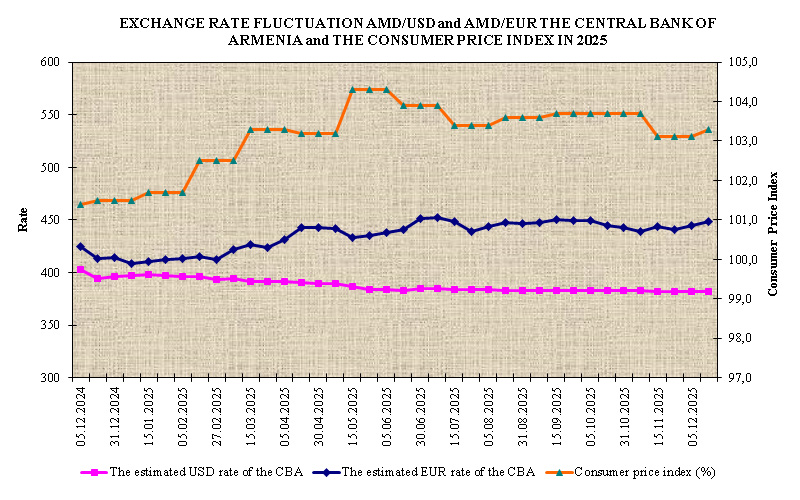
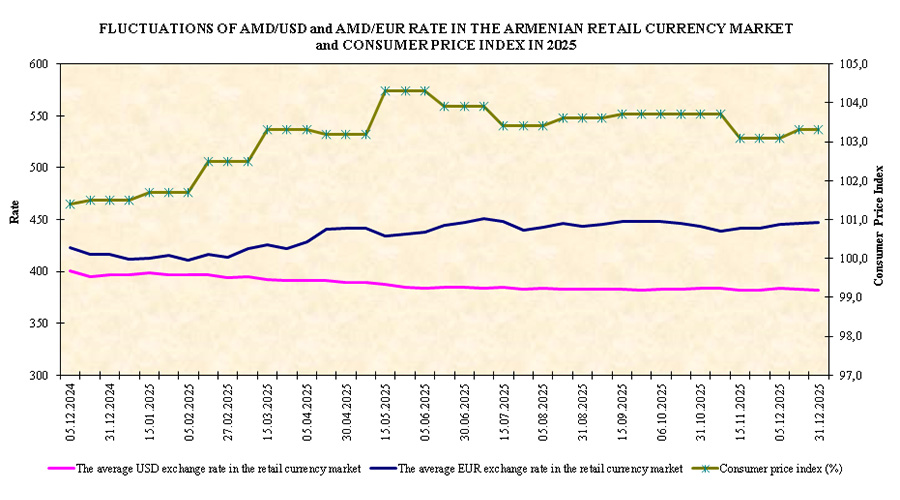
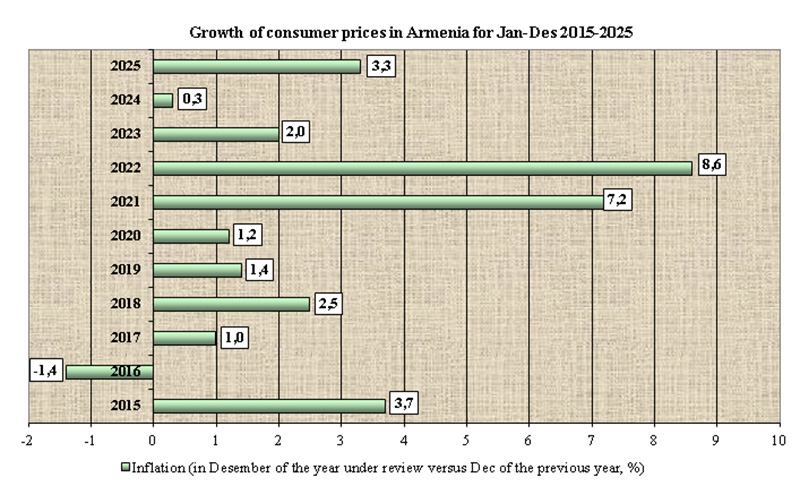
Since 2025, inflation has shown a tendency to accelerate, reaching 3.6% per annum in August. This is largely due to seasonal supply factors, the impact of which was already neutralized in June-August. Inflationary pressure transmitted from the global economy has increased in recent months (especially for imported food products), which also reflects the dynamics of world food prices (FAO). At the same time, deflationary pressure from non-food products is gradually neutralizing, reaching 1.1% y/y in August.
In the future, the preservation of inflationary trends transmitted from the global economy, mainly due to supply factors, may contain the risks of accelerating inflation of imported goods and expanding the inflationary environment. Since the beginning of the year, there has been a certain acceleration of inflation in prices for services, which is largely due to the high inflationary impact of air transport (inflation in the services sector, excluding air transport, remained below the target level - in the range of 2-2.5%). At the same time, since May 2025, there has been an acceleration in price growth for a number of services, mainly sensitive to external demand (hotels, restaurants, etc.), which is generally comparable with the trends in accelerating tourist flows in recent months. Further preservation of the trends in accelerating growth of external demand may become a source of pressure towards accelerating inflation. Inflation of non- exportable goods with rigid prices, demonstrating price dynamics determined by the demand situation, continued to stabilize in the range of 2-2.5%. At the same time, since the beginning of this year, the growth of core inflation has accelerated - up to 3.7% per annum in August, mainly due to the acceleration of price growth for imported non-seasonal food products and some exported services. In these conditions, inflation expectations continued to steadily decline and form near the target level, which was largely facilitated by the preservation of a long-term low-inflation environment in the economy.
The financial market expects the refinancing rate to decrease to 6.25%. The financial market's expectations regarding the refinancing rate (according to the Central Bank of the Republic of Armenia surveys) have remained virtually unchanged - a gradual decrease to 6.25% is possible over the next 8 decisions of the Central Bank Council.
The yield curve has remained broadly stable. There have been small upward shifts in the longer-term portion of the curve, reflecting expectations of some increase in long-term interest rates amid uncertainty regarding the neutral interest rate and the country risk premium. In recent months, Armenia's country risk premium has continued to form below the long-term sustainable level determined by fundamental factors. In particular, the recent decline reflects a positive reassessment of risks, driven not only by the improvement in overall sentiment towards emerging markets, but also by expectations of reduced geopolitical risks in the South Caucasus. Combined with Armenia's growing macroeconomic stability and production capacity, these factors create certain positive preconditions for a possible reassessment of the country's risks and a reduction in the neutral interest rate, which, all else being equal, could trigger potential deflationary pressure due to a relatively tighter monetary policy. In this context, a number of rating agencies estimate that final fundamental adjustments to the country's risk profile in response to the above events will only be made after the expected economic consequences have occurred. However, any possible upward adjustment to the country risk premium carries risks of upward revision of the neutral interest rate. This, all other things being equal, carries mainly inflation risks associated with the possible formation of a more stimulating monetary policy.