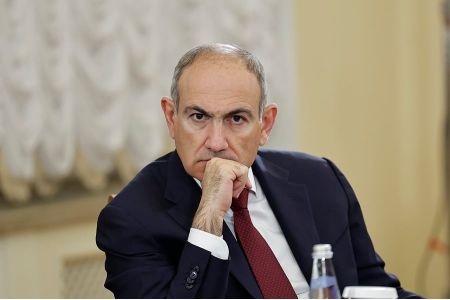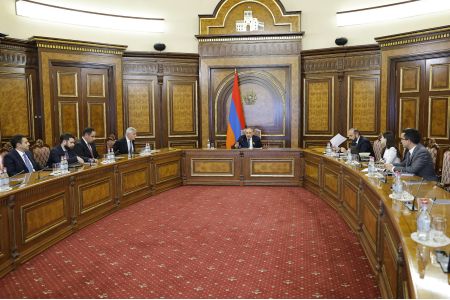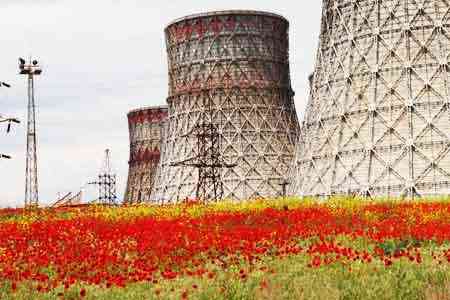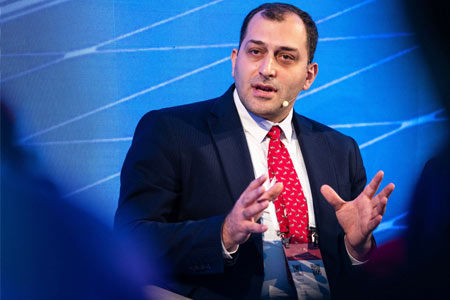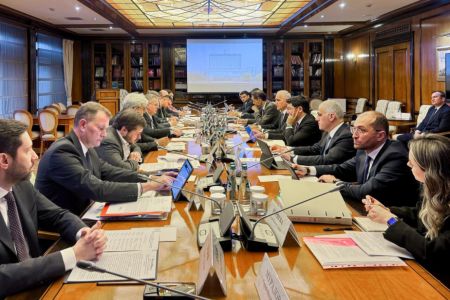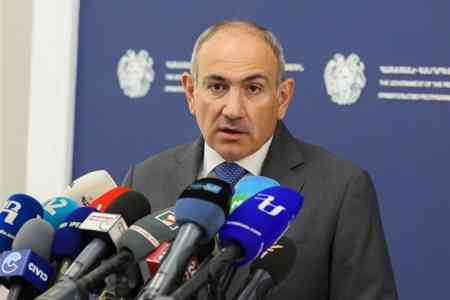
ArmInfo. "In the last seven years, we have built two nuclear power plants, without any fuss or fanfare. We haven't open them, haven't cut the ribbon, haven't given a speech, haven't even recorded it. We have made decisions in this hall and built two nuclear power plants. And this is a great achievement that is not talked about," Prime Minister Nikol Pashinyan stated at a Cabinet meeting on September 18, after Minister of Territorial Administration and Infrastructure (MTAI) David Khudatyan presented data on the share of solar power generation in Armenia.
Khudatyan noted that according to the Energy Strategy, Armenia plans to increase its solar power capacity to 1,000 MW by 2030. However, the total capacity of installed solar power plants now is 850 MW. "That's good. But I know this creates problems for the energy system," the Prime Minister responded. It turns out that during the day, when nuclear power plants, hydroelectric power plants, and thermal power plants, in addition to solar power plants, are operating, Armenia generates more than it consumes. The problem is that nuclear power plants, hydroelectric power plants, and thermal power plants cannot be constantly turned on and off, which complicates the management of the entire system. In the absence of storage systems and export options, the issue is even more pressing.
Meanwhile, the Prime Minister noted, electricity is a commodity for which demand is growing globally, and Armenia must find ways to export the electricity it produces. Not to mention that the country's abundant electricity supply should be of interest to investors, Pashinyan added. According to him, artificial intelligence, cryptocurrencies, and other technologies "consume enormous amounts of electricity, beyond the norm, beyond what is reasonable, and, given this factor, such investments should be attracted." "We mustn't stop or slow down the development of solar energy. We must allow it to develop, and we must catch up with it with our technologies and solutions," Pashinyan said, emphasizing that this is "a matter of national security and state independence." "We must consistently follow this path. I'm not saying this is the future; the future is already here. The more solar power plants and renewable energy sources we have, the more we enter the future today," Pashinyan said.
He noted that the authorities must be consistent on this issue and suggested that Khudatyan organize discussions in the near future. The head of the Ministry of Transport Infrastructure (MTAI) stated that the agency is considering increasing consumption and expanding export opportunities, including to Georgia and Iran. "Unfortunately, sometimes, in addition to the Armenian Nuclear Power Plant, we are forced to remove all our capacity from the power grid at certain times of the day when solar power plants produce more," the minister stated. "You say 'unfortunately' because you're facing difficulties, but I say 'fortunately' because we're able to fully meet our domestic needs with electricity generated entirely by ourselves. Yuu understand what strategic objective we've achieved." Nikol Pashinyan countered, calling for ways to effectively manage the sector.