

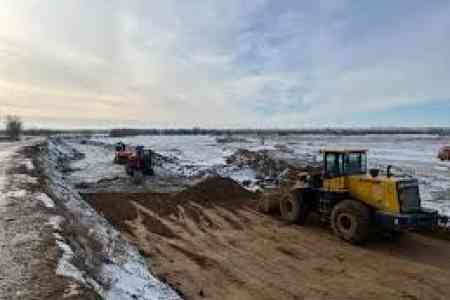
ArmInfo. The RA Ministry of Environment, together with its government partners, has carried out a number of works to identify the existing problems during flood risk management, prevention, emergency rescue and rehabilitation operations and to find appropriate solutions to them. It has been noted that the implementation of urgent rescue and rehabilitation measures during such disasters is hindered by the requirement for a water use permit for the implementation of certain works.
This problem became evident during the floods of the Aghstev and Debed rivers in 2024. In order to eliminate the problem, it has been envisaged that the implementation of anti-flood measures will also be considered free water use, for which a separate water use permit will not be required.
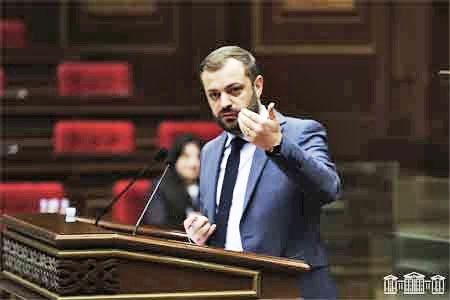
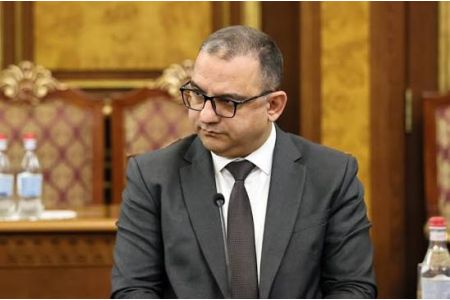
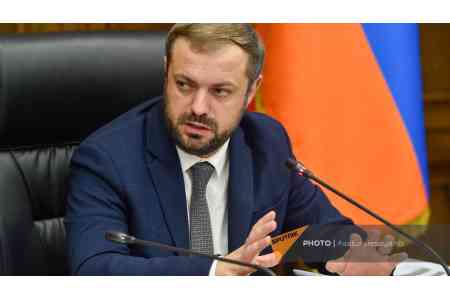
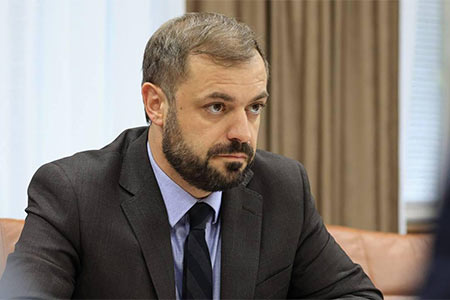
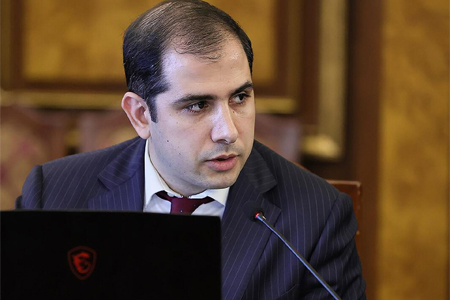
The RA Deputy Minister of Environment Ara Mkrtchyan presented for debate the amendments being on Making Amendments and Addenda to RA Water Code and informed about the abovementioned new regulations. The issue was debated in the first reading at the NA regular sitting.
The next regulation is aimed at extending the term of the Hydroelectric Power Plant (HPP) license. Under the current regulation, in case of extension of the term of the HPP license, the water user does not submit an application for extension of the term of the water use permit to the authorized body, but mechanically the water use permit is considered extended, equivalent to the term of the license. As a result, the authorized body is deprived of the opportunity to assess compliance with the terms, requirements and applicable legal acts of the issued water use permit. The draft stipulates that in case of extension of the term of the license for the production of electricity, the water use permit is not considered extended. It is extended in accordance with the procedure established by law.
The next change refers to the consideration of applications for water use permits from rivers that are spawning grounds for the Red Book and endemic fish species. It has been established that applications are rejected if there is no positive experimental conclusion on the impact on the environment. A legal basis has also been provided for the development of a methodology for determining the degree of burden on water resources.
The volume of renewable groundwater resources in the Ararat Valley and its distribution according to priorities have been determined. Currently, the law stipulates an annual renewable water volume of 1.1 billion cubic meters, which does not correspond to reality. It is being reduced to 926 million cubic meters. The reduced volume of water resources will be distributed among water users in the Ararat Valley, according to priority areas and quantities of water use. The calculation of the established water use volumes was carried out based on the information provided by the relevant bodies on the actual and potential demand for water for drinking, domestic, agricultural, industrial and fish farming purposes in the Ararat and Armavir marzes/regions, as well as on the current water use permits and the information provided by the relevant bodies.
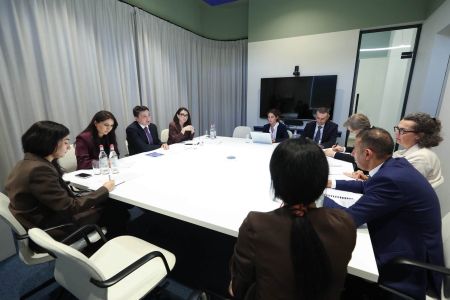
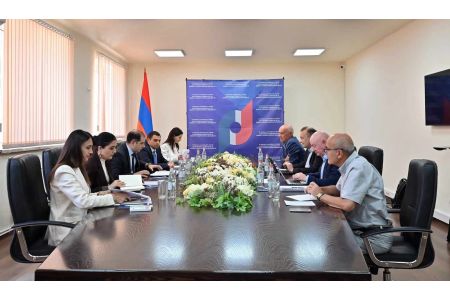
In Q&A session, reference was made to the feasibility of additional water intake from Sevan, steps were taken towards stabilizing the water resources of the Ararat Basin, the process of distributing water quantities, the preservation and effective use of national water resources, and other issues were discussed.
In his co-report, Davit Danielyan informed about the endorsement of the Standing Committee on Territorial Administration, Local Self-Government, Agriculture and Environment Protection.