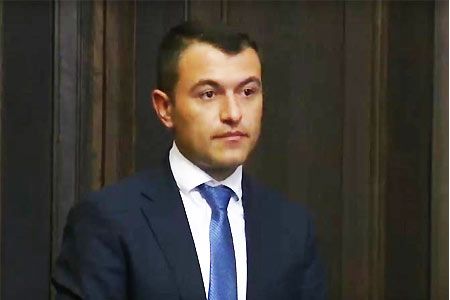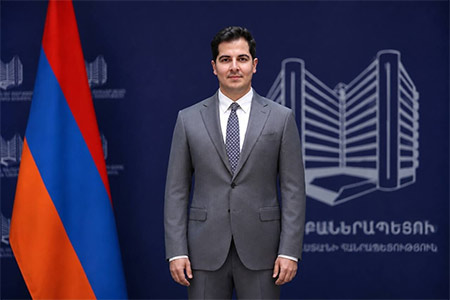


ArmInfoArmenian Deputy Finance Minister Arman Poghosyan, who is responsible for overseeing the country's tax policy, doesn't consider the implementation of the Universal Income Declaration System a failure, despite the fact that only about 20% of tax filers reported their income two to three days before the declaration deadline.
Poghosyan stated that the program has gotten off to a very good start during a panel discussion "The Process of Universal Income Declaration for Individuals at the Current Stage and Expected Changes" on October 27, organized by the State Revenue Committee, the Economic Journalists' Club, and the Konrad Adenauer Foundation. At the beginning of the discussion, the moderator, President of the SME Association, Hakob Avagyan, recalled that the reform was initially aimed at understanding the real socioeconomic situation of the country's citizens, which would allow for a fundamental revision of social support programs, making them more targeted. However, at the end of the second year of the system's implementation, it turned out that the main goal had not been achieved, and the ideology behind the reform had to be revised.
For example, out of approximately 700,000-800,000 employees, according to data as of October 24, only 145,000 people declared their income, while approximately 55,000 declarants received social credits totaling 4.5 billion drams, an average of 81,000 drams. The Deputy Minister of Finance, however, disagrees with this view. According to him, the Ministry of Finance, as the body determining tax policy, has approached the implementation of the system with the utmost responsibility and considers itself accountable for the results achieved. The agency apologizes for the temporary inconvenience, but is confident that once the system is established, many will find its results satisfactory, he added.
"In countries with a better starting position, it takes about 8-10 years to implement a system. But here, from the very first day of the program's launch, many have been engaged in nothing but denigrating the reform," Poghosyan pointed out. Babken Tunyan, a member of the ruling Civil Contract faction in the National Assembly of Armenia and deputy chair of the standing parliamentary committee, also affirms that the reform has in no way been a failure. He also disagrees with the assertion that the latest legislative amendments are a step backwards.
"Whatever we do, they say it's being done ahead of the elections. Meanwhile, we didn't start thinking about improving the system yesterday-we've been working on it constantly," he stated, assuring that the system was implemented not in the interests of anyone, but in the interests of the state. For example, Tunyan pointed out, a step toward improvement can be considered the legislator's expansion of the scope of family members between whom money transfers are exempt from declaration (including grandparents). All types of loans are also exempt from declaration. Furthermore, citing the official clarification of the Ministry of Justice, Arman Poghosyan states that transactions may qualify as gifts even without written confirmation. "The movement of funds between individuals is deemed a gift when mutually declared, and no third party can dispute its nature, regardless of the amount or the persons involved," he said.
Thus, the Deputy Minister of Finance and the Deputy Head of the Parliamentary Committee are convinced that talks about Armenian authorities failing the reform and deviating from the original ideology are purely the subjective perception of some citizens. The fact that many have already expressed a desire to declare income that was not "visible" to the tax service suggests otherwise. "For example, 145,000 tax filers have collectively reported additional taxable income of over 51 billion drams in their tax returns. This means that our citizens' mindset and discipline are changing," Arman Poghosyan concluded.