


ArmInfo.Armenia's industrial production continues to decline, as noted in an article by political scientist Vahe Davtyan.
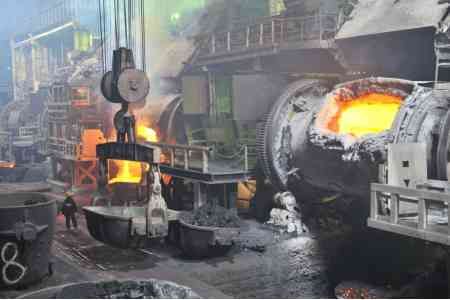
Referring to data from the RA Statistics Committee, the expert pointed out that Armenia's industrial output declined by 5.7% from January to September 2025. The volume of industrial production amounted to 2.055 trillion drams (approximately $5.3 billion). "The processing industry, the strategic core of industrial development, has suffered the most. While the sector demonstrated growth of 18.9%, the previous year, it is now experiencing a 10.2% decline. The production volume was about 1.4 trillion drams. In September, there was a local growth of 9.6%, reaching 205.8 billion drams. However, this cannot compensate for the overall losses. The decline in metallurgy by 10% following a 7% growth the previous year is particularly concerning, as metallurgy has traditionally been the main driver of Armenia's industrial exports. The mining industry somewhat softened the decline: if in 2024 it decreased by 7.8%, now it is only 0.5%, totaling 360.5 billion drams. However, this seemingly "positive trend" rather indicates stagnation than recovery. In September, there was again a decrease of 0.4%, reaching 48.5 billion drams," Davtyan noted.
He noted that, against this backdrop, the services sector is demonstrating the opposite trend: the growth accelerated from 5.9% to 9.9%, reaching 2.9 trillion drams (approximately $7.5 billion). In terms of volume, the services sector has already significantly overtaken industry, becoming the main GDP driver.
"The overall picture indicates a deepening process of deindustrialization. The Armenian economy is rapidly losing the balance between manufacturing and services, turning into a service economy without an industrial base. This is not a temporary crisis, but a reflection of the lack of a long-term doctrine of economic security and industrial policy," the expert concluded.