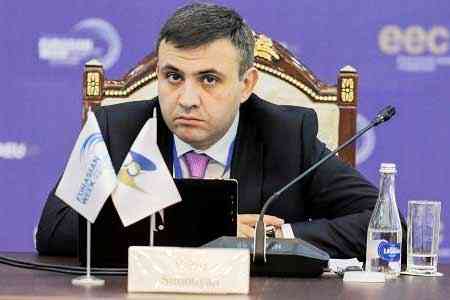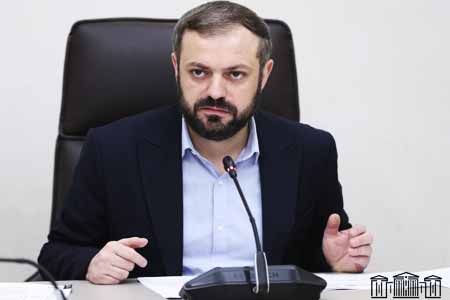
ArmInfo.At the end of 2017, Armenia's public debt was only $7 billion. By December 31, 2026, this figure will increase by $10 billion to $17 billion 170 million. Next year, debt repayment and servicing will require 1 trillion 53 billion drams, compared to the expected budget of 3..91 billion drams. This means that out of every 3 drams earned, 1 dram is paid to creditors, as stated by Artur Khachatryan, a parliament member from of the opposition Hayastan faction.
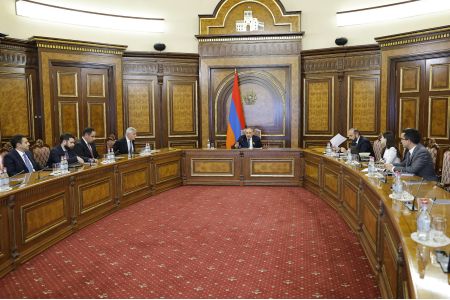
"Last week, the National Assembly discussed the latest budget presented by Nikol Pashinyan's government. I call this budget a 'budget summing up failures' because it reflects Nikol Pashinyan's failures over nearly eight years," Khachatryan wrote on social media.
For instance, the government promises 5.4% economic growth in 2026. Last year, around this time, Nikol Pashinyan's government promised 5.5% growth by 2025, but today it has lowered its expectations to 5.2%, he recalled.
"In other words, the positive factors caused by the Russian-Ukrainian war have begun to neutralize, and Armenia's economic growth rate has also begun to decline. Economic growth of 5.2-5.5% indicates that the bubble inflated around Nikol Pashinyan's economic growth and his economic achievements has burst," the opposition MP notes, mentioning that from 2000 to 2008, Armenia's average annual economic growth was 11%.
"Okay, but what caused this 5.2-5.5% economic growth?" the parliamentarian asks. "The public debt," he continued.
"At the end of 2017, the public debt was only $7 billion. By the end of 2025, the public debt is expected to be 5. 820 billion drams, or $15 billion 232 million at the current Central Bank exchange rate." By the end of 2026, the public debt will amount to 6. 569 billion drams, or approximately $17 billion 170 million at the exchange rate used in the draft budget calculations. This means that compared to 2017, the public debt will increase by $10 billion," the MP noted.
Meanwhile, budget revenues in 2026 will amount to 3 trillion 91 billion drams. This means that the public debt will be more than twice the country's revenue. In the next financial year, the government will require 1 trillion 53 billion drams for debt repayment and servicing, with 629.8 billion drams allocated for debt payments and 423.2 billion drams for interest payments. The 423.2 billion drams is solely for interest. For comparison, the healthcare budget is 212 billion, the education budget is 361 billion, the social budget (excluding pensions) is only 315 billion, and the economic sector is 285.9 billion.
"What does this really mean? For every 3 drams earned, 1 dram is paid to creditors. Imagine a family with a monthly income of 250,000 drams and an annual income of 3 million drams. Let's assume that the family's income is generated by wages and investments. (Let's assume that the main source of investment is a loan.) And of these 3 million drams, 1 million drams goes to debt repayment. You take a loan because your annual expenses are 3.6 million drams (300,000 drams per month). You take a loan to live a little better, to invest a little more, to earn more money. But as a result of paying off the debt, you buy lower-quality food, fewer clothes, can't send your children to school, and relax only by watching the sea on TV. In other words, you live worse because of the debt repayment," Khachatryan clarified. The opposition member asks: isn't it obvious that before we begin accumulating this enormous debt burden, we need to analyze how much additional economic growth/well-being we gain for every luma borrowed, and how much our well-being is reduced by debt repayment? "Let's return to the family budget example. Imagine that without debt, the family's income would only be 2.8 million drams per year, but the money wouldn't "leave" the house in the form of debt. Yes, the budget would be smaller, but there would be more available cash. Does borrowing make sense in that case? Of course, not. It would make sense if the interest rate on the debt were lower than the amount earned on the money saved/invested.
A reasonable person considers all this before going into debt. But let's see, Nikol Pashinyan's government hasn't calculated all this, hasn't "filtered out" what our economic growth (budget, GDP) would be without debt. With a huge debt, in the absence of favorable external factors, annual economic growth, as a reminder, is 5.2% - 5.4%. But what would this growth be if we didn't borrow?," Artur Khachatryan noted.