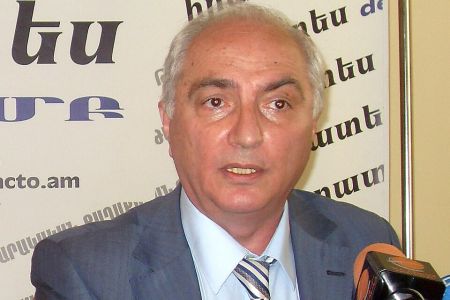


ArmInfo. Surveys of metal and other deposits in Armenia are in no way inferior to CRIRSCO and JORC system requirements. Geologist Mesrop Poghosyan expressed this opinion during field-specific discussions on the implementation of CRIRSCO (Minerals and Reserves International Reporting Standards Committee) standards in the Armenian mining industry.
He noted that he sees no challenges in the context of the transition to CRIRSCO standards. "The law defines the concept of 'revaluation,' and if necessary, we can revaluate a number of deposits according to the JORC and CRIRSCO systems, as in any case, this is merely a guideline," the expert noted.
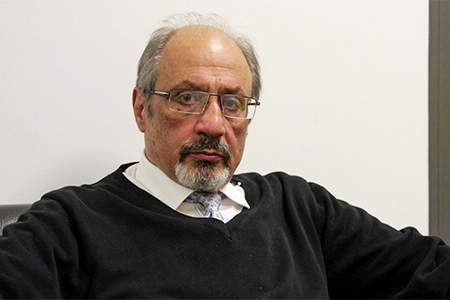
Additionally, Poghosyan emphasized that the central issue remains the organization of reporting. He mentioned that, according to the law, the subsoil belongs to the Republic of Armenia and its people. Consequently, no private company should independently confirm the results of geologists' work. "A government agency should handle confirmation. It can require JORC- or CRIRSCO-compliant studies- there's nothing complicated about that. We'll do it. We have talented young specialists who are proficient in all the necessary programs. We're ready for such requirements," Poghosyan stated.
According to him, one principle remains fundamental: reports related to the state's subsoil must be approved exclusively by the state.
Geologist Grigor Grigoryan, for his part, dismissed the transition to CRIRSCO standards as a secondary issue. First and foremost, he believes, it's necessary to align the vast information base from the Soviet and pre-Soviet periods with international methodologies. According to the specialist, CRIRSCO fully protects business interests. "Market relations are forcing us to transition. To attract financing, companies turn to banks, and banks require CRIRSCO reporting. Therefore, the transition to this system of standards is necessary. And at the moment, I don't think it's profitable for the state to allocate large sums to finance revaluation, exploration, and field development," he clarified. Grigoryan believes the transition to CRIRSCO will require extensive work at the state level. Specifically, changes will be necessary to the Subsoil Code, regulation of the business environment, and possibly even the creation of an exchange, as industry reporting is directly linked to access to financial instruments. "Such issues will inevitably arise when companies turn to banks," the geologist noted.
He emphasized that the existing rule stating that subsoil resources are the exclusive property of the state should be retained. Furthermore, he believes it's important to preserve expert structures so that the state can trust the assessment process.
However, Grigoryan believes the most important step is the creation of a fully-fledged government body or service that would centrally manage geological work. "For the entire geological community, this is paramount. The transition to CRIRSCO is a secondary issue," he said. It should be noted that the Australasian Code for Reporting of Exploration Results, Mineral Resources and Ore Reserves ('the JORC Code') is a professional code of practice that sets minimum standards for Public Reporting of minerals Exploration Results, Mineral Resources and Ore Reserves.
CRIRSCO is a coalition of representatives of organizations responsible for developing mineral reporting codes and guidelines in Australia (JORC), Brazil (CBRR), Canada (CIM), Chile (National Committee), Colombia (CCRR), Europe (PERC), India (NACRI), Indonesia (KOMBERS | KCMI), Kazakhstan (KAZRC), Mongolia (MPIGM), the Philippines (PMARC), Russia (OERN), South Africa (SAMREC), Turkey (UMREK), and the United States (SME). The combined value of mining companies listed on the stock exchanges in these countries accounts for over 80% of the listed capital of the mining industry. The organization's goal is to promote international best practices in the reporting of mineral exploration, mineral resource and mineral reserves.
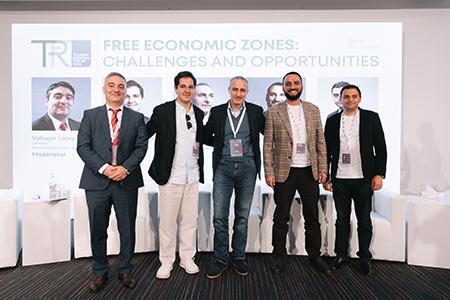
Meanwhile, Asatur Vardanyan, Deputy Minister of Territorial Administration and Infrastructure of Armenia, announced on the sidelines of the Mining Forum Armenia on October 4, that a national geological service will be established in Armenia in 2027. Today, the Ministry is taking effective steps in collaborating with foreign geological services, particularly those from the United States and EU countries. "We are trying to implement this model here," he noted. Vardanyan clarified that the state will commission these surveys on behalf of the geological service, which will allow new deposits to be identified and offered to investors, who will receive guarantees of investment protection and a high degree of predictability.
It should be noted that in his speech at the forum, Roman Khudoli, CEO of ZCMC, the country's largest mining company, noted that over the past 10 years, no work has been carried out in Armenia to find new mining deposits, and not a single new enterprise, even of a medium scale, has been created, and this is a serious challenge that requires urgent attention. In this regard, Khudoli did not rule out the possibility that by 2038, many of the eight mining companies operating in the country will cease mining operations. "If nothing is done, the sector will exhaust itself," the head of ZCMC noted.
He emphasized the importance of conducting geological exploration work in Armenia, noting that the deposit operator can't solve such problems independently. Despite the fact that ZMMC conducts such research itself, Khudoli emphasized that a strong state strategy and policy are needed to bear such a burden in this area. He pointed to the need to create an Armenian geological service that would undertake the study of the country's subsoil, future deposits, the assessment of promising areas, geological surveys, etc.
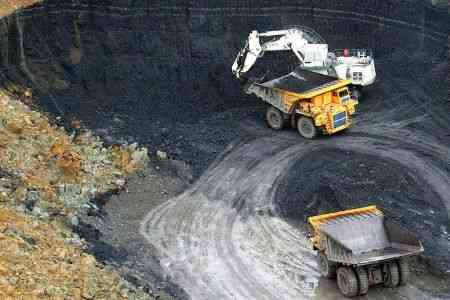
It should be noted that until the mid-1990s, the geological production association "Armgeology" was operating in Armenia. It was engaged in geological surveys and reserve assessments. The State Register of Mineral Reserves currently lists approximately 670 solid mineral deposits with confirmed reserves, including 30 metallic ones. Out of these deposits, approximately 400 are currently in production, including around 20 metallic ones.
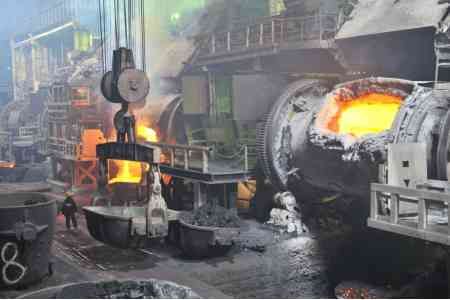
The subsoil of the Republic of Armenia is rich in the following types of metallic minerals: iron, copper, molybdenum, lead, zinc, gold, silver, Antimony, aluminum, and rare metal placers. There are 7 copper- molybdenum deposits, 4 copper deposits, 14 gold and gold-polymetallic deposits, 2 iron ore deposits, and 1 aluminum ore deposit in the region. In addition to these primary metals, the ores of registered deposits contain rare elements and their placers: rhenium, selenium, tellurium, cadmium, indium, helium, thallium, bismuth, and others.