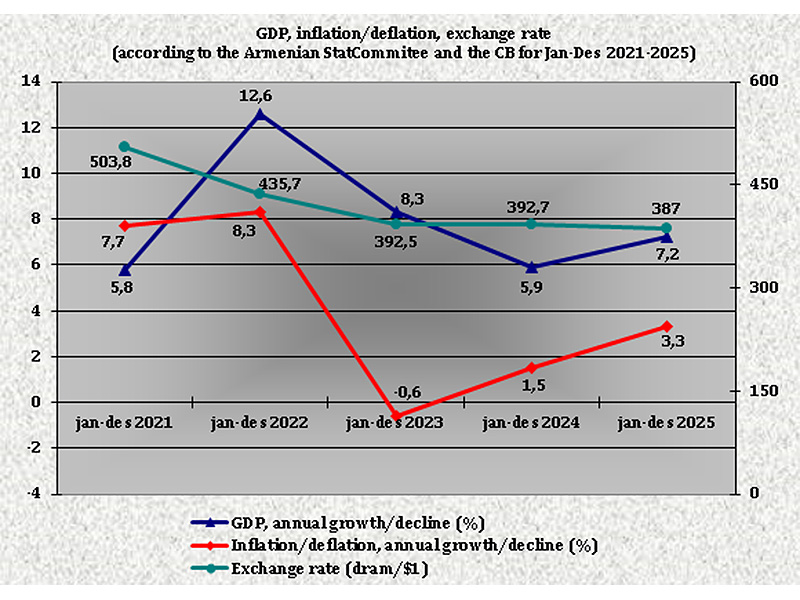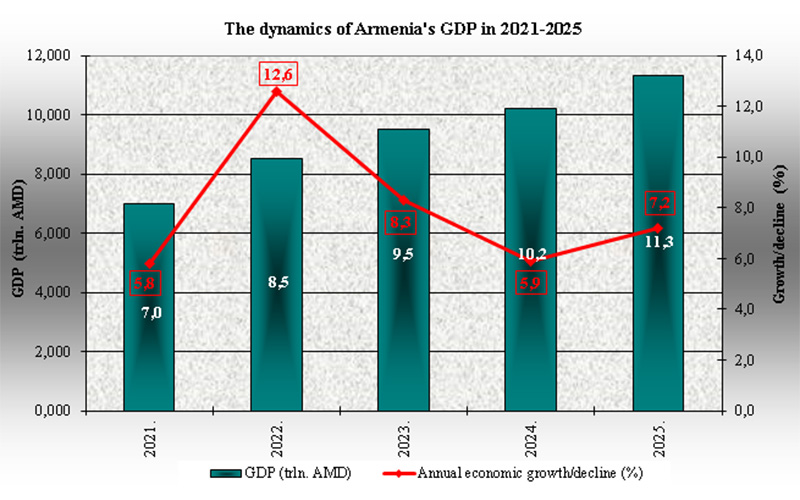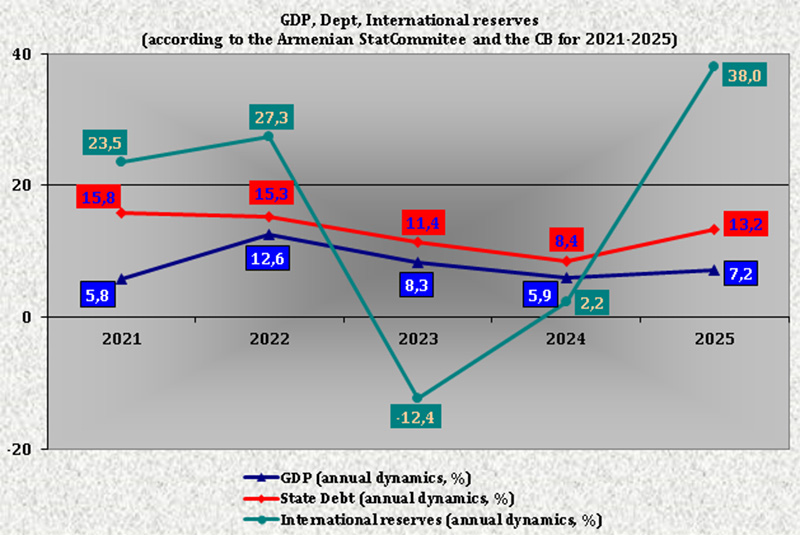


ArmInfo. By the end of 2026, Armenia's GDP growth will be at least 6%, compared to the 5.1% budgeted for by the state budget. Prime Minister Nikol Pashinyan made this forecast on December 25 at a regular government meeting, noting that since the "non-violent, velvet people's revolution of 2018," Armenia's gross domestic product has grown by approximately 50%, with "we're talking about real economic growth."
He recalled that Armenia's economic activity index in January-November was 8.3%. "Before the publication of the November data, we already had some confidence that economic growth would be at least 6%," Nikol Pashinyan noted. The Prime Minister also noted that in November 2025, a new historical record was set for the number of registered jobs in Armenia - 814,818. According to him, this is 275,465 more, or approximately 50% more than in November 2017. "I compare this to November 2017 because it was the first November before the revolution," the Prime Minister noted. The number of jobs also increased by 31,986, or approximately 4%, compared to November 2024.
As for the average salary, in 2025 it reached 327,155 drams. This is 158,421 drams, or approximately 93% more than in November 2017.
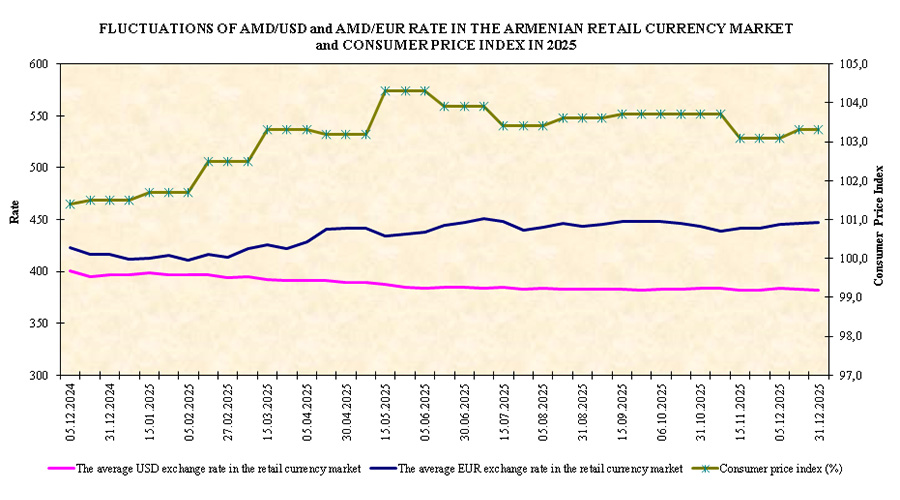
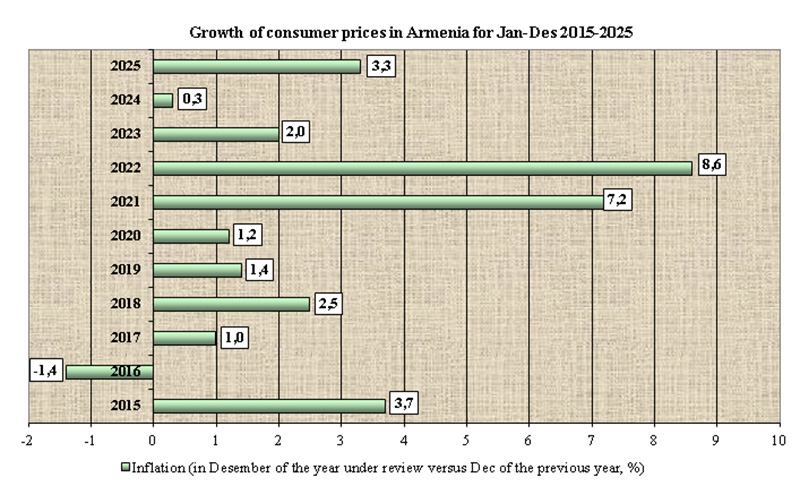
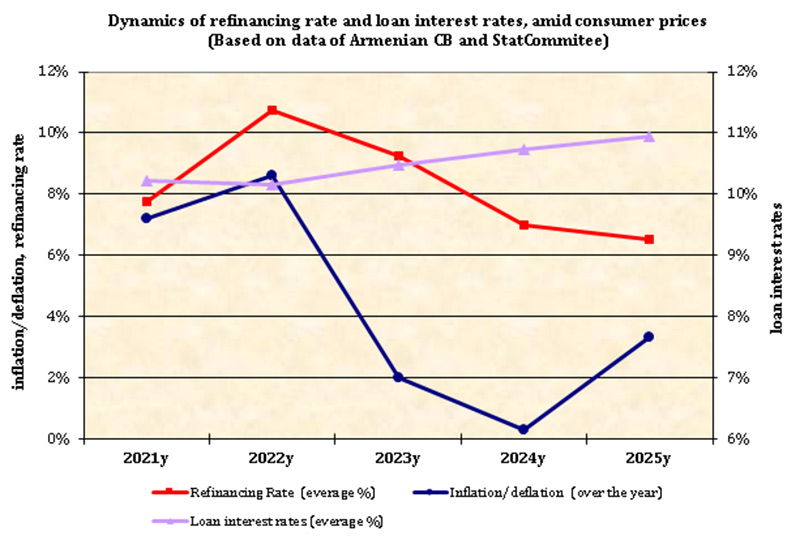
Moreover, according to the Statistical Committee, annual inflation was 3.3%, he emphasized, meaning that wage growth exceeded the rate of inflation.
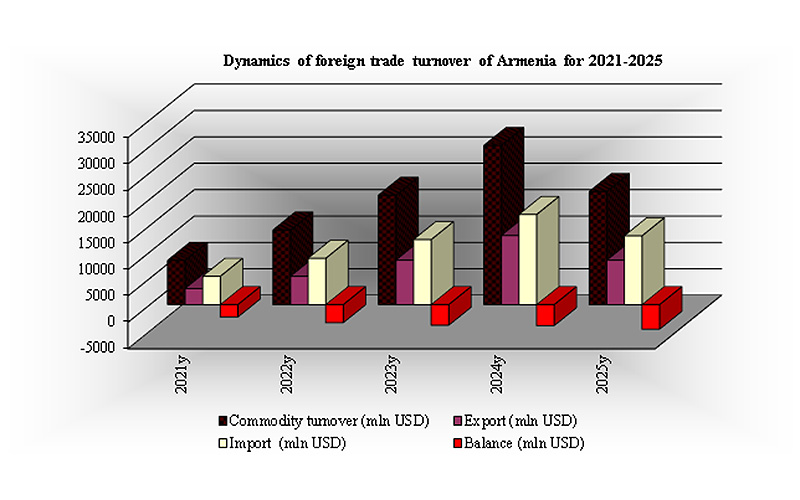
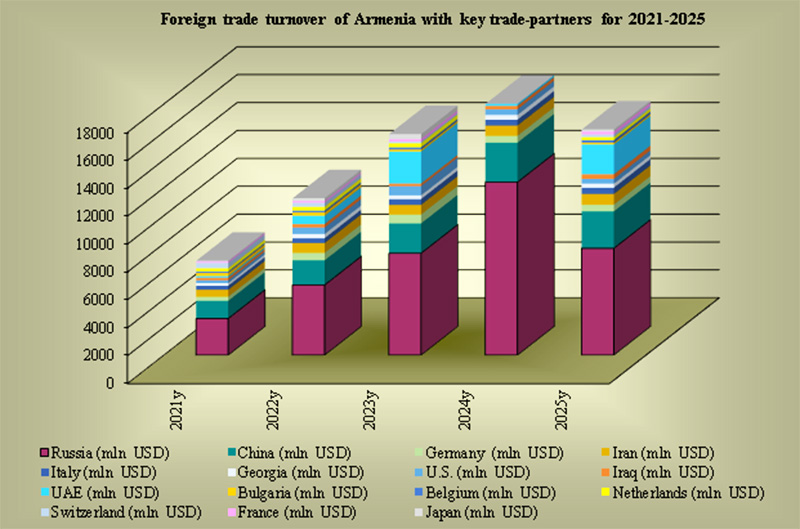
Economic activity in Armenia began to accelerate in the lead-up to the New Year holidays, reaching 8.3% for the first 11 months of 2025 (from 7.4% in the same period a year ago). Meanwhile, foreign trade continued to decline at a double-digit rate, compared to significant growth a year earlier. According to preliminary data from the RA Statistics Committee, the industrial sector, which was one of the drivers of economic growth a year ago, is now stagnating. According to statistics, this economic activity in January- November 2025 was largely due to a significant increase in the construction sector, from 14.9% to 20.1%, and an acceleration in annual growth in the services sector, from 6.3% to 10.9%. A slowdown in annual growth was observed in the energy complex - from 5.9% to 2.8%, and in the trade sector - from 18% to 3%. The annual dynamics of the industrial sector deteriorated much more noticeably, with growth slowing from 7.6% to a stagnant 0.5%. The statistical report for this period does not include data on the agricultural sector. According to statistical data for January-November 2025, the trade sector holds the lead in absolute value with a volume of 5.97 trillion drams ($15.4 billion). The second place in terms of volume is occupied by the service sector - 3.7 trillion drams ($9.5 billion), the third place is the industrial sector - 2.8 trillion drams ($7.3 billion), and the fourth place, due to the lack of data on the agricultural sector, is occupied by the construction sector - 644.6 billion drams ($1.7 billion). Electricity generation in January-November 2025 amounted to 8,225.3 million kWh, of which 783.2 million kWh was generated in November alone.