ArmInfo. Starting in January 2027, Armenia will legislatively restrict the participation of companies affiliated with high-ranking government officials and their family members in procurement processes. On January 22, the Armenian government approved the draft law "On Amendments and Supplements to the Law on Public Procurement and Related Laws."
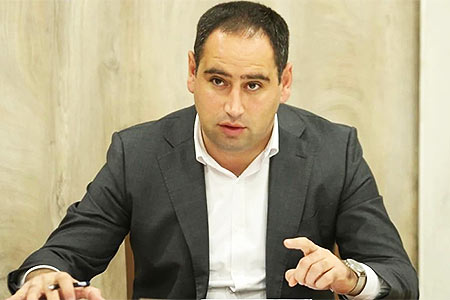
As stated by Finance Minister Vahe Hovhannisyan, establishing systems that eliminate corruption in procurement is among the priorities of the Armenian Cabinet. The creation of such a system is outlined both in the RA Anti-Corruption Strategy and in reports submitted by international partners.
According to the law, affiliated entities will include the official's spouse, children, parents, siblings, and anyone living with them. The restrictions will also apply to companies in which the official or their relatives (collectively) directly (through ownership of shares/stocks, contributions, or use of funds for business purposes) or indirectly (through voting rights, influencing decisions, or controlling stakes, as regulated by legislation on major transactions and related-party transactions) have the right to manage authorized capital, make decisions, and issue binding instructions.
Within the framework of the above, this draft was developed, which proposes: - Defining the concepts of "conflict of interest" and "affiliated participant."
- Reserving the government the right to determine instances of increased influence of individuals holding government positions or who are civil servants on procurement processes, based on their actual or potential influence on these processes.
- Reserving the government the right to include the heads of executive bodies of state funds in the 2nd and 3rd levels of influence and/or to increase these levels.
The draft provides for three levels of influence.
- Organizations with a conflict of interest with officials included in the first level may not participate in procurement processes. This level must include the President of the Republic, the Speaker of the National Assembly, the Prime Minister, the Deputy Prime Ministers, the Minister of Finance, and the Deputy Prime Minister coordinating the development of procurement policy.
- Organizations with a conflict of interest with officials included in the second level may not participate in procurement processes organized by the given contracting authority, as well as commercial and non-profit organizations under its jurisdiction. This level necessarily includes individuals holding administrative and political positions (except for members of the National Assembly and members of the Community Council), the Prosecutor General and his deputies, heads of investigative bodies and their deputies, and secretaries general.
- Organizations with a conflict of interest with officials included in the third level may not participate in procurement processes organized by the given contracting authority. This level of influence necessarily includes members of independent government bodies and autonomous bodies, including the Governor of the Central Bank and his deputies, and the Human Rights Defender.
- Restrict the participation of companies associated with the aforementioned individuals in procurement processes by stipulating that participants must submit a statement along with their bid declaring their lack of connection with these officials.
It is also planned to establish in the concluded contract (draft) that in all cases where the Corruption Prevention Commission's conclusion establishes that a party to the contract has violated the prohibition on participating in the procurement process prior to the conclusion of the contract, the customer may unilaterally terminate the contract based on this conclusion. Furthermore, if, on the date of the decision to unilaterally terminate the contract, there are duly executed contract deliverables that have not yet been accepted by the customer, the customer is obligated to ensure their acceptance and payment.
It is noted that the customer bears no risk of actual losses or lost profits for the party to the contract as a result of unilateral termination of the contract, and the party to the contract will return 20% of the amount paid by it under the transaction to the client. This amount will be offset against the contract amount and/or qualification security provided in the form of a bank guarantee or cash. If the amount: a. is less than the security amount, the remaining security amount is returned to the party to the contract; b. is greater than the security amount, the party to the contract guarantees payment of the remaining amount to the client. It is stipulated that unilateral termination of a contract based on a violation of the prohibition will not result in the company being blacklisted.
To implement the proposed model, the package also includes amendments and additions to the Codes of the Commission for the Prevention of Corruption (which will oversee the implementation of the restrictions) and the Code of Administrative Procedure Law.