


ArmInfo.A significant rise in compulsory motor third-party liability insurance (MTPL) tariffs effective February 2025 has enabled insurance companies to enhance their efficiency and achieve significant profits. This information is based on the Financial Rating of Armenian Insurance Companies data as of December 31, 2025, prepared by the ArmInfo Investment Company using published financial reports and requested indicators from insurance companies.
Thus, active (mandatory) sales of MTPL policies and seasonal decrease in claims have significantly improved the overall profit and loss picture of the insurance sector. The annual growth of insurance premiums jumped from 3.1% to a double-digit 17.1%, while the growth of compensation slows down from 14.3% to 9.3%. This resulted in total values of 84.7 billion drams ($222.2 million) and 48.9 billion drams ($128.3 million) at the end of 2025. As a result, the annual dynamics of net profit increased almost fourfold reaching 2.9 billion drams ($7.7 million) for the year. Armenia Insurance led in net profit this year, with AMD 784.7 million ($2.1 million), increasing its net profit by 39.6% year-on-year. This was due to a more pronounced slowdown in claims growth, from 61.3% to 29.2%, compared to premium growth, from 28.5% to 14.6%. Moreover, premium growth for the MTPL insurance class slowed significantly, from 2.1 times to 1.2%. This was also true for claims, but less dramatically, from 99.8% to 44.5%. Six insurance companies ended 2025 with a profit, and only one (INGO) failed to maintain profitability and ended up in the red. In particular, two insurance companies (LIGA Insurance and Sil Insurance) returned to profit, and four insurance companies (Armenia Insurance, REGO Insurance, Nairi Insurance, and Efes) further increased their profits. Sil Insurance saw the largest profit growth, increasing 9.3-fold, turning from a loss to a profit.
MTPL and health insurance continue to lead in premiums and payouts
As expected, the highest share of premiums collected by companies remains with mandatory MTPL (41%) and health insurance (30%). Of the remaining insurance classes, property insurance (over 10%) and CASCO (8.5%) have a more or less significant share. Accident insurance accounted for 3.5%, cargo insurance (2%), travel insurance (1.7%), and general liability insurance (1.3%). Other insurance classes, such as compulsory motor third-party liability insurance ( CMTPL) at 49.7% and medical insurance at 39.2%, also lead in claims. They are followed by CASCO insurance at 7%, accident insurance at 1.1%, cargo insurance and property insurance at 1%, and travel insurance at 0.4%.
Of the aforementioned dominant insurance classes, CMTPL insurance specifically has seen accelerated premium growth, while medical insurance premiums have recovered from a decline to double-digit growth, despite a noticeable slowdown in claims growth for these two insurance classes. For example, the acceleration in premium growth for CMTPL, from 8.5% to 16.7%, was accompanied by a slowdown in claims growth from 18% to 10.2%. In health insurance, premium growth reversed from a 3.1% decline to 22.6%, accompanied by a slowdown in claims growth from 21.6% to 14.4%.
In property insurance, premiums reversed from a 16% decline to 15% growth, while claims declined from 37% to 81%. It's worth noting that this class is represented by two types: fire/natural disaster property insurance and other property damage insurance, with premiums and claims for the former significantly exceeding those for the latter. Premiums for the former increased by 4.2%, while premiums for the latter jumped 4.3-fold, while claims for both classes fell sharply, by 82-60%. A year ago, double-digit declines were observed in both these classes, both in premiums and claims. It should be noted that these classes are used when issuing mortgages and agricultural loans. Moreover, it is precisely within these property insurance classes that a relatively new type of insurance-agricultural risk insurance-is taken into account, although it is also reported as a separate line item in insurance companies' financial reports.
For CASCO, the acceleration in premium growth from 14.1% to 26.4% was accompanied by a subtle acceleration in compensation growth from 46.4% to 48.1%. In Armenia, this class of insurance, being voluntary, is used alongside mandatory MTPL for car loans and new vehicle purchases, and less frequently-only at the owner's discretion.
In accident insurance, premiums reversed a 4.6% decline to 32.5% growth, while claims growth slowed sharply from 2.1% to 33.3%. In cargo insurance, the premium decline accelerated from 1.1% to 17.1%, accompanied by a reversal in claims growth from 64.2% growth to a 10.5% decline. In general liability insurance, premiums lingered in decline, accelerating from 44% to 56%, while claims growth reversed an 8% decline to 16%. In travel insurance, a slight acceleration in premium growth from 2.3% to 4.5% was accompanied by a deterioration in claims growth from 12.3% growth to a 10.1% decline. In aviation insurance (including liability for the use of air transport, including cargo), premiums continued to decline, accelerating from 18% to 29%, while claims remained at zero.
Agricultural risk insurance, after the last increase in premiums and claims in 2023 and a subsequent reset in 2024, has still not recovered. It's worth noting that the agricultural risk insurance program, which launched in Armenia as a pilot program in September 2019 and began selling policies in 2020, continued to operate until issues with inadequate control over claims, which exceeded the estimated damage, emerged in 2024. Now, instead of the former program partners, Swiss Re and the German bank KfW, the government has taken over reinsurance. According to the draft law, the government is prepared to reimburse 70-80% of the insurance premium (versus the previous 50-60%). If damage exceeds 200%, insurance companies are also entitled to compensation for this portion. Furthermore, starting in 2025, this program will cover all agricultural crops against all types of risks, without limitations. The government's plans for 2026 include determining which foreign reinsurance company will become a partner in this program, a matter for which negotiations are underway.
The World Bank believes that the current agricultural risk insurance system requires fundamental reform and proposes continuing the pilot program in 2026, with some amendments outlined in the draft. Additionally, the World Bank recommends implementing systemic changes during 2026 aimed at introducing an insurance phase and launching a new, reformed program in 2027. The project provides for the subsidization of insurance premiums in the 2026 agricultural year entirely from state funds and the provision of subsidies to agricultural entrepreneurs in the amount of 40-60% of the insurance premium stipulated in the insurance contract. To encourage insurance company participation, the project for the 2026 agricultural year proposes that the state subsidize not only the insurance premiums of business entities but also compensate insurance companies for the portion of insurance payments that exceeds 80% of the collected insurance premium. The necessary funding will be fully implemented in 2026 from the Armenian state budget (200 million drams have been allocated for this purpose). Assets are growing faster, but are lagging behind liabilities.
Among insurance companies' assets, the annual growth rate of short-term accounts receivable has shifted from a 2.3% decline to 45% growth, while cash has accelerated from 10.4% to 14.4%. This is also reflected in current financial investments, which have accelerated from 16.5% to 22.2%. Among liabilities, the growth rate of current accounts payable has slowed from 32% to 15%, while the growth rate of insurance contract liabilities has remained at 13%, and the trend in insurance reserves has reversed a 2% decline to 29% growth. Against this backdrop, borrowed funds continue to grow significantly (by 45% for the second year in a row). This trend in components allowed for accelerated growth in both current assets (from 15% to 24%) and current liabilities (from 20% to 27%), reaching $229.9 million and $166 million, respectively.
As a result, borrowed funds continued to dominate current liabilities for the second consecutive year, accounting for 41% (versus 36% in 2024), while the share of insurance contracts continued to decline, to 30% (from 35% in 2024). The share of insurance reserves increased over the year from 19% to 20%. A decrease in the share was noted for current accounts payable, from 10% to 9%. In terms of current assets, the dominant position remains held by current financial investments (securities pledged under repo agreements, government bonds, deposits and loans in banks) - 81% (the same as a year ago), followed by short-term accounts receivable (including assets under insurance and reinsurance contracts) - 10% (the same as a year ago), and a very small amount is accounted for by cash - 2% (the same as a year ago).
Equity capital grew by double digits due to a jump in profits
The lack of authorized capital replenishment by insurance companies would have negatively impacted the equity trend, but the situation was saved by a significant increase in accumulated profits. As a result, equity capital accelerated from 7% to 14%, reaching $80.1 million, supported by a 34% jump in accumulated profits (versus a weak 3% in 2024) to $24.6 million, while the authorized capital remained at $49.3 million. Moreover, accumulated profits remained negative for two insurance companies (REGO Insurance and Sil Insurance), while the remaining five insurance companies recorded positive results (including Efes, which moved from loss to profit). LIGA Insurance leads in accumulated profit with $7.7 million, while also retaining the lead in equity ($19.7 million) and authorized capital ($11.7 million), accounting for 31%, 23%, and 25% of the market in total market share, respectively.
TOP 3 by key indicators
The top three companies by current assets are INGO, LIGA Insurance, and Nairi Insurance, collectively holding a market share of 62%. In terms of current liabilities, the leading companies are INGO, LIGA Insurance, and Efes, with a combined market share of 64%. As for insurance premiums, Nairi Insurance, INGO, and Efes are the top three companies, with a combined market share of 49%. Lastly, in terms of claims, Nairi Insurance, INGO, and LIGA Insurance are the three companies, with a combined market share of 50%. In terms of equity, the top three companies are LIGA Insurance, INGO, and Nairi Insurance, with a combined market share of 60%. In terms of authorized capital, the top three are LIGA Insurance, REGO Insurance, and Sil Insurance, with a combined market share of 55%. The top three in terms of accumulated profit are LIGA Insurance, Nairi Insurance, and INGO, with a combined market share of 87%. In terms of net profit for 2025, Armenia Insurance, REGO Insurance, and LIGA Insurance account for over 72%. As ArmInfo analysts note, the transition of insurance companies' financial reporting to a new format is limiting access to key indicators for a detailed market analysis. It's worth noting that, unlike the previous reporting format, the new version lacks a unified approach to publishing financial statements, allowing insurance companies to selectively disclose certain balance sheet indicators. ArmInfo Investment Company is therefore requesting insurance companies to provide important data missing from the new format, as it has become difficult for them to independently analyze the market situation.
It's worth noting that, with the establishment of Efes Insurance Company in July 2023, seven companies are already operating in the Armenian insurance market. Among the currently operating insurance companies, the parent companies of several were placed on Western sanctions lists in 2022, triggering a market reorganization process. Specifically, the former RESO and Rosgosstrakh Armenia companies rebranded and changed their shareholder structure, re-registering as REGO Insurance and LIGA Insurance. The Armenian subsidiary of the Russian company Ingosstrakh, INGO Insurance Company (formerly INGO Armenia), which gave rise to Efes Insurance Company, underwent a somewhat different reorganization process, with the spin-off of its client base. Now, LIGA Insurance has been acquired by European companies: the Austrian financial group GRAWE Group and C-Quadrat Investment Group. The transaction was approved by the Central Bank of Armenia on February 3, 2026. LIGA Insurance will continue to operate in the Armenian market without changing its name, but will indicate that it is a member of GRAWE Group. LIGA GRAWE Group, with a 75% stake, and C-Quadrat Investment Group, with a 25% stake, are now shareholders of this insurance company.
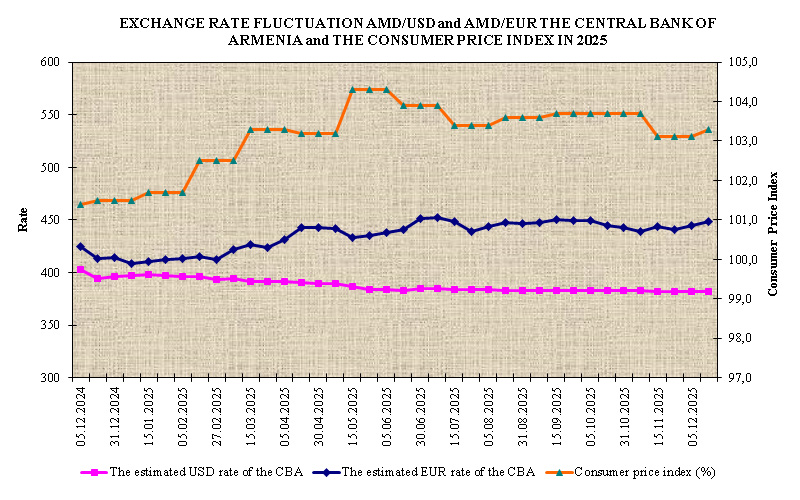
Recall, 18 of the 20 insurance classes available are used in Armenia, with the exceptions being liability insurance for railway transport and insurance for legal and extra-judicial expenses. Only Armenia Insurance is licensed for railway insurance. INGO and Armenia Insurance are licensed for the most classes (16), followed by LIGA Insurance (15). (The current exchange rate for the dram to the dollar as of December 31, 2025, was AMD 381.36/1$)