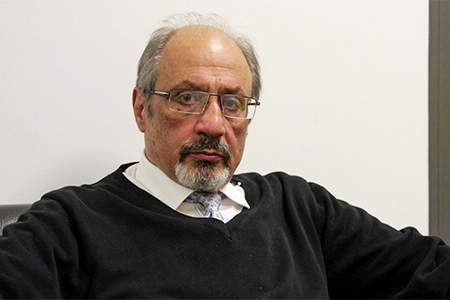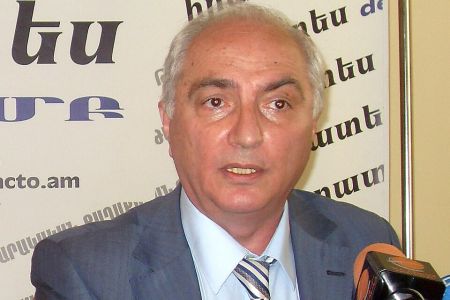
ArmInfo. Over the past eight years, since Prime Minister Nikol Pashinyan came to power, public debt servicing costs have increased by 2.5%. Meanwhile, this amount could have been used to increase the minimum pension from the current 36,000 to approximately 60,000 drams. This statement was made by Mesrop Arakelyan, co-founder of the "Country to Live in" party.
"The Minister of Economy is spreading yet another false narrative, claiming that "the share of our debt in Armenia's revenues has decreased."
Yes, the public debt-to-GDP ratio has decreased, but what's more important is the debt-to-budget revenue ratio-that is, what percentage of our revenues we allocate to servicing the public debt." Thus, in 2017, 8.1% of the budget was allocated to paying interest on the public debt, and in 2025, 10.6% of budget revenues were forced to be allocated to servicing the public debt.
Therefore, we are allocating an additional 2.5% of our expenditures to servicing the public debt, limiting our ability to spend other funds. For example, the aforementioned 2.5% constitutes half of all healthcare expenditures, or by this amount, the minimum pension could be increased to approximately 60,000 drams.
Figuratively speaking, families now allocate a larger portion of their income to loan repayments than to current expenses.
And the reason for this is clear: over the past eight years, the average percentage of Armenia's public debt has increased by 2.3%," Arakelyan wrote on social media.
As a reminder, at the beginning of 2026, the minimum pension was approximately 36,000 drams, while the average was approximately 49,000 drams. Meanwhile, by the third quarter of 2025, the cost of the minimum consumer basket per person was 81,681 drams, and the food basket was 44,152 drams.
It's also worth noting that by the end of 2025, the public debt (according to the previously existing terminology) amounted to $14.531 billion. In dram equivalent, the public debt increased over the past year from 5.0927 trillion to 5 trillion. 541.7 million drams. At the end of December 2017, Armenia's total public debt stood at $6.774 billion, and by the time Nikol Pashinyan's government was formed, at the end of April 2018, this figure stood at $6.867 billion. Thus, over the 28-year history (since Armenia's independence), the Republic of Armenia has borrowed approximately $6.8 billion, and from 2018 to the end of 2025, the authorities have managed to increase the public debt by approximately $7.757 billion.
According to the law "On the State Budget of the Republic of Armenia for 2026," by the end of this year, the government debt will amount to $15.152.8 billion (6 trillion 310.3 billion drams), or 52.9% of GDP. The government's debt repayment and servicing will require 1.05 trillion drams (420 billion drams alone for interest payments).