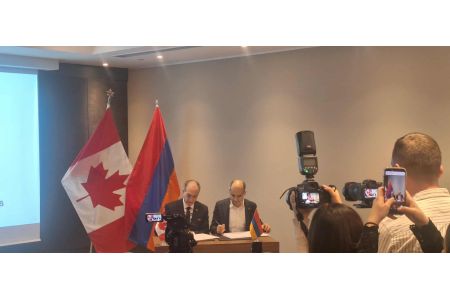
ArmInfo. Armenia's mining and metallurgy industries intend to follow the Canadian development model. On February 26, a memorandum of understanding was signed between the Armenian Miners and Metallurgists Association (AMMA) and the Canada-Eurasia Chamber of Commerce (CECC) in Yerevan.
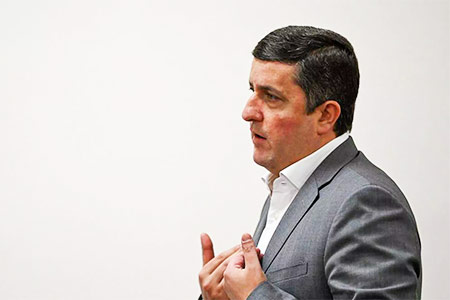
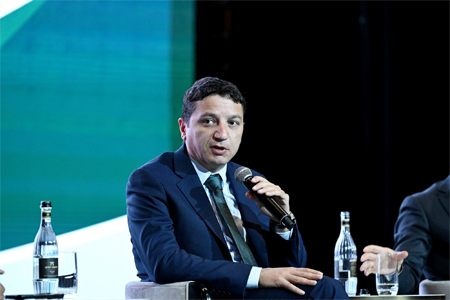
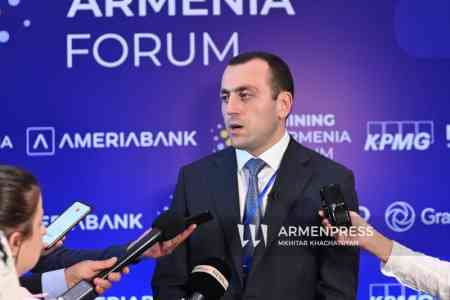
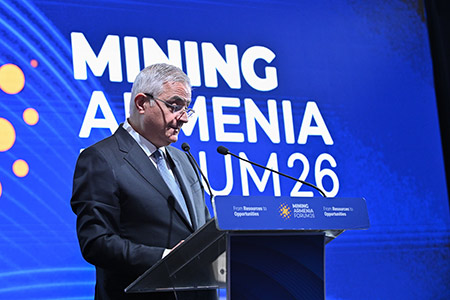
On this occasion, Vardan Janyan, Head of the AMMA and Vice President of the Zangezur Copper and Molybdenum Combine (ZCMC), noted that Canada has advanced experience in subsoil use, implementing modern technologies, and maintaining environmental standards. According to him, given the high level of Armenian-Canadian relations and the Canadian side's willingness to support industry development, signing the memorandum will further enhance cooperation.
"The signing of the memorandum lays the foundation for a new stage of the industry's development," he emphasized. Janyan mentioned that the mining sector is of strategic importance to the Armenian economy, but faces several challenges. He emphasized the importance of adopting best international practices to effectively address these challenges. "By leveraging Canadian expertise, we can help Armenia develop a mining industry that meets high international standards," he stated.
According to him, at one of the Association's recent meetings, a decision was made to prioritize expanding international cooperation as the most effective tool for accelerated development. "Key sectors such as mining and metallurgy, without drawing on advanced global experience, will either not develop at all or will develop too slowly. We have no right to slow development," Janyan noted.
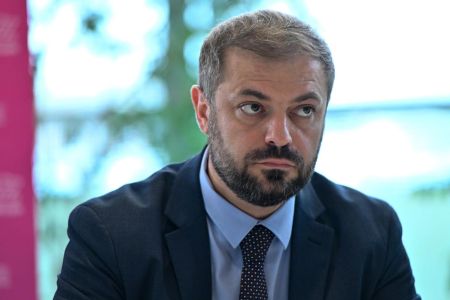
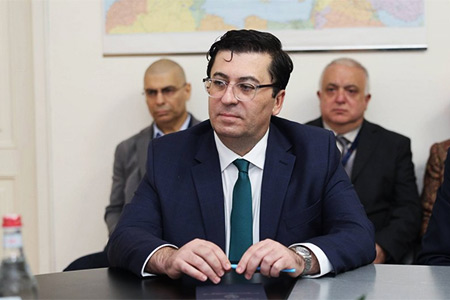
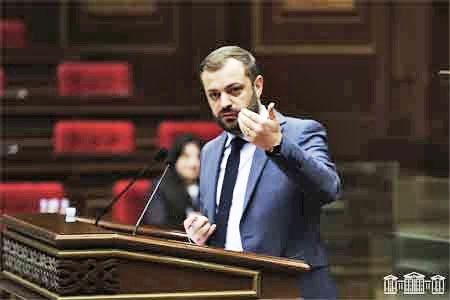
Deputy Minister of Territorial Administration and Infrastructure Asatur Vardanyan also attended the ceremony. He recalled last year's joint visit to Canada, organized with the Association's participation, and noted the high level of technological development and institutional environment in Canada's mining industry. The Deputy Minister emphasized the importance of strengthening cooperation, including knowledge transfer, laboratory modernization, and personnel training. He stated that the upcoming visit to Canada will involve discussions on the technological re-equipment of Armenian industry laboratories and specialist retraining programs.
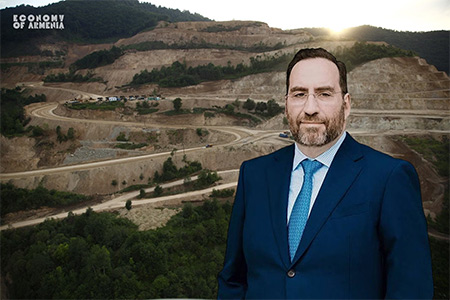
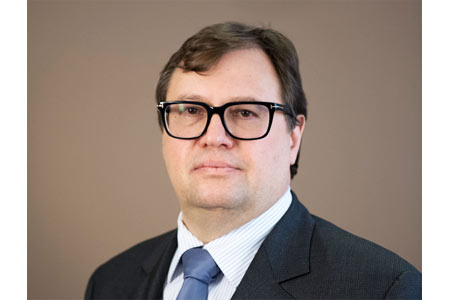
CECC Head Vardges Avagyan stated that the high level of diplomatic relations between Armenia and Canada creates a solid foundation for intensifying trade and economic cooperation. He highlighted Canada's global leadership in the mining industry, and emphasized that the transitioning to practical cooperation with Armenia's largest mining enterprise, the Zangezur Copper and Molybdenum Combine, is a logical and strategically important step.
According to the State Revenue Committee of Armenia, as of 2024, 403 mining enterprises were registered in Armenia, 41 of which were inactive. There were 99 enterprises in the metallurgy sector, 12 of which were inactive. The sector's turnover in 2024 amounted to 520 billion drams, compared to 540 billion drams in 2022. In 2025, a slight improvement in these indicators was noted, driven by rising metal prices and increased ore production.
From 2014 to 2024, investments in the sector amounted to 159.3 billion drams (approximately $600-700 million), which corresponds to 17.3% of total investment in the country's economy. By the end of 2024, the industry generated tax revenues of 130 billion drams, with 102 billion drams coming from the Zangezur Copper and Molybdenum Combine.
According to the Statistical Committee of the Republic of Armenia, the mining and open-pit mining industry demonstrated a reversal in 2025: after a decline of 8.6% in 2024, the sector grew by 6.4%, generating production of 514.7 billion drams. The metallurgy industry saw a slowdown in growth in 2025, dropping from 1% to 0.2%, effectively signifying stagnation and maintaining volumes at the previous year's level.
Specifically, from January to December 2025, Armenia produced 300.5 thousand tons of copper concentrate: the annual dynamics worsened from a growth of 4.1% to a decline of 0.4%. Molybdenum concentrate production remained in negative territory, with the rate of decline slowing from 26.9% to 13.6%, reaching 14.7 thousand tons. Ferromolybdenum production also declined: the rate of decline slowed from 42% to 33.6%, with a production volume of 2.9 thousand tons. Meanwhile, zinc concentrate production continued to grow, although at a rate slowing from 28.7% to 10.5%, with a 2025 volume of 11.6 tons.
Production of steel pipes, hollow sections, and fittings reached 28.5 thousand tons, with an annual growth rate slowing from 16.8% to 15%. Aluminum foil production recovered from a 23.2% decline to a 4.6% increase, reaching 20.6 thousand tons. Almost 100% of the production of the metallurgical industry in Armenia is oriented towards export.