ArmInfo.The Armenian government has revised the deadline for community applications to implement subsidy programs, as well as the procedure for implementing participatory budgeting programs.
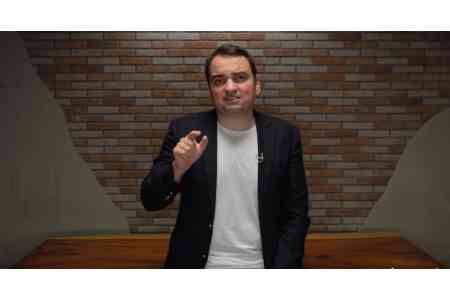
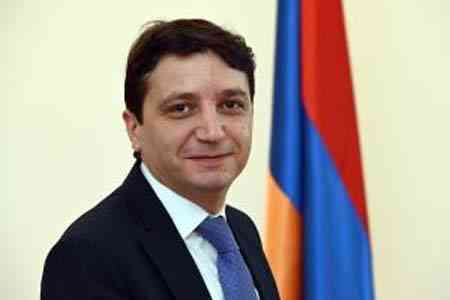
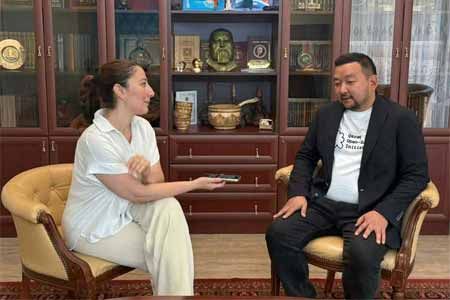
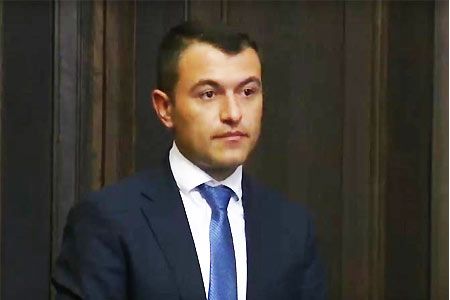
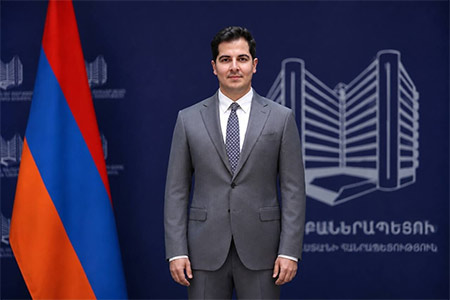
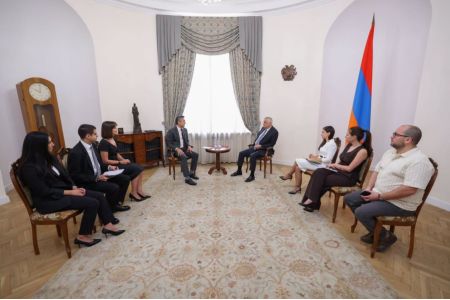
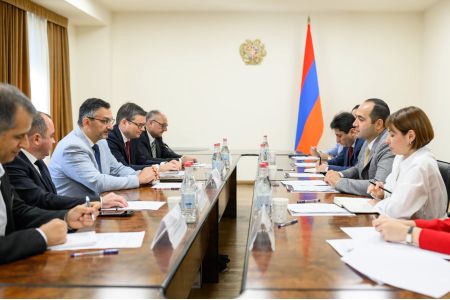
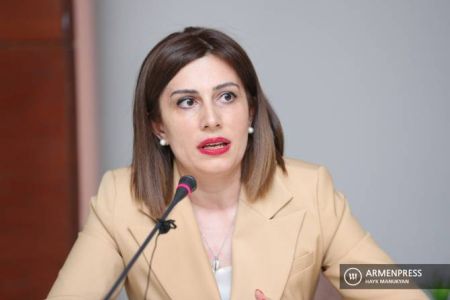
The new procedure was clarified to Loris Muradyan, Head of the Community Budgets Division of the Department of Finance, Accounting, and Community Budgets of the Ministry of Territorial Administration and Infrastructure (MTAI), and Eduard Baghdasaryan, Chief Specialist of the Analytical Methodology of the Budget Process Division of the Budget Process Coordination Department of the Ministry of Finance.
According to the MTAI representative, the program was implemented in 2024 and began a test run in four communities - Ashtarak, Armavir, Abovyan, and Jermuk (including adjacent towns and villages). Eight programs were approved (out of 17 applications received) for 570 million drams, of which 443 million drams came from state funding. In 2025, 31 programs worth approximately 1.202 billion drams were implemented in 17 communities, of which approximately 740 million drams (61.6%) were financed through subsidies (despite the fact that 1 billion drams was allocated in the 2025 state budget for co- financing participatory budgeting programs). The programs included improvements to public spaces, the creation and improvement of sports and entertainment, educational and cultural infrastructure, and the construction and improvement of water supply networks.
This year, the program is being implemented in 52 communities across the country; voting on submitted applications will be completed in the first ten days of March. Approximately 2 billion drams are planned for the implementation of the programs. A Ministry of Finance representative, in turn, noted that the new regulations set the deadline for submitting subsidy applications at March 1 of the respective year (except for the 2026 process, for which it is set until March 16, 2026), instead of the current April 1. The earlier deadline, one month earlier, is aimed at extending the period allotted for the implementation of programs based on participatory budgeting and improving the planning and organization of the entire process. Experience from 2024-2025 showed that some planned programs were not fully completed that year due to delays in procurement tenders and unfavorable weather conditions.
The voting mechanism has also been revised. To ensure equal competitive opportunities between settlements (larger and smaller communities) and to increase the competitiveness of proposals for smaller communities, it is planned to clarify that a voter may vote for a maximum of three project proposals if they concern different settlements within the community. For project proposals concerning the same settlement, a voter may only vote for one project proposal. This change improves the competitiveness of project proposals submitted from different settlements within the community and prevents projects from large settlements from accumulating votes disproportionately.
Furthermore, according to current regulations, those project proposals that receive the highest number of votes, but not less than 1% of the eligible population of the settlement, are selected for subsidy applications. The draft proposes establishing thresholds based on the size of the settlement covered by the project proposal.
In particular, the following threshold values are established: - 1% - if the proposal-project is planned to be implemented in a settlement with a population of up to 5,000 residents, - 2% - if the proposal-project is planned to be implemented in a settlement with a population of more than 5,000 residents.
These thresholds are based on available statistical data, which shows that the average population of Armenian settlements is approximately 33,178 (Yerevan is not included in the calculations). This means that the thresholds for the required votes are approximately 332 votes per 1% and approximately 664 votes per 2%, respectively. This differentiation in thresholds will promote active participation while preventing disproportionate hardship for relatively small settlements. It is noted that the proposed solution promotes proportionality, facilitates balanced competition, and enhances the involvement of various communities in the participatory budgeting process.
The Ministry of Finance also addressed the regulation of situations where a municipality undertakes to implement subsidized programs formed through participatory budgeting during a given year, but fails to do so as of the penultimate working day of the budget year due to circumstances beyond the municipality's control. For such cases, the following provision is proposed: the municipality may be provided with a corresponding share of state funding for the unimplemented portion of the program if at least 70% of the program has already been implemented and funded. If the above provision is applied, the subsidy agreement will be amended: a new deadline for program completion will be established (the deadline will be changed by no more than six months), and conditions will be stipulated under which funds will be used only for the implementation of the program, with any unused balance at that time being returned to the state budget. The head of the municipality will submit a full report on the implementation of these programs to the authorized body no later than August 1 of the following year.
Participatory budgeting (also known as participatory budgeting or participatory budgeting) is a form of direct democracy that allows residents of a municipality to directly participate in the allocation of a portion of the local government budget. The implementation of participatory budgeting processes provides an opportunity to expand community involvement in budgeting processes, thereby increasing the efficiency and effectiveness of public resource allocation. Community residents will now have the opportunity to propose ideas and programs relevant to their community. These proposals will be reviewed, discussed, selected by community vote, and given the opportunity to be implemented.
Within the program, the share of community budget funding (the fund portion) for the implementation of each subsidy program formed through participatory budgeting must be at least 20% of the total costs of that program.
The government decree of November 2, 2023, also established that information on the implementation of programs developed through participatory budgeting and the targeted use of provided subsidies will be published monthly by the head of the community on the community's official website. To raise awareness and promote public oversight of participatory budgeting, participation is provided to representatives of public organizations registered in the Republic of Armenia, individuals engaged in media activities, or their representatives.