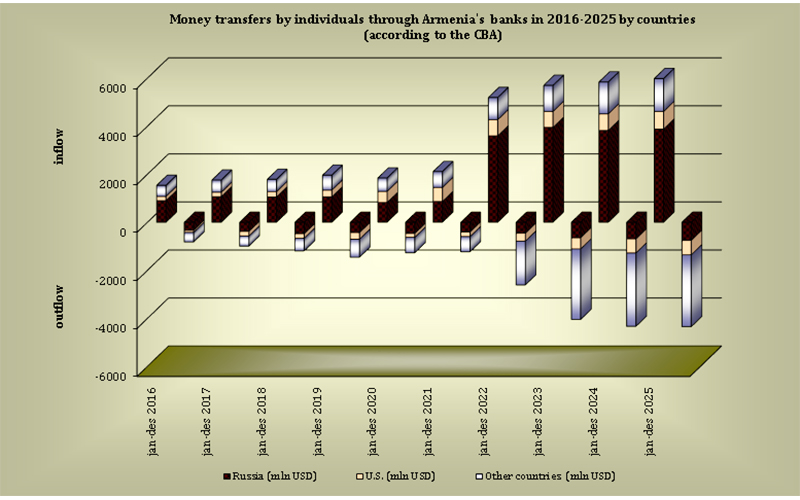



ArmInfo. A possible slowdown in economic growth in Armenia amid significant growth in the credit market threatens to result in a significant increase in toxic assets, primarily risky loans, according to ArmInfo analysts, who analyzed the performance of the banking system (Financial Ratings of Armenian Banks bulletin) for 2025. It is noted that in 2025, in the Armenian banking sector the growth rate of corporate lending outpaced the growth rate of retail lending - 24% compared to 21%, while in 2024 the picture was the opposite - 18% compared to 33%.
This positive trend started in 2023 after two years of a decline in the credit market due to the pandemic factor and "crazy" non-interest income due to servicing the unprecedented financial activity of a huge number of relocators, "a big wave" of whom poured into the country in 2022. According to an analytical report, corporate loans reached $11.8 billion by the end of 2025, while retail loans reached $9.6 billion. At the same time, banks have stepped up their efforts to support each other with interbank loans and deposits, as evidenced by a strong 75.4% increase in volume to $2 billion.
Meanwhile, the data shows that corporate loan delinquency jumped 65% in 2025, while toxic debt in consumer loans increased by 44%. Notably, mortgages, which slowed their annual growth rate from 33% to 17%, saw delinquency increase by a whopping 77%, with a significant deterioration across all risk groups. This may indicate the ineffectiveness of portfolio recovery efforts through refinancing.
Analysts noted that, as was the case last year, bad loans are prevalent in both corporate and retail loan portfolios. The construction sector stands out as the only sector where the low-risk (controlled) group has a higher proportion of delinquencies, which jumped 4.5-fold during the reporting year. However, judging by the picture from a year ago, when significant volumes of overdue loans to the construction sector were recorded in the medium- and high-risk groups (non-standard and dubious), it's likely that the refinancing implemented only had a short-term effect. Meanwhile, the healthy (standard) group of loans to the construction sector has maintained growth rates in the 28-29% range for the second year in a row.
Analysts particularly note the acceleration of annual loan portfolio growth from 22% to 26%, reaching $23.4 billion. This, in turn, spurred growth in interest income from lending from 18% to 30%. Specifically, interest income from lending accounted for approximately 59% of total income (over $2.2 billion). Corporate loans account for 50.5% of the loan portfolio ($11.2 billion), while retail loans account for 41.1%. However, analytics show that double-digit asset growth slowed from 20% to 17%, reaching $33.6 billion. As a result, the banks managed to maintain their net interest margin for 2025 at 5%, thanks to accelerated growth in interest income and expenses to a flat 24% (from 16-14% a year earlier). Furthermore, a subtle slowdown in healthy loan growth from 25% to 21% was accompanied by a sharp acceleration in delinquency growth from 14% to 44%. Write-offs of toxic loans are depressing profits, as evidenced by the sharp slowdown in net profit growth from 60% to 17%, with high-risk loans particularly worsening the situation.
In the asset structure, the share of credit investments increased from 64% to 70% over the year, while the share of investments in securities decreased from 19% to 17% (with a weak volume growth of 5% to $5.7 billion). The share of correspondent accounts with the Central Bank of Armenia also decreased from 8% to 5% (with a 30% volume decline to $1.6 billion). This was also reflected in correspondent accounts with banks (nostro), whose share decreased from 3% to 2% (with a 15% volume decline to $624 million).
The quality of the loan portfolio has significantly deteriorated
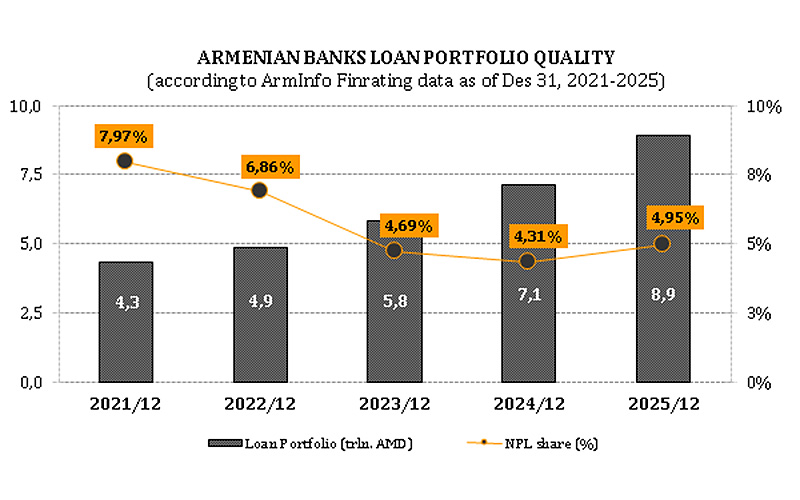
Weaker growth in consumer loans and active lending to the economy significantly accelerated the growth of non-performing loans (NPLs) from 14% to 44%, whose share of the loan portfolio increased from 4.3% to 5%, while remaining at 3% of assets. Moreover, over 55% of NPLs are high-risk loans-doubtful and bad loans. The agency's analysts noted that the bulk of delinquencies continues to accumulate in consumer loans-over 37%, almost half of which are doubtful and bad loans. However, the share of delinquencies in mortgage loans is small-around 7%-but a significant increase in toxicity is observed across all risk groups.
It is the write-offs of high-risk loans off-balance sheet that have a particularly negative impact on profits, significantly slowing their growth rate-from 60% to 17%. As a result, by the end of 2025, the total net profit of the banking sector amounted to $1.1 billion.
By share of overdue loans in total NPLs, the following sectors are ranked: trade (over 23%), construction (over 11%), catering/services (almost 7%), industrial (over 6%), agriculture (approximately 4%), and transportation and communications (over 1%). The highest annual growth in overdue loans primarily came from the trade sector (3.2 times) and catering/services (69%). Comparatively modest growth was recorded in transportation/communications (23%) and construction (16%), while the industrial sector experienced a very modest increase of 1%. Only in loans to the agricultural sector did the volume of overdue loans decrease by 16%. Overdue loans for consumer loans increased by 44% over the year, while mortgages grew by 77%. High-risk loans (dubious and hopeless) for both consumer loans and mortgages increased significantly by 30% and 62%, respectively.
Analysts point to a significant (17-fold) increase in overdue loans to non-residents, although this is largely due to the situation at one of the country's major banks, which unsuccessfully financed a foreign client whose loan debt is already classified in the high-risk, dubious category.
Nevertheless, despite the significant deterioration in loan quality, the retail sector has historically been a preferred sector for Armenian banks, which increased their financing in this sector by 23%. But unlike previous years, in 2025, banks also focused on lending to the real sector, specifically increasing investment at double-digit rates in construction (28%), industry (21%), transportation and communications (17%), food service/services (14%), and agriculture (13%). Moreover, lending to small and medium-sized businesses accelerated in the reporting year from 7% to 16%, still significantly lagging behind the 35% growth rate of two years ago. Meanwhile, consumer lending, while maintaining double-digit growth, began to slow from 31% to 20%. Mortgage lending continues to grow at double-digit rates, but a significant slowdown is already visible-from 33% to 17%, which can be easily explained by the reduction in the state tax deduction program.
Term deposits are becoming the primary source of funding for active operations
Term deposits established their status as the primary source of funding for Armenian banks' active operations in 2025, regaining their position in the first quarter and further increasing their dominance after two years of outweighing demand liabilities (starting in 2022 due to large-scale financial transactions by relocators). Thus, ArmInfo analysts' forecasts, previously presented in their 2024 analytical review, regarding the high probability of a return to term deposits as the primary source of funding in the short term have been realized.
The forecast was based on the observed diversification of liabilities, with a more pronounced acceleration in the growth of term deposits, while the growth of demand liabilities significantly weakened. Thus, after slowing to 3% in 2022, term deposits accelerated to a double-digit 25% in 2025, exceeding $10 billion, while demand liabilities significantly slowed during this period, from a high of 67% to a modest 4%, amounting to $9.4 billion.
As a result, the share of term deposits in total liabilities has increased from 34% to 36% over the past four years, while demand liabilities, conversely, have decreased from 38% to 34%. According to ArmInfo analysts, this imbalance in favor of term deposits will continue to gain momentum and, under equal macroeconomic conditions, could approach its historical maximum of 48%, recorded in 2017, in the medium term. Overall, individual deposits (time and demand) slowed slightly in year-on-year growth from 14% to 13%, exceeding $11 billion, of which 64.3%, or $7.04 billion, were represented by time deposits, and 35.7%, or $4.04 billion, by demand deposits. Moreover, over the past four years, the growth of demand deposits has sharply stalled in the structure of individual deposits, reaching a stagnant 0.3%, while the growth of time deposits has accelerated sharply to a double-digit 23%. Meanwhile, funds raised from external sources, after a double-digit decline in 2022 and near stagnation in 2023, then grew by 39% in 2024, slowing to 22% in 2025, reaching $5.8 billion. This increased the share of this item in total liabilities from 19% to 21% over four years, but the record 25% (in 2020-2021) has not yet been reached. As a result, total liabilities slowed in annual growth from 20% to 16%, reaching $28 billion.
Concurrently, the dynamics of legal entity funds in term deposits has improved over the past four years, accelerating to a double-digit growth rate of 34%, while the growth of legal entity funds in demand liabilities has slowed sharply from high double-digit rates to 5%. In capital, the shares of authorized capital and profit equaled each other.
The total capital of Armenian banks accelerated in growth to 22% in 2025, after slowing in 2022-2024 from 38% to 20%, reaching $5.7 billion. In its structure, the share of authorized capital decreased annually over this period - from 59% to 45.9% ($2.617 billion), while accumulated profit, after increasing in 2022-2024 from 32% to 45.5%, only slightly increased in 2025 to 45.6% ($2.598 billion). Moreover, the annual growth of both authorized capital accelerated - from 15% to 18%, and accumulated profit - from 24% to 25%. In particular, out of 17 banks, only 6 increased their authorized capital year-on-year: Ardshinbank (by 95.2% in Q1 and Q2 2025), IDBank (by 43.7% in Q3 2025), AMIO Bank (by 11.8% in Q1 2025), Unibank (by 16% in Q2 and Q4 2025), Fast Bank (by 14.96% in Q4 2025), Inecobank (by 14.01% in Q4 2025). As we can see, Ardshinbank, even after increasing its authorized capital as a result of the acquisition of HSBC Bank Armenia in 2024, continued to strengthen its authorized capital, which allowed it to take the lead by mid-2025, further consolidating it. However, a slight slowdown in the double-digit growth of risk-weighted assets from 20% to 19% only imperceptibly advanced the level of adequacy of both total capital - from 26.8% to 27.9% on average across the market (N1 with a minimum level of 11%), and core capital - from 24.4% to 24.7% (N1/1 with a minimum level of 6.2%).
According to ArmInfo analysts, liquidity levels assessed by four standards - N2/1 (total, with a minimum of 15%), N2/2 (current, with a minimum of 60%), N2/3 (LCR - short-term, with a minimum of 100%), N2/4 (NSFR - long-term, with a minimum of 100%) - continue to decline. In particular, the level of total liquidity decreased from 34.3% to 33.3% on average for the market, short-term - from 242.4% to 223.5%, long-term - from 139.4% to 138.2%. And only current liquidity has increased from 122.9% to 126.8%. This was accompanied by a deterioration in the annual dynamics of almost all items of highly liquid assets: correspondent accounts with banks - from 3% growth to a 15% decline, cash and cash equivalents - with a slowdown in growth from 9% to 1.5%, correspondent accounts with the Central Bank - from 23% growth to a 30% decline. Growth of the dominant item of highly liquid assets - investments in government bonds - also weakened - from 14% to 7%. At the same time, such key components of general and current liquidity ratios as total assets - with a slowdown from 20% to 17%, and demand liabilities - with a slowdown from 17% to 4% - maintained growth. Regarding the two later-introduced standards (N5/1 max 10% and N5/2 max 5%), designed to curb mortgage risks, their average market rate for the reporting year remained virtually unchanged, remaining at 3% and 0.5%, respectively. This is occurring against the backdrop of a slowdown in annual mortgage growth from 33% to 17% (with a volume of $4.5 billion), which is due to the suspension of the state tax deduction program in Yerevan starting in 2025, which currently only continues in the regions. However, starting in 2029, the Armenian authorities intend to completely abolish income tax refunds for mortgages (the restrictions will not apply to border settlements). The top 5 banks firmly established their positions.
In terms of loan investments (including interbank loans and deposits) and funds raised (including liabilities to clients, loans from external sources, and funds received from the placement of their own bonds), the top 5 banks are Ardshinbank, Ameriabank, Acba Bank, AMIO Bank, and Inecobank, accounting for 65% and 64%, respectively.
These five banks represent the top five in terms of loans raised from external sources-Ardshinbank, Ameriabank, Acba Bank, AMIO Bank, and Inecobank-with a total market share of 65%, and in terms of funds raised from the placement of their own bonds-Ameriabank, Acba Bank, Inecobank, and AMIO Bank-with a total market share of 56%. In terms of term deposits, the above-mentioned five banks represent the TOP-5: Ardshinbank, Ameriabank, AMIO Bank, Acba Bank, and Inecobank, with a total market penetration of over 59%. Four of these banks also lead in demand deposits: Ardshinbank, Ameriabank, Acba Bank, and Inecobank, with a total market penetration of over 65%. In terms of corporate and retail loans, all five of these banks represent the TOP-5, led by Ameriabank, with a total market penetration of 70% and 57%, respectively. Ardshinbank holds the lead in interbank loans/deposits, with a market penetration of over 42%. The five aforementioned banks also established themselves as leaders in terms of assets and total liabilities (with a market share of 62-63%), as well as total capital (with a market share of approximately 59%). The top two banks, Ardshinbank and Ameriabank, hold the dominant share (35-40%). These five banks ended 2025 with a profit, but four of them - Ardshinbank, Ameriabank, Acba Bank, and Inecobank - remain in the top five, accounting for over 65% of the banking sector's total net profit, with the top two generating 50%.
S&P Assessment: The Level of Credit Risk in the Economy is Very High
According to S&P Global Ratings, the high level of risk is reflected in economic resilience, economic imbalances, and competitive dynamics, while the very high level of risk is reflected in credit risk in the economy, institutional framework, and banking system funding. "In the Armenian banking sector, adequate capital buffers and stable profitability will support significant lending growth in 2026-2027. Banking sector profitability indicators will continue to normalize due to a strengthening base effect, as well as lower foreign exchange income and global interest rates," S&P Global Ratings notes, expecting return on assets to decline to an average of approximately 3.5%.
S&P Global Ratings expects banks to maintain stable profitability indicators in 2026, although they will be below the peak levels of 2022-2023: "Despite a decline in net interest margins, profitability will be supported by a stable cost of risk." In particular, net interest margins are expected to decline slightly by 10- 30 basis points over the next 12-24 months, primarily reflecting increased competition. An increased share of high-margin consumer loans and SME loans should partially offset this pressure. Banks are likely to maintain lower provisioning costs compared to the average cost of risk over the entire cycle.
S&P forecasts that banks' funding base will remain stable: "Domestic deposits represent a significant source of funding, and stable funding means manageable financial risk for the banking sector. Given the shallow and underdeveloped domestic capital market, deposits and borrowings from international financial institutions will remain the main source of funding for banks. Although the inflow of deposits from non- residents has declined from its peak in 2022-2023, it should remain at the level of 2024-2025 in 2026. These deposits are likely to remain relatively stable regardless of the development of regional conflicts. Major players will likely increase their borrowing from international financial institutions such as the EBRD and EIB to finance special development projects, but banks' access to international capital markets will remain limited.
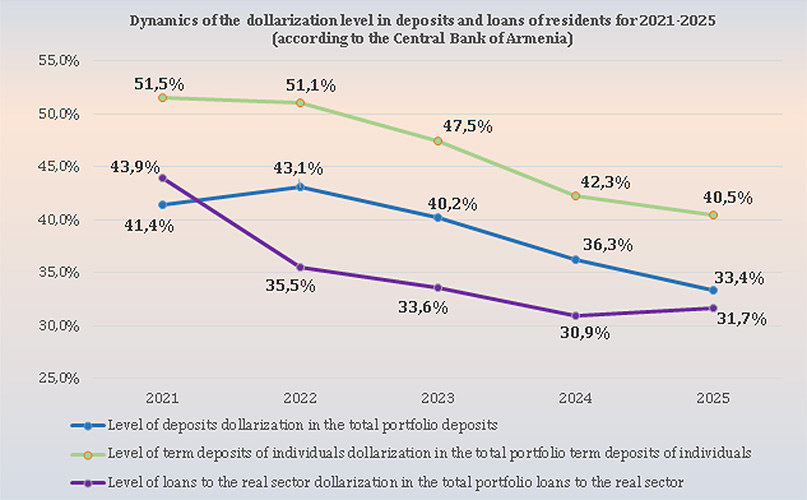
According to S&P Global Ratings, the share of foreign currency in bank deposits will increase to 38% in 2026 (from 31.5% in 2025) and remain at this level in 2027-2028. A similar picture will be seen in funds attracted by banks; specifically, in deposits, the share of foreign currency will increase to 42% in 2026 (from 33.6% in 2025) and remain at this level in 2027-2028. Regarding strengthening banking regulation and supervision, which still lags behind best practices, S&P Global Ratings expects a new draft resolution to be submitted to parliament and operational regulations to be phased in by 2026. "Draft legislation regarding Pillar 2 capital surcharges and early intervention powers is currently under discussion. Authorities also plan to introduce a new payment system law. Going forward, greater attention will be paid to compliance with anti-money laundering requirements and know-your-customer principles, including additional regulation of cryptoassets and stablecoins," S&P Global Ratings notes. Banking regulation and supervision are gradually being strengthened, including through the adoption of the Basel III standard. However, S&P Global Ratings continues to view the regulatory and supervisory regime as less stringent compared to international standards, largely reflecting lower corporate governance and transparency. S&P voices the likelihood of continued discrepancies between problem loans reflected in national reporting standards (monthly) and loans reflected in reporting (mainly at the end of the year) under International Financial Reporting Standards (IFRS).
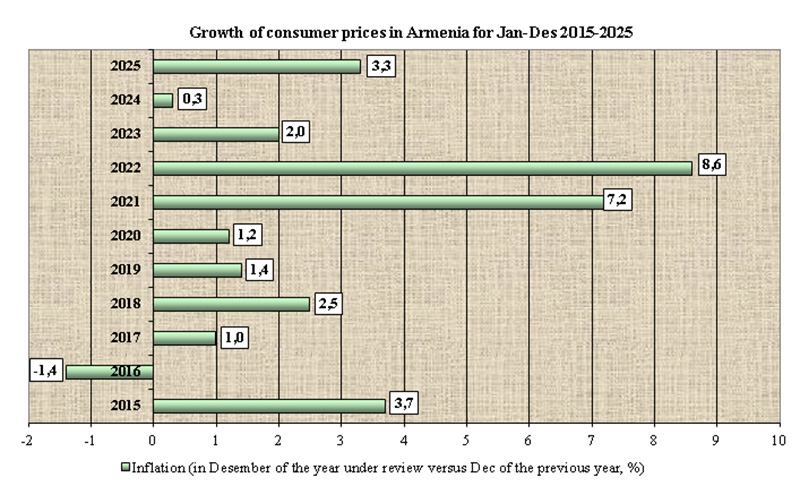
The IMF recommends that the Central Bank, in the context of continued robust lending growth driven by construction and consumer lending, be prepared to use its macroprudential instruments to mitigate risks threatening financial stability. "Further improvement of the macroprudential toolkit and strengthening of the supervisory system are also key. The Central Bank of Armenia's (CBA) new monetary policy framework, based on a prudent approach to risk management and a high degree of transparency, maintains the inflation target (3%, +/- 1 percentage point - Ed.). A flexible exchange rate, remaining a key factor in absorbing shocks, together with healthy reserve buffers, will support the economy in the event of external shocks," the IMF notes, stating that Armenia's economic indicators remain strong despite a number of shocks amid global uncertainty: "Growth remains robust, and the medium-term outlook is favorable." According to the IMF, Armenia's banking system is well capitalized and liquid, and mortgage lending growth has slowed somewhat: "The Central Bank's monitoring and willingness to use macroprudential instruments will help mitigate the risks arising from continued high lending growth. The development of additional macroprudential instruments and further strengthening of the regulator's prudential and supervisory framework and tools will further enhance the resilience of the financial system."
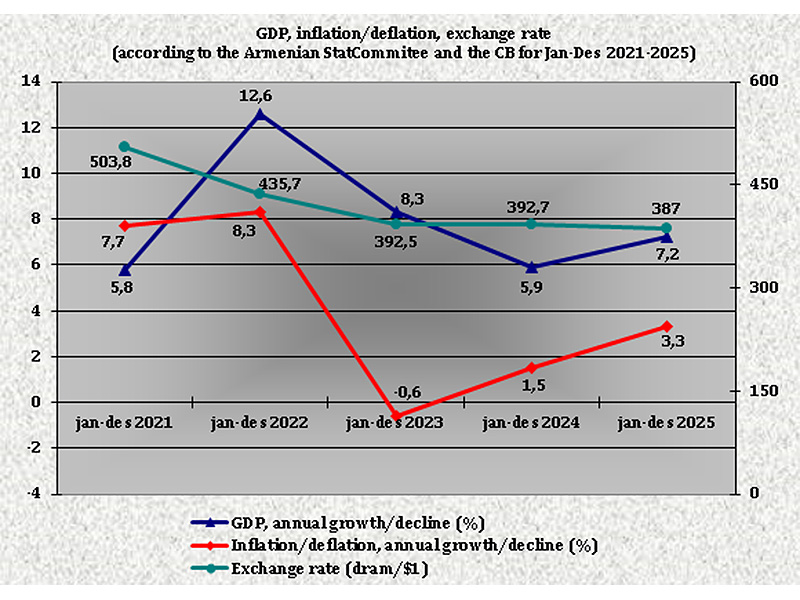
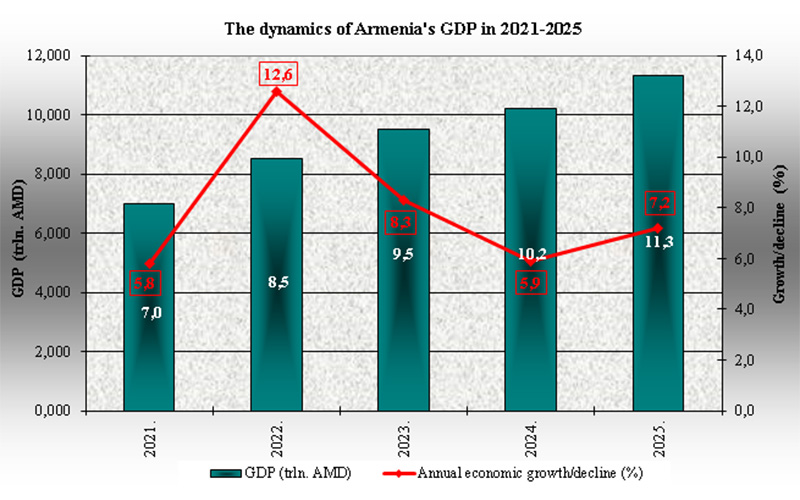
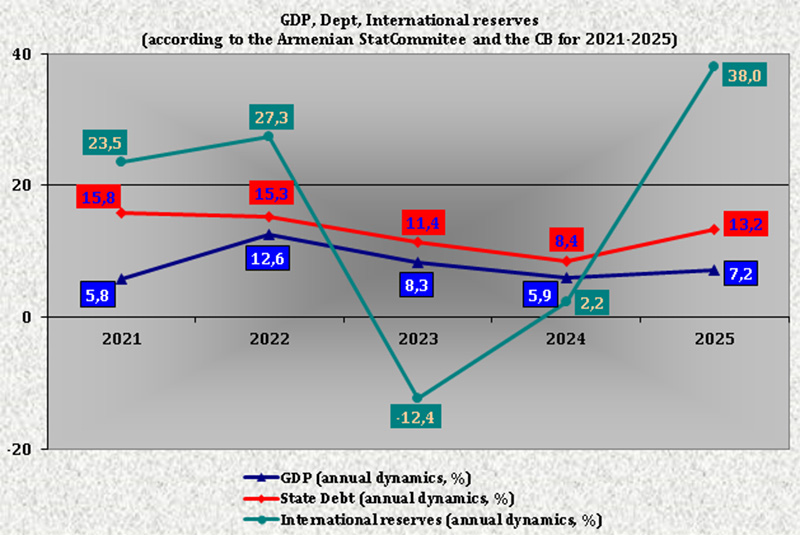
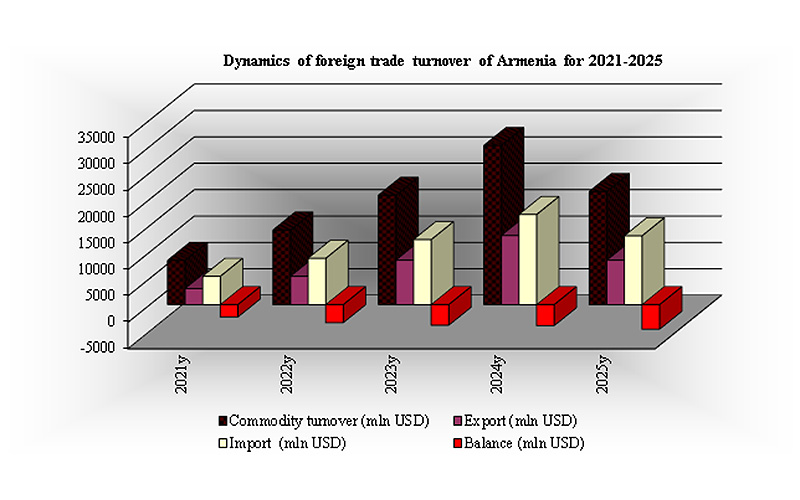
At the same time, international financial institutions and rating agencies forecast a slowdown in Armenia's GDP growth in 2026-2027 (from an actual 7.2% in 2025). According to the International Monetary Fund (IMF), growth will reach 5.5% in both the current and next years; the World Bank (WB) projects growth to weaken to 4.9-4.7%; S&P Global Ratings projects growth to slow to 5.3-4.8%; and Fitch Ratings expects growth above 5% in these years. We consider it appropriate to recall that these rating agencies upgraded Armenia's country rating outlook from stable to positive in early 2026: Fitch Ratings in January and S&P Global Ratings in February, reflecting robust growth prospects and potential improvements in regional security. Armenia's foreign trade is projected to improve, with export and import dynamics expected to begin growing as early as 2026. Specifically, the IMF expects export and import growth to be 2.2-2.1%, accelerating to 3.4-3.7% in 2027, while S&P expects export growth to be 2.2%, accelerating to 3.7% in 2027.
WB notes that risks to the outlook are skewed to the downside, particularly given ongoing geopolitical tensions related to Russia's invasion of Ukraine and heightened policy uncertainty. Additional risks include escalating trade tensions, more persistent inflation than expected, and the emergence of financial stress. According to the World Bank, geopolitical tensions remain a significant downside factor, with risks and uncertainty remaining high and exceeding pre-war levels. A prolonged extension or intensification of Russia's invasion could maintain high geopolitical uncertainty. Potential setbacks in the peace process between Armenia and Azerbaijan also increase downside risks, while progress in this peace process could strengthen the integration of the South Caucasus. High political and trade uncertainty persists, posing downside risks. Elevated geopolitical risks could reduce international trade by approximately 30-40%.
The Central Bank of Armenia forecasts GDP growth of 6.3-4.1% in 2026 and 4.9-5.3% in 2027. Regarding Armenia's foreign trade, the Central Bank forecasts an improvement in the dynamics of exports to 4.5- 3.4% growth and imports to 3.1% growth in 2026 (from an actual 30.5-23.7% decline in 2025), with this trend continuing in 2027 to 3.9-4.1% (for exports) and 4.2-3.8% (for imports).
In early February, Central Bank Chairman Martyn Galstyan stated that there are currently no signs of economic overheating in Armenia: "We are closely monitoring the situation (we are talking about high growth in consumer loans and low wage growth, which implies an increase in the credit burden of citizens and a possible overheating of the economy - Ed.), and if necessary, we will be able to influence the situation not through monetary instruments, but through macroprudential ones - we will tighten buffer standards." He noted that at the last meeting of the Central Bank Council, there was a debate about whether buffer standards should be increased or left as is, and ultimately the decision was made to keep them at the same level (for example, the countercyclical capital buffer has been maintained at 1.75% - Ed.). As the chief banker explained, the Central Bank Council, having reviewed the entire financial cycle, decided that the financial sector is not yet in the right cycle for intervention through macroprudential instruments. Analysts at AmRating, a rating agency affiliated with ArmInfo, believe that this backdrop is forcing banks to refinance corporate loans, following a similar experience with consumer loans, in an effort to "formally rehabilitate" some portion of the portfolio, at least for the short term, which allows them to maintain profit growth during this phase. According to the analysts, the rapidly growing non-performing portfolio, weighed down by a multitude of doubtful and bad loans, has already significantly slowed profit growth from 60% to 16%, and with continued write-offs, the chances of maintaining even this rate are diminishing.
Meanwhile, AmRating analysts, noting the accelerated growth of term deposits (25%), which have cemented their leadership in funding active operations, suggest that banks will nevertheless be able to maintain and even increase lending activity. However, it should be noted that in an unfavorable macroeconomic environment, banks, instead of actively issuing new loans, prefer to refinance existing debt, spurring a significant increase in non-performing loans and suppressing the potential for significant profit growth.
Unfavorable factors in such a scenario could include a continued slowdown in GDP growth without a further significant reduction in the cost of money, which would negatively impact economic agents' willingness to borrow. The potential conflict between two key macrofactors-economic development and inflation-will leave banks with no choice but to increase refinancing or begin a corporate loan restructuring process, which would lead to a deterioration in portfolio quality. The extent to which loan portfolio quality has deteriorated can already be judged by the results of 2025: of the 17 banks operating in Armenia, 12 have recorded an increase in toxic loans, most of them quite significantly.
Analysts note that the slowdown in annual growth of the standard group of loans from 25% to 21% is largely supported by the slightly accelerated growth of healthy corporate loans, from 25% to 26%, rather than by the stalled growth of healthy consumer lending, from 23% to 19%. Specifically, in industrial sector loans, the standard group grew by 32%, while delinquency increased by 1%. In the latter structure, a 38% decline in the medium-risk group (non-standard) and an 8% decline in the high-risk group (dubious) was accompanied by a threefold jump in the low-risk group (controlled) and a 25% increase in the riskiest group (hopeless). Slightly lower growth in standard loans was observed in the construction sector (28%), while comparatively moderate growth was observed in transportation/communications (19%), agriculture (16%), catering/services (14%), and trade (12%). However, delinquency rates also increased: by 3.2 times in the trade sector, by 69% in catering/services, by 22% in transport and communications, and by 16% in construction. Only in the agricultural sector did delinquent loans decrease by 16%.
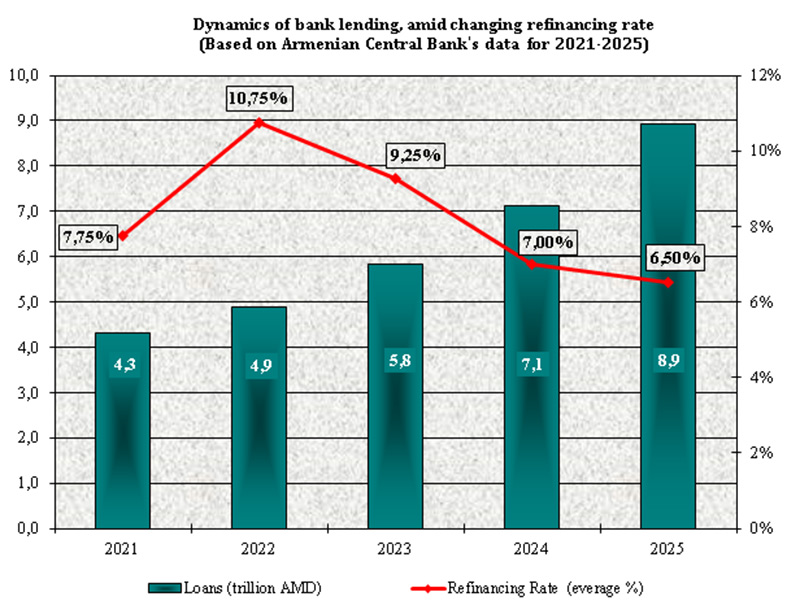
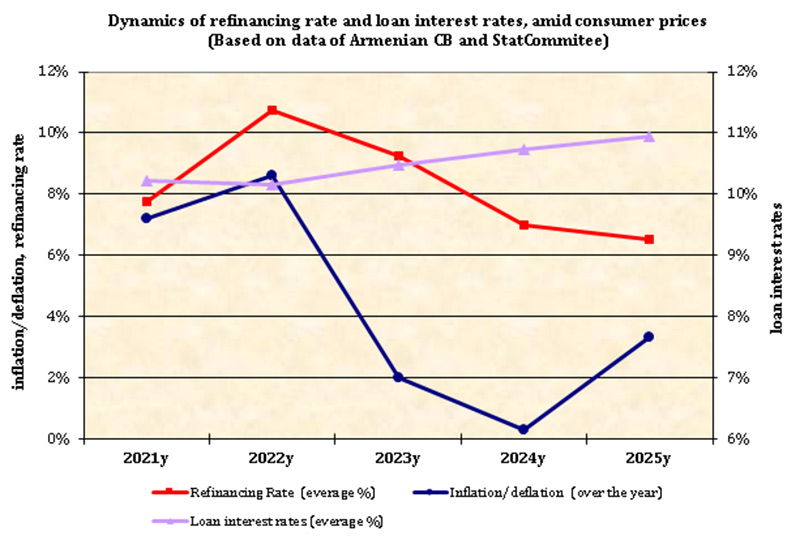
Specifically, in the trade sector, the more moderate growth in standard loans than in other sectors was accompanied by a significant increase in delinquent loans, with a significant increase in the high-risk category-dubious loans by 5 times and bad loans by 2 times, where the bulk of toxic loans have accumulated. Speaking about the forecast risks of loss of profitability, it is necessary to take into account that, of the listed sectors, the main driver of GDP growth by the end of 2025 was the construction sector, with an acceleration of annual growth from 13.5% to 21% (due to the continued high activity of commissioning of residential buildings. The service sector has shown growth of 10.6% for the second year in a row (due to the dominant IT sector and the financial sector). In the energy complex, growth remained almost unchanged, moving from 10.9% to 10.2% (mainly due to an impressive increase in the output of solar power plants, with a weakening growth in the generation of electricity by hydroelectric power plants). The agricultural sector accelerated in growth from 1% to 5.3% (mainly due to the high yield of grapes, fruits/berries and grains). The industrial sector accelerated in growth moderately - from 3.1% to 4.1% (due to the emergence of the mining industry to growth, with a weakly growing (dominant manufacturing industry). Meanwhile, the leading sector by volume, trade, saw its annual growth slow significantly, from 16.8% to 3.1% (primarily due to significantly weakened wholesale trade growth). Regarding banking sector profit growth, the fact that it is organic in nature is increasingly encouraging, as it has been supported by its key activity - lending - for two years now. Moreover, regulatory easing of monetary conditions continues through a reduction in the refinancing rate for 2023-2025 from a historically high 10.75% to 6.5%, maintaining this level to date. This signals a decline in interest rates, which nevertheless fluctuate depending on demand for credit products and are, so to speak, unresponsive to the key rate. The slowdown in economic growth is reducing interest in project financing, concentrating demand on refinancing short- and medium-term debt, replenishing working capital, and trade finance.