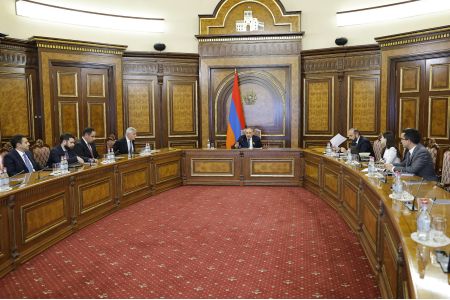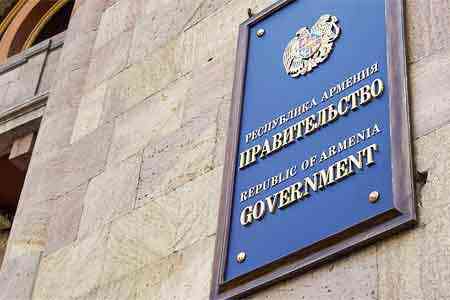


ArmInfo. On March 12, the Armenian government approved the draft presidential decree "On Approving the Agreement between the Government of the Republic of Armenia and the Eurasian Fund for Stabilization and Development on the Terms of the Fund's Location in the Republic of Armenia."
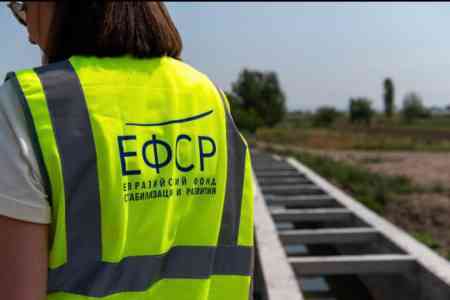
As stated in the explanatory note to the document, the Eurasian Fund for Stabilization and Development (EFSD) was established by the Republic of Armenia, the Republic of Belarus, the Republic of Kazakhstan, the Kyrgyz Republic, the Russian Federation, and the Republic of Tajikistan under the Agreement "On the Establishment of the Eurasian Fund for Stabilization and Development" of June 9, 2009. The Fund's primary goal is to promote the strengthening of the economic and financial stability of its member states.
The EFSD founding countries' participation in the Fund amounts to USD 8.513 billion, of which the Republic of Armenia's share is equivalent to USD 1 million (of which USD 100,000 was paid in cash and USD 900,000 was paid in full in the form of a simple, non-transferable, interest-free promissory note). The current EFSD program portfolio in the Republic of Armenia includes 10 programs totaling USD 538 million in the macroeconomic, agricultural, transport, and social sectors.
It is noted that, in accordance with the Agreement, the Fund was not previously a separate legal entity, and its resources were managed by the Fund Council in accordance with the Agreement on the Management of the Fund's Resources signed between the Eurasian Development Bank (EDB) and the Fund's founders on June 9, 2009. Operations under the programs and projects approved by the Fund Council were carried out by the EADB. Current regional events have highlighted the urgent need to transform the Fund into a fully independent international organization. As a result, in 2023, a package of updated statutory documents was developed and submitted to the Fund's Council. The purpose of these documents is to ensure the smooth implementation of the provisions of the EFSD Strategy for 2022-2026 by granting the Fund the status of an international financial institution.
The Protocol amending the Agreement was signed by all member states of the Fund on June 26, 2024 (ratified in the Republic of Armenia on December 10, 2024).
According to Article 1 of the amended Charter, the EFSD is an international organization subject to international law. As such (as is the case with other organizations subject to international law), it became necessary to establish the conditions for the Fund's presence in the Republic of Armenia.
Therefore, this Agreement establishes the legal status and legal capacity of the Fund in the Republic of Armenia, the immunity of the Fund and its representative offices, ensures the Fund's activities, provides for tax and customs benefits for employees, immunity, and other provisions.
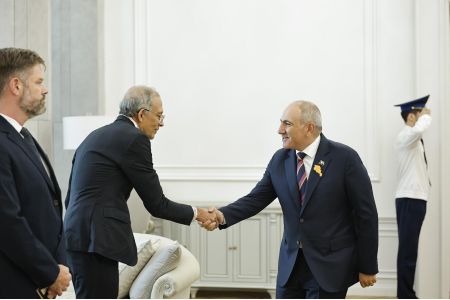
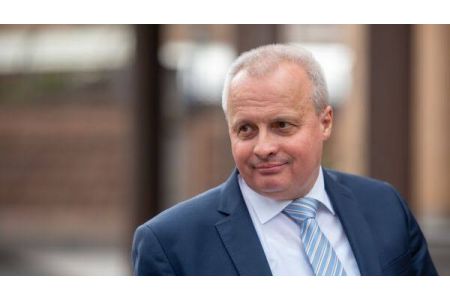
Based on the above, as well as from the perspective of ensuring favorable conditions for the Fund's vital activities, its status, immunity, the provision of benefits and recognition, and the deepening of cooperation between the Fund and the Republic of Armenia, we consider the adoption of the Agreement expedient,> noted the authors of the document, represented by the Ministry of Finance of Armenia. It should be noted that on February 5, 2026, Armenian Finance Minister Vahe Hovhannisyan and Andrey Shirokov, Executive Director of the Eurasian Fund for Stabilization and Development (EFSD), signed the Agreement between the Eurasian Fund for Stabilization and Development and the Government of the Republic of Armenia on the terms of the Eurasian Fund for Stabilization and Development's permanent presence in the Republic of Armenia. In this context, Andrey Shirokov noted that creating a comprehensive legal framework for the permanent presence of the Eurasian Fund for Stabilization and Development will enable a more responsive response to the needs of the country's economy, expand its project portfolio, and deepen dialogue with experts.