ArmInfo. Inflation in Armenia may accelerate due to a significant increase in oil prices, disruptions in supply chains, and changes in trade routes in the context of the Middle East conflict.
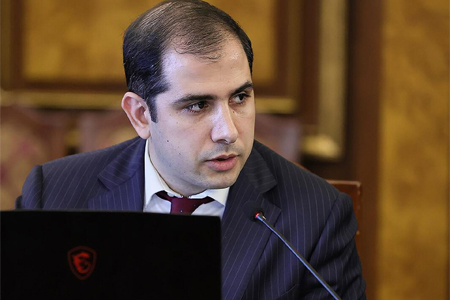
The extent of these factors' impact will depend on the duration and scale of the conflict, as stated by the Chairman of the Central Bank of Armenia during a press conference on March 17, thereby justifying the Central Bank Board's decision to maintain the refinancing rate at 6.5%. In this regard, he noted that in February 2026, annual inflation accelerated to 4.3%, which was more pronounced in core inflation, which reached 4.7% (from 2.5% and 1.5%, respectively, a year earlier - Ed.).
The continued rise in inflation in the first quarter of this year primarily reflects inflationary trends transmitted from imported and locally produced, off-season food products, due to inflationary pressure emanating from the global economy in recent quarters, and the impact of certain supply-side factors on the domestic economy. The main uncertainties going forward relate to the duration of the recent deflationary trends observed in global food markets, as well as the speed and scale of domestic price adjustments against this backdrop. However, rising service prices and the non-tradable goods index, which are near the target level, combined with stabilization of private sector wage growth in the 5-6% range and the results of direct surveys conducted by the Central Bank of Armenia, suggest that inflation expectations continue to gradually decline, approaching the 3% target (+/- 1 percentage point).
He noted that the construction and services sectors, as well as manufacturing, continued to contribute significantly to the significant acceleration of economic growth in Armenia in the fourth quarter of 2025. He also said that uncertainty regarding current demand conditions and its future trends has increased significantly, due to structural problems in economic growth and increased risks of fiscal policy expansion: "In this situation, the impact of aggregate demand on inflation is assessed as expansionary, and there are also inflationary risks stemming from supply-side factors." At the same time, private sector wage growth, inflation in the services sector, which is characterized by rigid prices, and inflation expectations continue to demonstrate predominantly stabilizing trends. In the context of current macroeconomic developments, Armenian financial market participants expect the Central Bank to maintain the current key rate for a somewhat longer period, with a reduction to 6.25% becoming possible in the medium term.
Speaking about the global economy, Galstyan stated that In the first quarter of 2026, risks of a further slowdown in demand conditions in the global economy and in Armenia's key partner economies significantly increased.. In the United States, the structural characteristics of economic growth, reflecting developments in the technology sector, as well as risks of a further correction in financial asset prices, a weakening labor market, and the sharp increase in global oil prices may negatively affect the medium-term growth outlook. The macroeconomic implications stemming from US trade policy have somewhat weakened, but continue to remain one of the main sources of uncertainty. In the medium term, uncertainty regarding long-term interest rates has increased amid expectations of rising US public debt, partly due to uncertainty over the possibilities of tarif collections . In Armenia's other main partner economies, risks of weakening medium-term growth and demand are gradually materializing. At the same time, geopolitical uncertainty, tensions in international trade relations, and concerns regarding potential disruptions in global supply chains continue to remain a key source of elevated price volatility in the global economy. Global oil prices have increased sharply amid escalating tensions in the Middle East, while uncertainty regarding their outlook has increased significantly. In this context, taking into account, on the one hand, the formation of a weak demand environment, and on the other hand, the increase in inflationary risks, it is likely that central banks in major economies will maintain or delay the easing of monetary conditions in the near term. Financial market participants in Armenia generally expect the Central Bank to maintain the current level of the policy rate for a somewhat longer period
According to the latest survey conducted by the Central Bank of Armenia among financial market participants on March 11, 2026, participants on average expect that the Central Bank will maintain the current level of the policy rate for a somewhat longer period, after which it will implement a moderate reduction in the policy rate. This is generally consistent with the results of the first quarter macro survey, where participants expect a reduction in the policy rate toward the estimated neutral level (around 6.25%) in the medium term. Following a significant decline in recent months, the yield curve has slightly increased across all maturities in recent weeks, likely reflecting the pricing of risks related to developments in the Middle East. Similarly, Armenia's shortterm country risk premium, after a significant decline in recent quarters driven by both general trends in emerging markets and country-specific factors (including a reduction in security risks), has recorded a slight increase, largely in line with trends observed in the broader region, including Eastern Europe and Central Asia.
The Central Bank of Armenia, in order to manage possible risks arising from existing uncertainties in a prudent manner, considers various scenarios for the development of the economic situation. The baseline Case A scenario presented in the Monetary Policy Report, which requires a higher policy rate path relative to market expectations, stems from the Typical Scenario B, presented in the Monetary Policy Report, indicates a reduction in risks associated with the country risk premium for Armenia and, consequently, a neutral interest rate level, due to fundamental factors. stems from the excess demand environment formed in the economy. This interpretation of the current position of the economy is supported by the continued recording of economic growth above the estimated long-term potential level, largely driven by strong household consumption, which is also accompanied by accelerating inflation. Effective management of the risks stemming from this scenario requires a higher policy rate path. The baseline Case B scenario presented in the Monetary Policy Report relates to the risks of a lower level of Armenia's country risk premium, and consequently the neutral interest rate, driven by fundamentals. This interpretation is associated with the reduction in security risks surrounding Armenia and expectations of their further improvement, which is reflected both in market pricing by investors and in improved outlooks for Armenia's sovereign credit rating by rating agencies. The improved sentiment toward Armenia is also reflected in the significant increase in capital inflows in recent quarters, including investments in AMD- denominated government bonds. These developments may indicate that monetary conditions are currently tight, and their prolonged maintenance may pose risks of the formation of a disinflationary environment. Therefore, managing these risks implies a faster reduction in the policy rate relative to market expectations.
Uncertainty about the balance of aggregate demand and supply in the economy is growing
Economic growth in Armenia in the fourth quarter of 2025, including the impact of the recovery of some non-structural factors, accelerated significantly, reaching 9.8% year-on-year, significantly above the projected stable level. The services and construction sectors contributed significantly to economic growth. The construction sector continues to grow rapidly, accompanied in recent months by a certain recovery in demand and, consequently, in real estate prices. While the IT sector also plays a significant role in driving strong growth in the services sector, the accelerated growth rates observed in other segments of the sector in recent months, particularly in culture and entertainment, hotels and restaurants, professional, scientific, and technical activities, etc., may indicate expanding demand conditions. On the other hand, although the acceleration in growth in manufacturing is largely due to non-structural factors, high growth rates were also recorded in traditional subsectors, and growth in exports, credit demand, and production capacity also provide positive signs for the long term. However, in January 2026, production growth rates in traditional manufacturing subsectors weakened significantly. Tourist flows to Armenia in January-February 2026 were higher than historical levels. However, uncertainty regarding the prospects for tourist flows has increased, in part due to the significant escalation of geopolitical tensions in the Middle East and further developments.
Uncertainty remains regarding seasonal migration trends to Russia and remittance methods. On the one hand, the long-term maintenance of the ruble exchange rate at its current level could increase incentives for labor migration from Armenia to Russia. On the other hand, high uncertainty regarding the medium-term prospects of the Russian economy and the tightening of migration policy may somewhat curb migration flows to Russia, contributing to an increase in labor supply in Armenia and the development of deflationary risks.
In this context, various signals may point to the formation of a small positive GDP gap, close to neutral, in the first quarter of 2026. However, the structural features of economic growth and the disproportionate and uneven developments in various sectors increase uncertainty regarding the balance of aggregate demand and supply in the economy. On the one hand, high levels of private consumption, accompanied by high credit growth, primarily high growth rates in demand-driven sectors, amid accelerating inflation, may indicate the presence of excess, strong demand in the economy. On the other hand, concentrated growth, stabilization of non-tradable prices, and wage growth at a target or stable level are not consistent with the formation of conditions of excess demand. Uncertainty regarding the future impact of fiscal policy on aggregate demand is primarily due to the planned further tightening of tax administration as growth stabilizes following high economic growth. On the other hand, a new, significant source of uncertainty is the increase in social spending this year. This is due to both the unplanned increase in pensions and benefits from April 2026 and the introduction of universal health insurance. The unemployment rate is declining, reflecting excess demand in the labor market
The unemployment rate continues to decline, reaching approximately 11.8% in the third quarter of 2025. It should be noted that, according to the labor force survey, the labor force increased in the third quarter of 2025 compared to the same period last year. However, this increase was primarily concentrated among the economically inactive population, while the number of employed individuals decreased slightly. The latter may indicate weak labor demand in the economy. However, according to the State Revenue Committee, the number of officially registered workers continues to grow at a steady pace, which may indicate strong labor demand. The increase in the number of registered workers may also indicate structural changes in the economy, reflecting the labor force's transition from informal to formal employment.
Nominal wage growth in the private sector accelerated slightly in the fourth quarter of 2025 to 5% year-on- year, with the concentration of growth declining. At the same time, the current unemployment rate may partially reflect excess demand in the labor market, especially given that the decline in unemployment in the second half of 2025 may have exceeded the projected natural rate. Associated risks from wages and inflation may continue to manifest themselves due to wage rigidity. At the same time, it cannot be ruled out that the natural rate of unemployment has gradually declined in recent years, reaching a range of 11-13%. This may be facilitated by the expansion of productivity and export opportunities from 2022, the integration and long-term formation of a highly skilled labor force in the Armenian economy, the increased efficiency of job and labor force matching thanks to the development of various electronic platforms, structural features of economic growth, and other factors.
On the other hand, the volume and quantity of non-commercial remittances from Russia to Armenia have increased slightly in recent months, which may indicate that ongoing challenges of ruble appreciation and labor shortages in Russia have outweighed the impact of factors limiting migration flows, stimulating growth in labor flows. Overall, despite the mixed signals coming from the labor market, some developments may indicate that labor market imbalances have significantly eased in recent quarters. The main uncertainty in the near future concerns the further development of labor supply, especially if demand conditions improve. At the same time, a possible increase in outbound labor flows could lead to a tightening of labor market conditions, creating inflation risks. Global economic growth prospects have worsened
United States: Amid significant policy shifts, US economic growth has been volatile in 2025, slowing significantly in the fourth quarter to an annual growth rate of 0.7%. This growth is supported by weakening, but still strong, private consumption growth. On the other hand, the continued deterioration of labor market conditions, as well as a significant increase in credit growth and the non-performing loan ratio in some sectors of the economy, may indicate a significant weakening of demand conditions. Given the uncertainty surrounding the economic outlook and, in particular, the effective application of AI in other sectors, possible further corrections in financial asset prices could further weaken the consumption and growth outlook in the United States, which in turn will have negative implications for global demand conditions. At the same time, escalating geopolitical tensions in the Middle East and a sharp rise in oil prices amid supply constraints pose additional risks to the growth outlook and, at the same time, aggravate the inflationary environment. In the context of the removal of some tariffs, possible further changes in US trade policy, particularly the introduction of additional tariffs and the pursuit of expansionary fiscal policy, could lead to an increase in the budget deficit and public debt in the medium term, increasing the risk of further increases in real interest rates in the long term. Such changes could impact both the US Federal Reserve's monetary policy outlook and the neutral interest rate environment and capital inflows to developing countries.
Inflation continued to decline in the first quarter of 2026, reaching 2.4% year-on-year in February, but inflation in hard-to-price goods and services remained significantly above target. Uncertainty regarding US trade policy and the pressure caused by additional tariffs have eased somewhat, but they still pose risks of higher inflation. On the other hand, the labor market situation has steadily worsened in recent quarters, and the sharp rise in oil prices creates risks of a further, unintended weakening and, at the same time, a widening of the inflationary environment. Under these conditions, the US Federal Reserve's task of ensuring price stability and full employment is significantly complicated. Eurozone. In the fourth quarter of 2025, economic growth in the eurozone stabilized at a low 0.2%, reflecting existing structural problems. Inflation in February 2026 approached the 1.9% target. At the same time, core inflation indicators are sending conflicting signals regarding demand conditions: core inflation is close to the 2.4% target, while service sector inflation remains above the 3.4% annualized target. Medium- and long-term growth prospects remain uncertain. On the one hand, structural problems and growth polarization could hinder the recovery of industrial production and an improvement in economic sentiment. On the other hand, measures aimed at strengthening the military industry and infrastructure in Europe are noticeable to some extent, which provides positive signals. In this context, uncertainty remains as to whether fiscal stimulus will be sufficient to ensure a sustainable recovery in economic growth given the accumulated structural problems. At the same time, a sharp escalation in the Middle East and a protracted conflict, given the EU's high vulnerability to energy imports and prices, could significantly contribute to a further deepening of the EU's structural problems and, simultaneously, a wider inflationary environment.
Russian Federation. In the fourth quarter of 2025, economic growth in the Russian Federation recovered slightly, reaching 1% year-on-year, significantly below the levels of previous years. This was primarily driven by growth in the manufacturing industry and a rebound in the construction sector. At the same time, the services and retail sectors continued to demonstrate robust growth, indicating weak signs of a recovery in domestic demand. On the other hand, the decline in consumer lending and the continued rise in the share of non-performing loans likely indicate weak demand generation and the accumulation of structural problems in certain sectors of the economy.
Inflation and core inflation weakened significantly in the first quarter of 2026, while service sector inflation and inflation expectations remain above target. Labor market conditions remain tense, although signs of easing were observed in the fourth quarter, reflected in a decline in the number of workers in demand and a slowdown in real wage growth. The introduction and continued tightening of additional, targeted sanctions by Western countries pose risks to the medium-term growth of the Russian economy and the security of budgetary funds. On the other hand, the escalation of tensions in the Middle East, at least in the short term, could have a somewhat positive impact on the Russian economy due to a significant increase in demand and prices for Russian oil. Under these circumstances, weakening economic activity, on the one hand, and persistently high inflation and inflation expectations, on the other, pose challenges for the Central Bank of the Russian Federation in effectively managing the dilemma of inflation and economic growth in the short term.
Global oil prices, due to the sharp escalation of tensions in the Middle East, have risen significantly in recent weeks, reaching the $90-$100 range compared to the $60-$65 range at the beginning of 2026. In this situation, the International Energy Agency announced an unprecedented release of 400 million barrels of oil from member states' reserves, effectively curbing further oil price increases. However, oil price volatility and uncertainty about the outlook have increased significantly and will depend on the duration and scale of the conflict in the Middle East. On the other hand, under these conditions, there is also a risk of a further slowdown in global economic activity and demand.