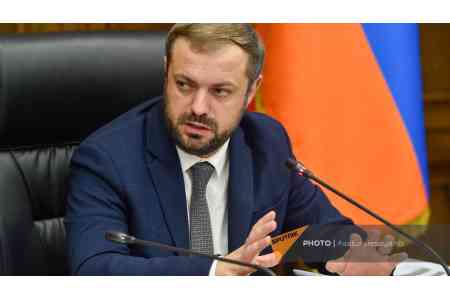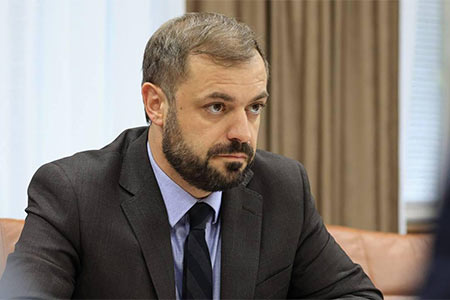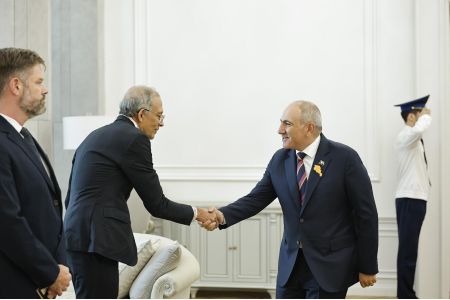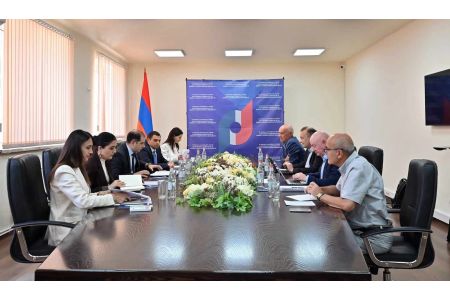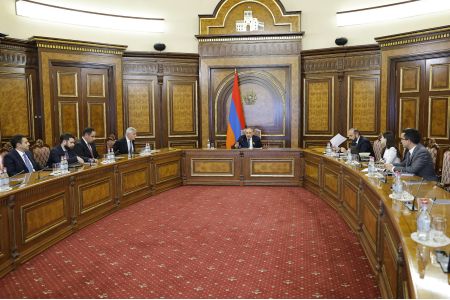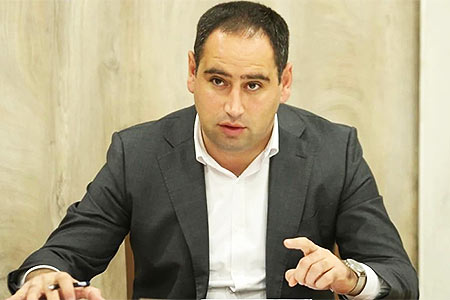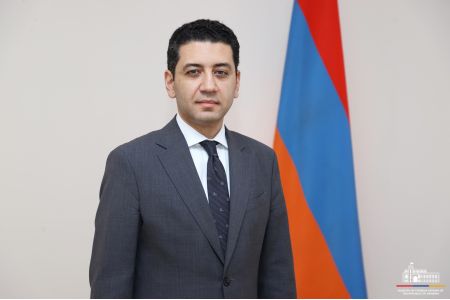


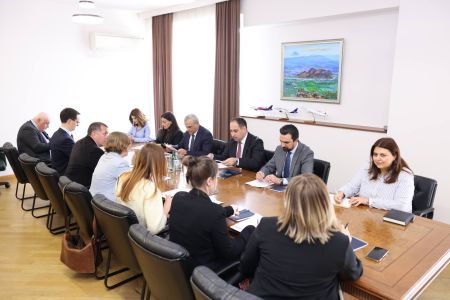
ArmInfo. Armenian Minister of Territorial Administration and Infrastructure David Khudatyan received a delegation from the German development bank KfW, led by Regional Director (Eastern Europe, Caucasus, and Central Asia) Veronica Garcia Del Arco.
During the meeting, the parties discussed the progress of joint programs in the energy and water sectors, as well as possible new areas of further cooperation.
The Minister noted that significant progress has been made in implementing the "Caucasian Electricity Network" program and emphasized the importance of this project for Armenia.
According to the press service of the Ministry of Territorial Administration and Infrastructure, Katrin Buder-Pelz, Head of Development Cooperation at the German Embassy in Armenia, also attended the meeting. As a reminder, last week the Armenian government approved a proposal to sign a grant agreement with the KfW Bank for Reconstruction and Development for the Caucasus Energy Network Phase II program and a loan agreement for the EU's Caucasus Energy Network Phase IV program. The documents envisage an additional EUR 120 million in loan funds and ?15 million in grant resources.
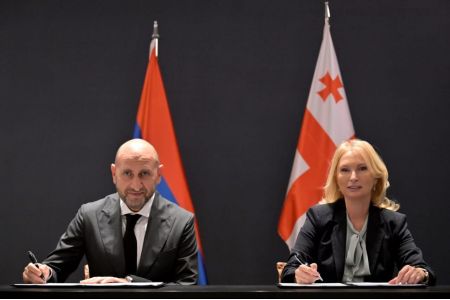
The project aims to connect the Armenian and Georgian power systems via a 500/400/220 kV high-voltage direct current (HVDC) converter station (with a final capacity of 1,050 MW), which will be located near the Georgian border in Ayrum, Armenia. Connection on the Georgian side will be via a 500 kV overhead power line from the Marneuli substation, and on the Armenian side via a 400 kV overhead power line from the 400/220 kV substation in Ddmashen. As a result, it is planned to increase the power exchange capacity between Armenia and Georgia from the current 200 MW to 350 MW in the first stage, and subsequently to 1,050 MW, depending on regional market demand.
KfW Development Bank has been operating in Armenia since 1998 and is currently the largest lender to the Armenian economy. KfW's cumulative investments in the Armenian economy over the past years amount to approximately ?1.1 billion. On behalf of the German Federal Government, it supports projects in the following areas: sustainable economic development, training and employment; climate and energy; a just transition; sustainable urban development; and the protection of natural resources.