

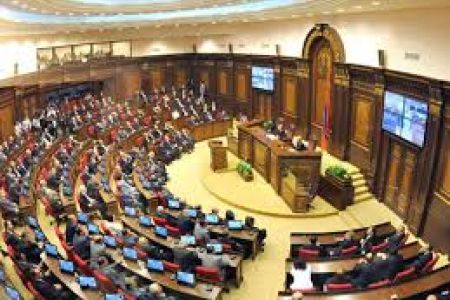
ArmInfo.Business conditions in Armenia will be simplified. At its plenary session on March 24, the National Assembly of the Republic of Armenia will discuss in amendments to the Tax Code the first reading, aimed at regulating documentation, tax reporting, as well as the calculation and payment of VAT and income tax.
According to Eduard Hakobyan, Chairman of the State Revenue Committee of the Republic of Armenia, the proposed changes have two main goals: first, to simplify business conditions and improve the business environment; second, to prevent potential disputes during administrative procedures. Specifically, the changes affect the procedure for adjusting transactions involving the return of VAT-inclusive goods, transactions processed using cash register receipts, imports of goods from EAEU countries, as well as certain provisions related to agriculture, the dairy industry, and solar energy.
Current regulations allow for transaction adjustments primarily for the return of goods with a limited shelf life, particularly in the catering sector. The bill proposes to regulate the possibility of adjusting transactions for the return of goods across all product categories. He also stated that specific changes concern the return of goods purchased using cash register receipts and the reporting of VAT and excise tax information in the relevant reporting period. Currently, adjustments in the reporting period are only applied when reducing amounts on tax invoices. When returning goods sold using cash register receipts, taxpayers are forced to manually adjust the transaction for the relevant period, with all the ensuing consequences. The new regulations allow for adjustments to be made in the month of return, treating it as a separate type of transaction.
According to the head of the State Revenue Committee, the changes related to solar energy primarily apply to stand-alone producers with an installed capacity of up to 150 kW. Currently, no profit tax is imposed on excess electricity generated, but there is no provision for accounting for the corresponding expenses when calculating profit tax. The proposed changes will enable the inclusion of such expenses, ultimately facilitating the development and expansion of solar energy in Armenia.