

ArmInfo.Recently, news spread across Armenia’s financial community: Ameriabank, as part of Lion Finance Group (LFG) with a capitalization of £4.25 billion, has been included in the UK’s leading stock index, the FTSE 100 (informally “Footsie”).
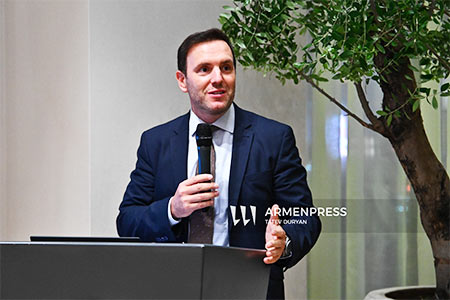
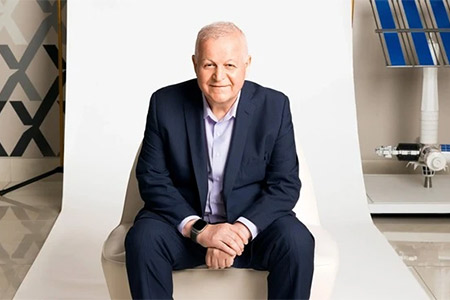
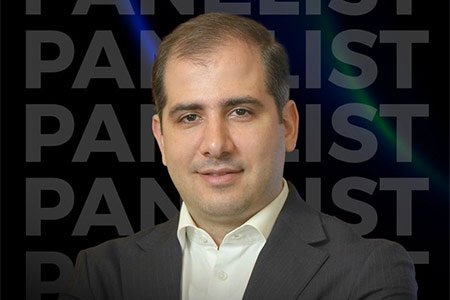
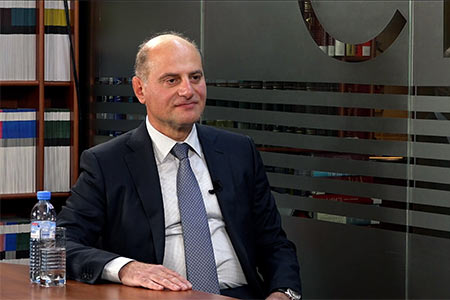
This index is considered a key indicator of the British market (the London Stock Exchange, LSE) and one of the most influential stock market benchmarks in Europe. Thus, an Armenian financial company—albeit indirectly—has appeared on the global investment map for the first time. What does this mean, and what advantages does it bring to Armenia’s economy? ArmInfo’s correspondent discussed these topics with Anushavan Simonyan, Head of Armenia’s first private equity fund, Amber Capital Armenia.
– As someone with extensive experience in major global investment companies and banks, you understand better than most what it means for Armenia’s economy, its investment attractiveness, and investor confidence to be represented—even indirectly—in the top-tier FTSE 100 index. It is worth noting that LFG had long been part of the FTSE 250 but has only now moved up to this “elite” level. How should this be interpreted from an investment perspective?
– This is a very important event. On the one hand, it may seem like a technical matter, because companies listed on the London Stock Exchange can, through successful business growth and increased capitalization, move up and automatically enter the FTSE 100. On the other hand, once in this league, you become the focus of the world’s largest institutional investors and are drawn into a powerful investment “vortex.”
Investors who selectively participate in the FTSE 250 as active investors often act as passive, index investors in the FTSE 100. When companies enter the index, their shares are automatically purchased and traded much more actively.
Will this benefit Armenia? Absolutely. Institutional investors typically conduct deeper analysis of index constituents, carefully studying group structures, assets, country risks, and credit risks. As a result, Ameriabank’s inclusion in the FTSE 100 brings Armenia into the field of vision of major global financial players such as BlackRock, Fidelity, Vanguard, and many others.
– I remember when Bank of Georgia Group (now renamed Lion Finance Group after Ameriabank joined) first listed on the London Stock Exchange. It was a major event, including politically. In Armenia, we had hoped for similar success from our own companies. Can we now say that being in the FTSE 100 will serve as an incentive for Armenian companies, including financial institutions, to pursue LSE listings and access international capital markets?
– I remember that time well, as I had the opportunity to work at the investment bank Merrill Lynch, which acted as the organizer of Bank of Georgia’s IPO in London. The process began with a syndicated loan, followed by exposure to international capital markets and leading investors, ultimately contributing to a successful IPO.
It was the first IPO from our region, and it encouraged investors to take interest in and more actively explore the region.
– Will inclusion in the FTSE 100 help increase Lion Finance Group’s capitalization, and how might Ameriabank benefit from this growth?
– That’s a good question. Capitalization is the result of comprehensive work and depends on many factors, starting with fundamentals: the bank’s development, growth in financial indicators, client base, assets—in short, overall financial performance. That’s the core aspect.
Another factor is how actively investors engage with the bank, which also affects its valuation. So, on one hand, there are fundamental performance metrics; on the other, the valuation multiples at which companies or banks trade.
If major global investors begin actively trading a bank’s shares, liquidity increases, confidence in the issuer grows, risks become better understood, and as a result, the business valuation rises.
– What about funding? Will it become easier to finance Ameriabank’s operations and those of other players in Armenia’s financial market? Could this allow the banking system to grow through international institutional investors rather than donor organizations, which sometimes distort the market?
– In terms of funding, there are two main types: equity funding (investors taking ownership stakes) and debt funding (borrowing capital). This covers the full spectrum of capital.
Regarding equity, major institutional investors supporting the FTSE 100—including through ETFs—will automatically purchase shares to replicate the index, increasing demand significantly. So, equity funding prospects are clearly positive.
As for debt markets, trust in FTSE 100 companies is very high. This is due to stricter risk assessment and corporate governance standards within the index. For example, key board committees such as the Audit and Remuneration Committee must meet stricter requirements, including being fully composed of independent directors. This gives investors greater confidence and positively affects funding.
– So we can conclude that being part of the FTSE 100 allows for significantly lower borrowing costs and greater access to debt financing?
– From the perspective of international capital markets—absolutely. Investors view FTSE 100 members much more favorably.
– And what about Armenia’s financial market as a whole? Can it indirectly benefit from having an Armenian bank in the FTSE 100?
– From a global perspective, one of the main barriers preventing Armenian issuers from entering capital markets has been scale—“size matters.” For example, eurobond issuances are typically expected to be at least $100 million, both for liquidity and economic viability, as transaction costs are high.
Armenian banks have grown significantly in recent years and now have real opportunities to access international markets. Some, like Ardshinbank, are already doing so, and I expect further positive developments in the coming years.
– Yes, but so far mainly with debt instruments rather than equity, although that is still very important.
– Entering the bond market is the first step. Learning how to operate under international capital market rules, working with global investors, and helping them better understand Armenia’s economy and financial sector is a crucial process.
This is excellent preparation for IPOs and entry into public equity markets. It’s a natural progression, and Ameriabank’s presence in the FTSE 100 may help pave the way for similar success stories in the near future.