ArmInfo. Armenia will revise VAT rules for gold and precious stone transactions. At its April 8 meeting, the RA National Assembly's Committee on Economic Affairs approved the first reading of amendments to the Tax Code submitted by the RA government.
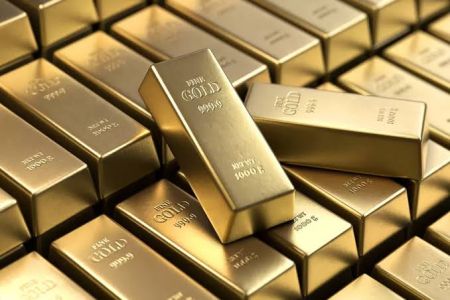
As Deputy Finance Minister Arman Poghosyan noted in his speech, the legislative initiative envisages the establishment of special regulations. Although the sale of gold and precious stones is exempt from VAT under current legislation, the sale of jewelry made from these materials is subject to this tax. Moreover, the cost of the gold and stones used often accounts for the majority of the price of the item. The problem is that when jewelry manufacturing companies exceed the VAT threshold of 115 million drams per year, the price of their products, including VAT, rises sharply, making them uncompetitive in the market. Another problem is that gold, as a unique commodity, is not created anew each time it passes through the value chain, but is simply transformed from one form to another, transferring its value through successive links. In other words, at the stage of manufacturing gold jewelry from a gold bar, the value of the gold is not considered newly created value. Therefore, in this case, taxing gold with VAT is problematic, on the one hand, and on the other, it leads to higher prices for gold jewelry, thereby hindering the development of the jewelry industry. Gold is a unique raw material, as its value is retained during each processing, and imposing VAT on it each time it passes through the value chain would, in practice, mean multiple VAT taxation, which is not a reasonable approach.
In this regard, the Deputy Minister of Finance explained, it is proposed to establish two separate preferential tax regimes: for manufacturers and for resellers. For manufacturers, it is proposed to levy VAT on the positive difference between the resale price of an item and the documented cost of purchasing the gold and stones used to make it. For example, if a jeweler sells a piece of jewelry for 100 units, with documented costs for gold amounting to 60 units and for a diamond, 25 units, VAT is assessed not on 100 units, but on 15 (100-60-25). For resellers, it is proposed to levy VAT on the positive difference between the resale price and the purchase price of the item. Thus, if a reseller purchased a piece of jewelry from the manufacturer for 100 units and sells it for 120, the tax is assessed on 20 units.
The Deputy Minister expressed confidence that the adoption of the bill will significantly boost the jewelry market. The government considered the document urgent, so that it would come into force as early as July 1, 2026.