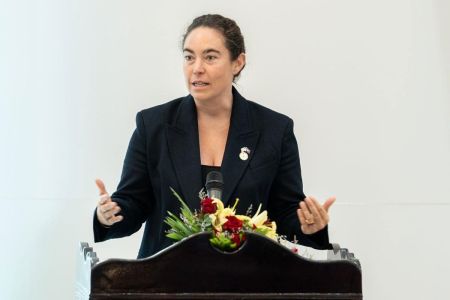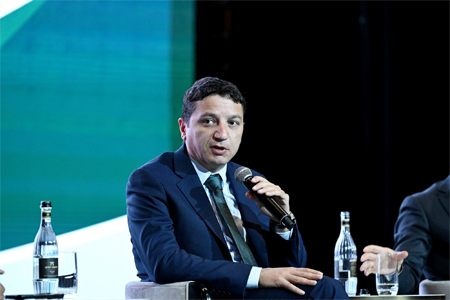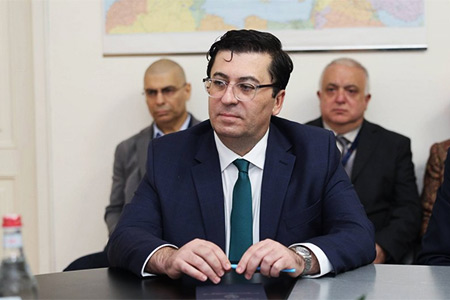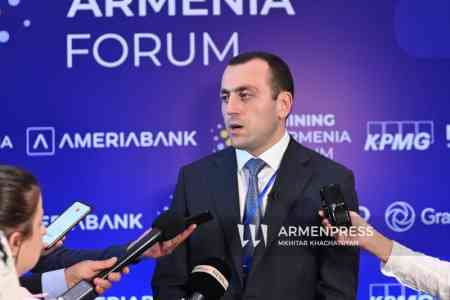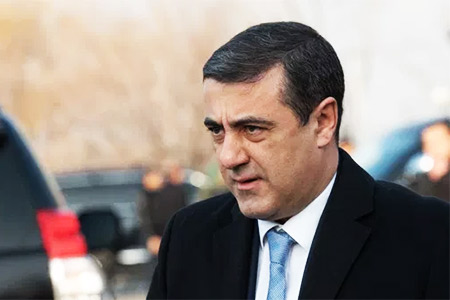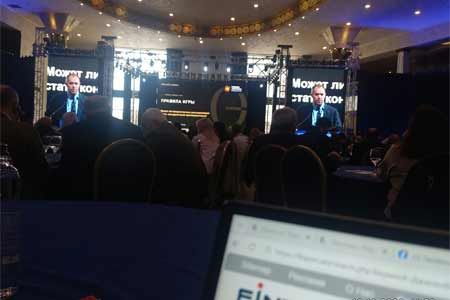
ArmInfo. As the situation in the Middle East worsened, there was an outflow of international investors from emerging markets. However, there was no capital outflow in Armenia, as stated by Armen Nurbekyan, Deputy Chairman of the Central Bank of Armenia, speaking at the opening of the Doing Digital forum.
Noting that the outflow volumes during the Iranian crisis were 4-5 times higher than those during the Russia-Ukraine conflict, the Deputy Chairman of the Central Bank said that since 2022, the country risk premium in Armenia has gradually decreased from 6.2% to 2.2%, reaching a historically low level. "Capital outflow from Armenia has not been observed, unlike from other emerging markets, because our country is comparatively more resilient," Nurbekyan said.
Regarding the impact of the conflict on inflation in Armenia, he said that in the short term, inflation could rise between 1.2% and 1.7%, for several reasons. First and foremost, the deputy chairman of the Central Bank cited oil prices, noting that Armenia is an importer. Among the reasons, he also mentioned the search for alternative routes, which will lead to increased spending and the need to substitute certain goods.
At the same time, the deputy chairman noted that the regulator will monitor developments, and further monetary policy actions will be determined based on these developments.
Regarding dependence on trade with the Middle East, Nurbekyan noted that exports have been regulated in the post-shock period, and this does not include imports from Iran or other countries that used Iran as a gateway to the Armenian market for their products. He specifically mentioned China as one of those countries. "These routes are still operational, but there has been an increase in logistics costs," he noted.