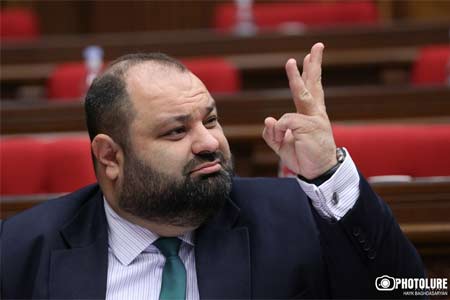


ArmInfo. Customs inspections in Armenia will be similar to tax inspections. This was announced by Eduard Hakobyan, Chairman of the State Revenue Committee, at the plenary session of the National Assembly of the Republic of Armenia on April 14, after presenting amendments to the Law "On Customs Regulation" in the first reading.
The SRC head emphasized that currently, customs inspections are conducted using both desk and on-site audits. However, desk audits do not have established deadlines, nor is there a provision for notifying the subject of the audit, which often leads to litigation and unnecessary bureaucracy. Now, it is proposed to establish a requirement that desk audits be conducted within 40 business days, and the business entity must be notified of the completion. Moreover, the deadlines for desk audits cannot be extended, nor can they be suspended.
Another issue concerns on-site customs audits, for which the deadlines, suspension, or cancellation of the audit are also not specified. It is proposed to establish grounds for investigations by law enforcement agencies. Specifically, the amendments specify cases involving document verification, their seizure based on a decision by an investigative body or a court order, the discovery of elements of a crime during a customs audit and the submission of a corresponding report, and the conduct of a customs inspection.
The next question concerns the legal grounds for the inspected party to review the inspection report in advance and the possibility of appealing it. It is proposed to establish that, in order to summarize the results of a customs inspection, the official conducting the inspection must prepare a draft inspection report within 10 working days from the date of completion of the inspection, should violations of international treaties and acts in the field of customs regulation and the requirements of the legislation of the Republic of Armenia be identified. The period for filing objections to the customs inspection report by the inspected party is an additional 10 working days. The types of decisions made by customs authorities based on inspection results will also be defined. These include amendments or additions to the customs declaration, calculation of customs payment or tax liabilities as part of measures to protect the domestic market, etc. It is proposed to establish a notification procedure and clarify liability standards for those organizations where customs inspections reveal instances of underpayment of customs duties, other taxes, duties, and charges collected by customs authorities. Liability will be borne by the individual organization.